
Surprising History of July
A Month of Celebrations, Traditions, and Strange Events

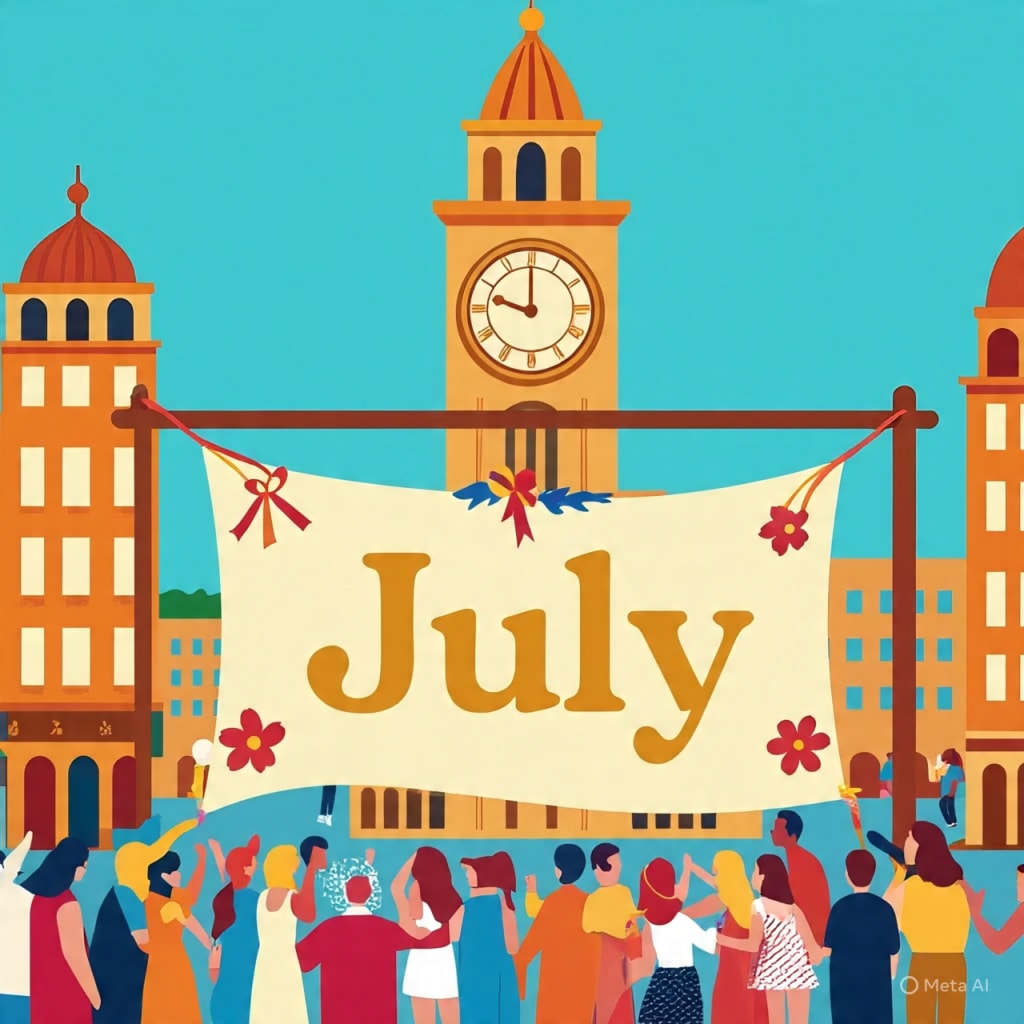
There’s a lot to celebrate in July: Independence Day, summer vacations filled with camping, swimming, barbecues, and picnics—and of course, National Ice Cream Month, declared by former President Ronald Reagan in 1984. Named after Julius Caesar, July is a month of solar spectacles, historical drama, and ancient traditions. Let’s explore some of July’s lesser-known yet fascinating facts.
The Origins of July
July gets its name from Julius Caesar, who reformed the Roman calendar in 46 B.C. After his death in 44 B.C., his birth month was renamed July to honor him. Previously, the month was called Quintilis, meaning "the fifth month" in the old Roman calendar before January and February were added.
Flashback: Independence Day 1941
While World War II raged across Europe and North Africa, the United States celebrated Independence Day in July 1941. As the possibility of joining the war grew, President Franklin Roosevelt gave a powerful speech linking America's fight for freedom during the 1700s with the battles faced by its allies overseas.
Celestial Events: Full Moons, Meteors, and Zodiac Changes
July’s full moon is called the “Buck Moon”, named by Native American tribes. It marks the time when male deer grow their velvety antlers.
The zodiac shifts from Cancer, representing home and care, to Leo, symbolizing strength and leadership—bringing a noticeable change in cosmic energy.
One of July’s beautiful sky shows is the Delta Aquariids meteor shower, beginning mid-July, sending nearly 20 shooting stars per hour across the sky.
Nature, Agriculture, and Birth Flowers
In farming societies, July is the peak season for harvesting wheat and barley—essential for food and trade. In Native American traditions, it’s the prime time for harvesting the “Three Sisters” crops: corn, beans, and squash.
The famous phrase, “knee-high by the Fourth of July,” once referred to good corn growth. Today, corn often reaches as high as 8 feet by mid-July, matching the lyric from the musical Oklahoma! — “The corn is as high as an elephant’s eye.”
July’s birth flowers are the water lily (symbolizing innocence) and the larkspur (representing positivity). Both are linked to Greek mythology. Water lilies are associated with water nymphs (Nymphaeaceae), and larkspur is said to have sprung from the blood of the Greek warrior Ajax during the Battle of Troy.
Fascinating Historical Events in July
In 1518, the city of Strasbourg witnessed the bizarre “dancing plague,” where 400 people danced uncontrollably. Causes remain unknown but are often linked to stress, famine, or even ergot poisoning (a hallucinogenic mold).
Bastille Day, celebrated on July 14, is well-known, but few remember the July Revolution of 1830, when French citizens overthrew King Charles X, replacing him with Louis-Philippe, the “Citizen King.”
On July 10, 1943, Operation Husky, the Allied invasion of Sicily during WWII, was launched. Though the operation depended on good weather, unexpected storms almost canceled the mission.
July’s Famous Festivals and Forgotten Holidays
In ancient Rome, the Ludi Apollinares celebrated the sun god Apollo with chariot races, animal hunts, and theater.
On July 23, Romans honored Neptune during Neptunalia by building temporary huts for feasting and celebrations.
In the U.K., July 15 is St. Swithin’s Day. According to legend, if it rains on this day, it will rain for the next 40 days; if it stays dry, the next 40 days will be dry too.
One of the grandest festivals in July is Japan’s Gion Matsuri in Kyoto. It began in A.D. 869 to ward off plagues. Originally a procession of sacred halberds and shrines to drive away disease-causing spirits, it evolved into a magnificent parade featuring giant floats, some as tall as seven stories. A sacred local boy is chosen as the festival’s messenger; tradition dictates that his feet cannot touch the ground from July 13 to July 17.
Animal Symbol of July: The Dog Days of Summer
The “dog days of summer,” from July 3 to August 11, are named after Sirius, the Dog Star, which rises with the sun during this time. Ancient Greeks and Romans believed Sirius caused extreme heat, leading to madness in both humans and dogs.
Today, the phrase refers to intense heat or tough times, often referenced in culture—like Florence and the Machine’s song “Dog Days Are Over” or the 1975 crime film “Dog Day Afternoon.”
Conclusion
From fireworks to festivals, dancing plagues to cosmic wonders, July is a month filled with history, mystery, and celebration. Whether you’re enjoying ice cream, watching meteor showers, or reflecting on history, there’s no shortage of stories hiding in the heart of July.
About the Creator
Muhammad Tayyab
I am Muhammad Tayyab, a storyteller who believes that memories are treasures and words are bridges to hearts. Through my writing, I capture what time often leaves behind."
Keep reading
More stories from Muhammad Tayyab and writers in Horror and other communities.
Top Tech Myths You Should Stop Believing
In a world where technology is growing faster than ever, misinformation often spreads even faster. From smartphones to Wi-Fi signals and artificial intelligence, there are countless myths that people continue to believe — not because they're foolish, but because these myths have been passed around for years without anyone questioning them.
By Muhammad Tayyab 7 months ago in Education
House No 450
On the night of the feast, we three sisters stayed up late talking. It must have been around two in the morning. We thought we could hear the sound of conversation coming from the TV lounge outside. Who could it be at that moment? As soon as we opened the door to the room while we were talking and came out,...
By Sudais Zakwan4 days ago in Horror




Comments
There are no comments for this story
Be the first to respond and start the conversation.