


Review of The Long Walk
By: T.D. Carter
Now, bear with me as this is my first formal review of a movie. I have written informal reviews in the past, but this one is different—I wanted to truly give my take on this film. The movie is directed by Francis Lawrence, with a cast that includes Ben Wang, David Jonsson, Cooper Hoffman, and Mark Hamill. This is a horror/sci-fi film based on the novel by Richard Bachman, who is actually Stephen King. “The Long Walk” was the first novel King ever wrote, and the movie was released on September 12, 2025.
If you’ve never heard of “The Long Walk,” here’s a brief breakdown. The story takes place in a world where America is ruled with an iron fist, and most people live at or below the poverty line. Every year, there’s a lottery that young men enter, hoping to win more money than they can imagine—and one wish granted. Some have likened it to “The Hunger Games,” but as I’ve never seen those movies, I can’t compare. The film follows the winners of the lottery on their journey to try and win the prize, as well as everything that happens during the long walk—including the friendships and rivalries formed along the way.

SPOILER ALERTS
In my honest opinion, this is an amazing movie, though it might be too much for some viewers. I haven’t read the book yet (it’s on my Audible list), but I’m still intending to. One of the main characters is Ray Garraty, played by Cooper Hoffman. From the start, we see him being dropped off by his mother, who is trying desperately to hold it together but is clearly about to break down. Having read the synopsis, I knew death was involved, but I didn’t realize it would be so intense. After prying himself away from his mother’s embrace and promising her he’ll see her in a few days, Ray goes and sits with the other young men, and they begin to talk.
Once they all receive their numbers from The Major (played by Mark Hamill), the walk begins. Ray Garraty walks alongside Peter McVries (David Jonsson), and although the early walking and talking might feel like a slow burn, remember: these are young men facing dire consequences. Even though they understand the risks, they believe the end will justify the means. However, things quickly turn real when the first boy, Thomas Curley (played by Roman Griffin Davis), suffers a charley horse.
To give you a visual: there are fifty young men, followed by a military jeep and a tank—both armed with semi-automatic guns. Even a female soldier is carrying one of the weapons. Nothing about the visuals is stunning; it looks and feels like poverty. The boys walk past spectators that gather for every Long Walk, passing empty stores and abandoned cars and houses that reflect the desperate state of America. The Major tells the walkers that the country suffers from an “epidemic of laziness,” insisting that America needs entertainment and that the Long Walk is the solution—a chilling commentary.

Broken-down tractors, overgrown fields, and desolate streets make you feel every mile the boys walk. The film periodically displays the mileage walked so far—for me, honestly, two or three miles would have been my limit! The rules: walkers must keep a pace of 3 mph, receive three warnings for slowing down or stopping before being shot, and leaving the pavement means instant execution. This is where I got invested in the characters.
Returning to Thomas Curley, the first killed: he was likable and gave the impression of being slightly too young, perhaps having lied about his age to enter the lottery. When he gets a charley horse, the other walkers try to support him, urging him to walk it off. But the pain is too much, and after receiving his third warning, he collapses and is shot in the head. The shock hit me hard—I genuinely considered leaving, but I stayed, and as the boys were picked off one by one, my emotions overwhelmed me. I cried, and didn’t stop for hours, even after leaving the theater. Having a son killed by gun violence this shook my soul, and I felt every kill.

I won’t spoil the ending, but I will say this: the characters are easy to connect with—there were deaths I cried over, and others I did not, but the ones who made me break down felt genuinely real, marking the sign of a powerful film. If you enjoy Stephen King’s older work, I think you’ll enjoy this movie immensely. There’s even some humor (the “poop walk” scene comes to mind). Despite today’s racial tensions, the story does not focus solely on race, but rather on human survival—on trying, even when defeat seems inevitable. Definitely a must see!
About the Creator
T.D.Carter
Tilita Carter is a writer from Alabama whose work explores all the aspects of family. Sunday Best is her first submission, and she is currently working on a collection of stories inspired by life growing up in Southern state of Alabama.
Keep reading
More stories from T.D.Carter and writers in Horror and other communities.
"Scream 7" (2026): Running out of Fresh Screams
This is the seventh time we’ve had a Ghostface crisis. Scream 7 is the latest edition of the Scream franchise. Sydney Prescott and her family are under attack by another anonymous killer dressed in a Ghostface costume. While having issues with her daughter, Tatum, they run from the bloody murders, trying to determine who is behind it all.
By Marielle Sabbag8 days ago in Horror
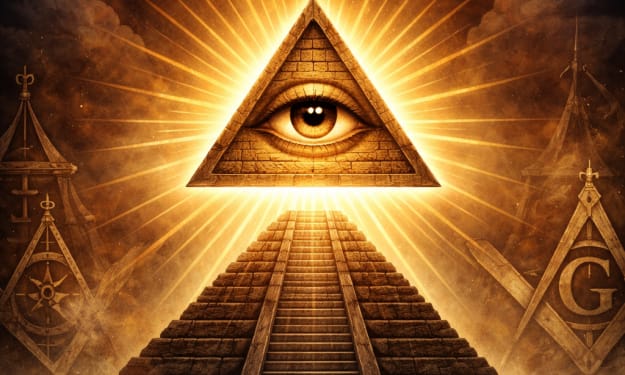
A Symbol Linked to Freemasonry and the Illuminati
The Eye of Providence, often referred to as the “All-Seeing Eye,” is one of the most recognized and debated symbols in the modern world. Depicted as a single eye enclosed within a triangle and often surrounded by rays of light, this symbol has appeared in religious art, national emblems, and popular culture for centuries. However, in recent times, it has become strongly associated with secret societies such as the Freemasons and the Illuminati, fueling countless conspiracy theories about hidden power and global control.
By Irshad Abbasi 6 days ago in Horror



Comments
There are no comments for this story
Be the first to respond and start the conversation.