
"Jupiter's Breath: The Death That Ended Earth"
When the Gas Giant Evaporates, Every Breath Becomes Your Last
The Beginning of a Nightmare
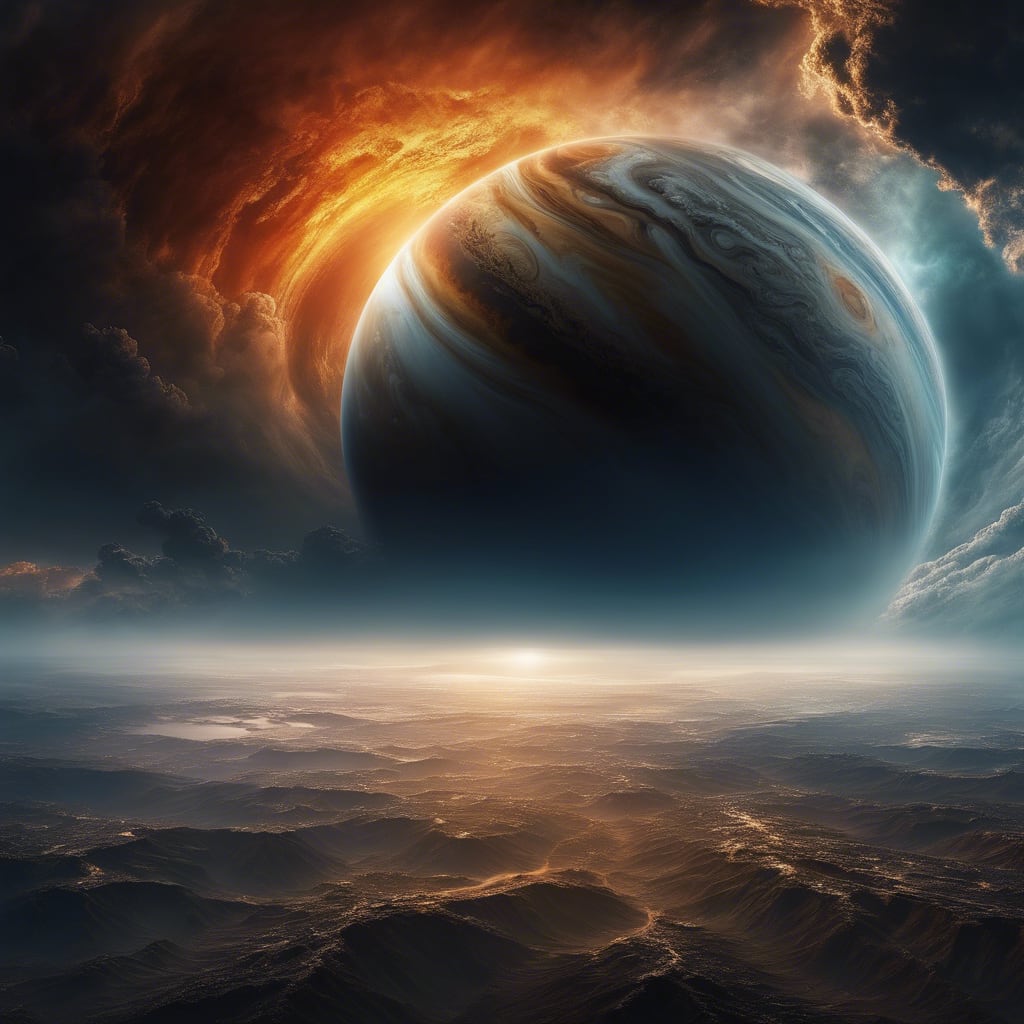
Jupiter, the behemoth of our solar system, has always loomed over Earth as a colossal guardian, its immense gravity protecting us from errant asteroids and comets. But in this dark twist of fate, that same gas giant—the largest planet in our celestial neighborhood—becomes our executioner. A mysterious force triggers a catastrophic event on Jupiter, causing its hydrogen and helium-rich atmosphere to destabilize. Slowly, the planet begins to evaporate, sending massive plumes of deadly gas spiraling into the solar system.
At first, the event is nothing more than a distant astronomical anomaly. But what begins as an eerie spectacle soon turns into a galactic horror, as Jupiter’s gases flood toward Earth like an unstoppable tidal wave of death.
The Poison in the Air
Jupiter’s atmosphere is made primarily of hydrogen, helium, methane, and ammonia, mixed with traces of other exotic chemicals. As the gas giant breaks apart, these toxic vapors billow outward, carried by solar winds and propelled by the sheer size and mass of Jupiter’s dying remnants. This slow, creeping wave of gas would take months to reach Earth—but once it did, there would be no escaping its poisonous grip.
The first signs of disaster would come in subtle, terrifying shifts. The sky would gradually take on a strange, sickly hue—pale yellows and greens, as particles from Jupiter’s vaporized atmosphere filter into ours. People would watch in stunned disbelief as the air itself begins to feel thicker, heavier, like an invisible noose tightening around the planet. Birds would fall from the sky, suffocating mid-flight as the oxygen around them becomes tainted with hydrogen gas.
Breathing would become labored, like inhaling fire and acid all at once. The gases would slowly erode the ozone layer, exposing Earth to lethal solar radiation. As the toxic cocktail settles into the atmosphere, entire ecosystems would begin to wither and die, suffocated by the very air they depend on.
But this is only the beginning.
The Slow, Agonizing Suffocation
Within days, humanity would descend into chaos. The air would become nearly unbreathable, a noxious mixture of hydrogen and ammonia that burns the lungs with every gasping breath. Hospitals would overflow with the dying, their skin blistered and eyes burning from the toxic fumes. Oxygen masks would become humanity’s last, fragile defense against a planet that had turned against them. But even these would prove to be futile as the gases continue to thicken, permeating every nook and cranny of the Earth’s atmosphere.
Plants, unable to photosynthesize in the poisoned air, would die en masse. The global food chain would collapse within weeks. Starvation would sweep across the world as crops rot in the fields, suffocated by the invisible poison drifting down from the heavens. Even the oceans would not be spared. The waters would become stagnant and dead, as fish and marine life rise, belly-up, to the surface, killed by the rapidly depleting oxygen levels.
The terrifying part? There would be no escape. Unlike a traditional disaster—where fleeing to another part of the planet could save you—this apocalypse would be global, inescapable. The toxic gases from Jupiter would blanket the entire Earth, turning it into a planet-wide gas chamber.
People would huddle in basements, makeshift shelters, desperate to avoid the invisible death creeping in through every crack. But slowly, inevitably, the gas would seep in, filling lungs and turning every breath into a choking, agonizing struggle for survival.
The Collapse of Civilization
As the world gasps for air, society would unravel. Governments, powerless to stop the toxic assault, would fall apart as panic takes hold. Streets would become battlegrounds as people fight for what few oxygen tanks remain. Gangs would form, raiding homes and hospitals for any last chance at clean air.
Technology would fail—communications severed as satellites plummet from the sky, electronics short-circuit from the electromagnetic chaos in the upper atmosphere. Cities, once bustling with life, would become graveyards filled with the rotting corpses of those who succumbed to the poisonous gases. The dead would pile up in the streets, their bodies twisted and contorted in the final throes of suffocation.
The air would become thick with the stench of decay, mixing with the toxic gases in a grotesque mockery of life’s final moments. With no clean air to breathe, survivors would collapse one by one, their lungs filled with Jupiter’s fatal breath.
The Sky Burns
As if the suffocating gases weren’t enough, Earth would be subjected to another terrifying consequence of Jupiter’s death—fire. The hydrogen from Jupiter’s atmosphere, now swirling thick in our own, is highly flammable. All it would take is one stray lightning strike, one spark from a crumbling power grid, and the skies would ignite.
Fires would rage uncontrollably, as the very air above Earth burns. Firestorms would engulf entire cities, with towering flames consuming everything in their path. The hydrogen-rich atmosphere would act like gasoline, fueling the inferno as it spreads across continents.
People would flee in terror, only to suffocate or burn in the streets. There would be no shelter from the blaze, no place safe from the toxic firestorms that reduce the world to ash and ruin. The night sky, once dotted with stars, would glow an eerie orange, lit by the endless flames devouring what little remains of civilization.
A Dead, Silent Earth
As the fires burn out, and the toxic gases finally settle, Earth would be left a lifeless wasteland. The once-blue skies would be permanently clouded by a thick, yellowish haze—remnants of Jupiter’s atmosphere that would linger for centuries, perhaps millennia. The oceans, now poisoned and stagnant, would turn green and putrid. Forests, jungles, and grasslands would be nothing more than charred ruins.
Humanity, once proud and dominant, would be extinct. Every species, every trace of life, would have been erased by the unrelenting poison that drifted down from a planet we once thought of as distant and harmless. Earth would become a dead world, its surface scorched and uninhabitable, its atmosphere a swirling, toxic mix of Jupiter’s remnants.
There would be no recovery, no second chance. The cosmic scales would have tipped against Earth in the most brutal, unforgiving way. As the gas giant fades into nothingness, Earth would be left as a grim reminder of how fragile life truly is in the vast, indifferent universe.
In the end, we would be just another lifeless planet, suffocated by the toxic breath of a dying giant, forgotten in the endless expanse of space. And Jupiter, once a distant protector, would have claimed us all in its final, devastating act of cosmic annihilation.
About the Creator
Cosmic Dread
A cosmic horror writer. I blend real science with chilling possibilities, exploring the terrifying forces of the universe—black holes, rogue planets, and cosmic horrors lurking in the cold void of space.
Keep reading
More stories from Cosmic Dread and writers in Horror and other communities.
"The Saturn Apocalypse: Earth’s Final Reckoning"
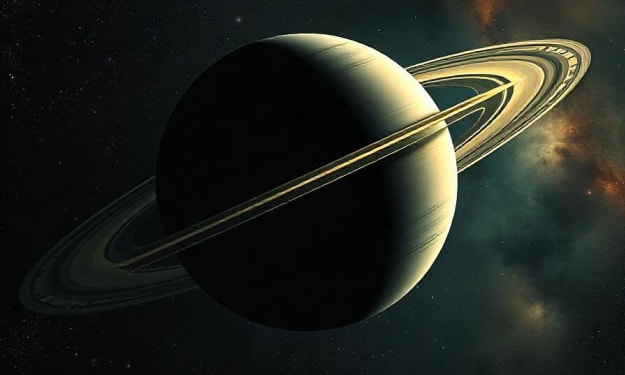
Saturn—one of the most iconic planets in our solar system, renowned for its magnificent rings—has long fascinated scientists and the public alike. Its tranquil presence, millions of miles away, has lulled humanity into a false sense of security. But what if that peace were to be shattered? Imagine a catastrophic event where Saturn, a gas giant nine times wider than Earth, begins to disintegrate. The consequences of such an astronomical disaster would be unimaginably terrifying, and Earth would be thrust into a cosmic nightmare.
By Cosmic Dreadabout a year ago in Horror



Comments
There are no comments for this story
Be the first to respond and start the conversation.