
Fort Rotterdam: Indonesia's Fortress of Tears
The Brutal Colonial History and Enduring Ghost Stories Trapped Within Makassar's Walls

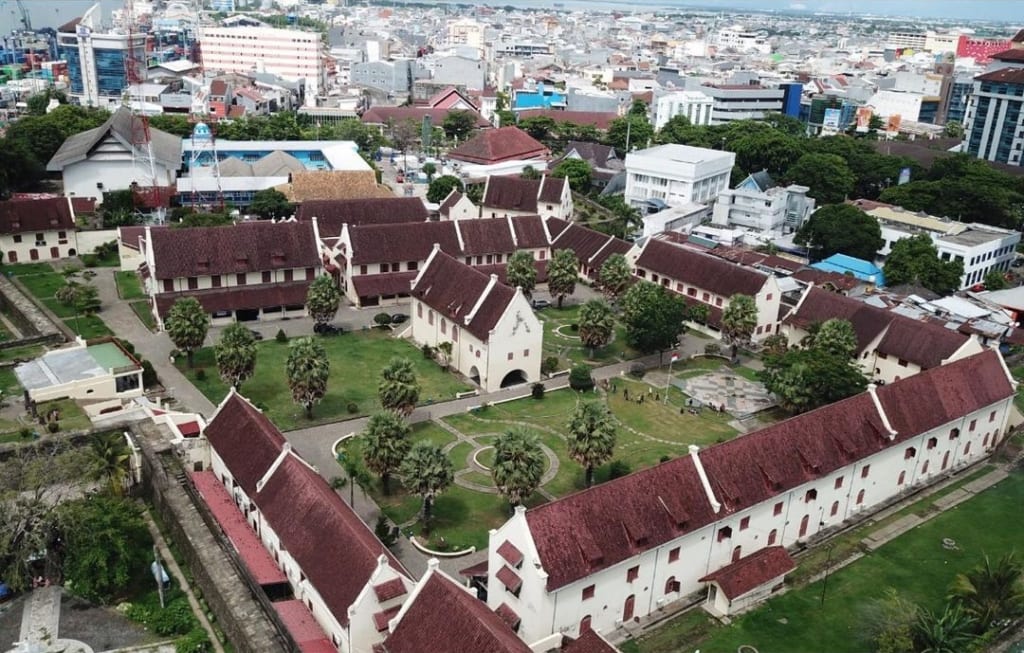
Guarding the Makassar coast of South Sulawesi stands Fort Rotterdam, larger than Indonesia's best-preserved Dutch colonial fort. Its three-century-old sea-turtle-shaped walls (Benteng Penyu) are beset with sorrowful history and whispered secrets of troubled ghosts, making it the nation's spookiest place to visit.
A Fortress Forged in Blood and Treaty (1545–1679)
The fort is not Dutch in origin, but the powerful Gowa Kingdom. King I Manrigau Daeng Bonto Karaeng Lakiung Tumapa'risi' Kallonna (the 9th Gowa King) constructed the original fortress in 1545, naming it Jum Pandan or Ujung Pandang, which was inspired by the pandanus trees which grew on the land. Constructed of stone, clay, and arrogant Makassarese hearts, its turtle shape was symbolic of a kingdom that dominated land and sea.
This strategic seaport town became an incendiary device. Centuries of war came to an end in defeat for the grand Sultan Hasanuddin in the Makassar War (1666-1669). The disabling Treaty of Bongaya (1667) forced the Gowa to cede Ujung Pandang to the Dutch East India Company (VOC). Under VOC Admiral Cornelis Speelman (redesignated from his Dutch hometown, Rotterdam), the fortress was redesigned from top to bottom. Between 1673 and 1679, the Dutch engineers reconstructed it as a powerful stone fortress with five (later six) bastions, 7-meter-high walls, and a 2-meter-deep moat – today's imposing building. It was the brutal nerve center of Dutch domination of Eastern Indonesia.
Whispers of Captivity and Suffering
Fort Rotterdam's stones soaked up centuries of pain:
Prince Diponegoro's Prison: Following the Java War (1825-1830), Javanese prince and national hero was jailed here. He endured 26 years of imprisonment (1830-1855) in the fort's damp southeast cells until his death, a gross injustice to forever stain its walls.
World War II Torture: Under Japanese occupation, the fort became a heartless prisoner-of-war camp, another chapter of man's torment to be added to its somber history.
Lasting Symbolism: Centuries of colonial rule, from the VOC's monopoly over spices to the imprisonment of dissidents, seeped into the very ground of the fort, infusing the atmosphere with an aura that many perceive as heavy with unhealed trauma.
The Lingering Spirit: The Legend of Satan Sumiati
While Fort Rotterdam's history is concrete, its most legendary ghostly resident is Satan Sumiati. This chilling urban legend, well-established in Makassar's modern lore, burst into fame in the 1990s.
A Tragedy in Red: Sumiati's backstories vary, but the tragedy underlying them is the same. Most place her in the Dutch colonial era or in mid-20th-century times. She was a beautiful woman from Pinrang, and she had migrated to Makassar with her sailing husband. Her beauty had unwanted consequences. One dark night, a man in unique red attire brutally raped her. She was unable to identify her perpetrator other than the red attire, and being pregnant due to rape, Sumiati felt shame. She chose death by hanging herself at the area of Fort Rotterdam.
The Haunting: Sumiati’s spirit found no peace. She became known as Satan Sumiati, a vengeful female ghost specifically targeting men. Legend insists she manifests only to men wearing red clothing, perhaps eternally seeking her attacker or projecting her rage onto all men reminiscent of him.
Chilling Encounters: Reports of sightings peaked in the 1990s. One of the most famous tales tells of a motorcyclist late at night outside the fort and seeing a woman flagging down for a ride. He ignored her, zooming away, only to discover her reappearing in front of him. Looking down, he noticed she had no feet – she was hovering. In his rearview mirror, he saw her flying behind him until he managed to escape barely alive. Her presence is also linked to the nearby Pelamonia Hospital (where her body purportedly was taken away) and her burial place at Beroanging area.
Residual Energy: Beside Sumiati, tourists and staff report rampant sensations of being watched, drafts with abrupt cold, and unexplained shifting shadows within the old barracks and prison blocks, particularly in rooms related to Diponegoro's detention and the Japanese POW camp.
Where History and Hauntings Converge
Now a restored cultural center (completely refurbished in the 1970s), Fort Rotterdam is a home to museums like La Galigo, a festival site, and a tourist attraction. Yet, its past is inevitable. The imposing Bastions (Bonie, Boeton, Batjang, Mandassar, Amboina), the central church building, and the restored VOC officials' quarters are reminders of colonial superiority, with the surviving prison cells reciting desperation stories. This potent mix of concrete, sometimes brutal history and the ageless, visceral legend of Sumiati secures Fort Rotterdam's niche. It is a place where the line between the documented past and spectral present blurs, and where it is not just a monument in stone, but an unsettling account of the still-unhealed echoes of centuries of human strife.
About the Creator
Kyrol Mojikal
"Believe in the magic within you, for you are extraordinary."
Keep reading
More stories from Kyrol Mojikal and writers in Horror and other communities.
Ghost Palace Hotel Bali: Haunted History of Bedugul’s Abandoned Resort
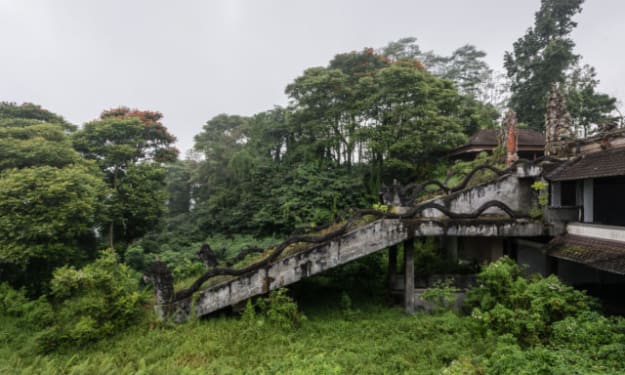
A Monument to Corruption: The Tragic History of the Hotel Perched above the foggy highlands of Bedugul, the Ghost Palace Hotel (officially PI Bedugul Taman Rekreasi Hotel & Resort) is a decaying monument to greed, political corruption, and ghostly legend. It began in the early 1990s as a side project of Indonesia's then-authoritarian leader President Suharto's youngest son, Tommy Suharto. Thought out as a high-end retreat overlooking Lake Buyan, the hotel was showy Balinese in design: stairways lined by snakes, marble floors, and balconies with floor-to-ceiling windows overlooking sensational views of volcanic peaks and rice paddy fields.
By Kyrol Mojikal6 months ago in Horror
One to See, One to Speak, One to Listen
Contains gore and horror some readers may find disturbing. Rated 14+ Author's Intro: This story is meant to revive the Gothic literature so famously crafted by one of my favourite writer's, Edgar Allen Poe, and as such, the language and style is deliberately antiquated. Thank you for reading my all time favourite work of horror - Les
By Call Me Les19 days ago in Horror
Stories Told At Twilight
A 300-word flash fiction regarding the above image: She never realized the pale blue of her eyes until now. Pressing the palm of her hands against the cold porcelain sink, she sank deeper into her own gaze. Her eyes were not only pale but striking.
By JB Inglandabout 12 hours ago in Horror
Wild Card Weekend Recap: What Happens Now?
I think I figured out why I love Wild Card Weekend so much. It's because it's the first playoff anything of the calendar year. The NFL season starts in the fall, and once upon a time, the champion was crowned either on or slightly before New Year's. The evolution of the NFL schedule has resulted in the playoffs starting just into the New Year, and currently, the final week of the season falls on the first weekend of the New Year, with Wild Card Weekend coming a week after that. So yes, chronologically, the NFL's Wild Card Weekend serves as the first playoff anything of the calendar year.
By Clyde E. Dawkins6 days ago in Unbalanced



Comments
There are no comments for this story
Be the first to respond and start the conversation.