
Ezana the Great
Ezana the Great: The Aksumite King Who Transformed an Empire
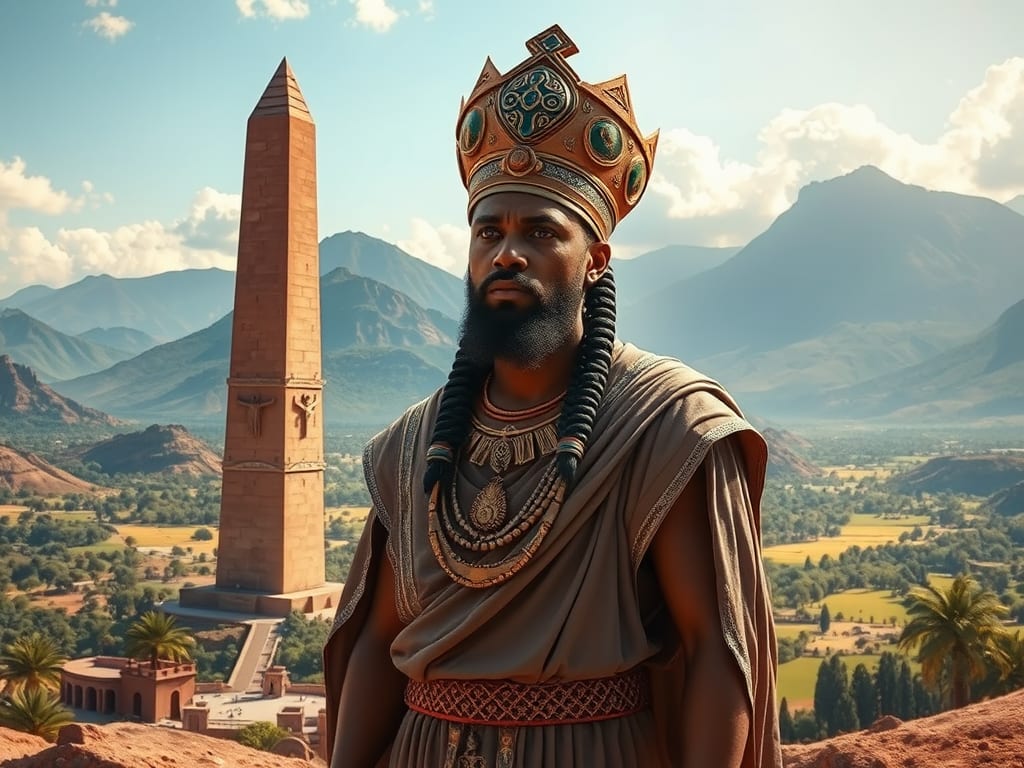
Ezana the Great: The Aksumite King Who Transformed an Empire
Introduction:
In the annals of African history, few figures stand as tall and influential as King Ezana of the Aksumite Kingdom. Ruling in the 4th century AD, Ezana oversaw a period of profound transformation, ushering in Christianity as the state religion, expanding Aksum's influence through military campaigns, and leaving behind a legacy of inscriptions that provide invaluable insights into his reign. This is the story of Ezana the Great, the Aksumite king who reshaped an empire and left an indelible mark on the history of Ethiopia and the Horn of Africa.
Aksum: A Powerful Kingdom at the Crossroads of Civilizations:
Before delving into Ezana's reign, it's important to understand the context of the Aksumite Kingdom. Aksum, located in modern-day Ethiopia and Eritrea, was a powerful trading empire that flourished from the 1st to the 7th centuries AD. Its strategic location along major trade routes connecting the Roman Empire, Egypt, and the Arabian Peninsula made it a hub for commerce, culture, and religious exchange.
Aksumite society was sophisticated and well-organized, with a complex administrative system, a thriving agricultural sector, and a strong military. The Aksumites were skilled builders, constructing impressive monuments, including towering obelisks (stelae), elaborate palaces, and well-engineered irrigation systems.
Ezana's Conversion: A Turning Point in Aksumite History:
The defining event of Ezana's reign was his conversion to Christianity. While the exact circumstances surrounding his conversion remain debated, the most widely accepted account involves Frumentius, a Syrian Christian who was shipwrecked on the Aksumite coast and became a trusted advisor to the royal court.
Frumentius, along with another Syrian Christian, Aedesius, gradually introduced Christianity to the Aksumite elite. They were eventually given permission to build churches and preach their faith openly. When Ezana ascended to the throne as a minor, his mother, Queen Sophia, acted as regent and continued to support the spread of Christianity.
Ezana's eventual conversion to Christianity marked a turning point in Aksumite history. He declared Christianity the state religion, making Aksum one of the first Christian kingdoms in the world. This decision had profound implications for Aksumite society, culture, and politics, shaping its identity for centuries to come.
Military Campaigns and Expansion of Aksumite Power:
Ezana was not only a devout Christian but also a skilled military leader. He launched several successful military campaigns that expanded Aksumite territory and consolidated its power in the region.
His most famous military campaign was against the Kingdom of Kush, a rival kingdom located to the west of Aksum in modern-day Sudan. Ezana's forces decisively defeated the Kushites, conquering much of their territory and effectively ending their independence.
Ezana also launched campaigns against other neighboring kingdoms, solidifying Aksum's control over trade routes and expanding its sphere of influence throughout the Horn of Africa.
The Inscriptions: Ezana's Enduring Legacy:
One of the most valuable sources of information about Ezana's reign are the inscriptions that he left behind. These inscriptions, written in Ge'ez (an ancient Semitic language), Greek, and Sabaean, provide invaluable insights into Ezana's religious beliefs, military campaigns, and administrative policies.
The inscriptions reveal that Ezana saw his conversion to Christianity as a divine mandate to spread the faith and expand his kingdom. He attributed his military victories to the assistance of God and proclaimed his commitment to justice, righteousness, and the protection of his people.
The Ezana Stone, a particularly important inscription, provides a detailed account of his military campaigns against the Kingdom of Kush and his efforts to convert the conquered population to Christianity.
Transforming Aksum: A Christian Kingdom with a Unique Identity:
Ezana's conversion and his subsequent policies transformed Aksum into a unique Christian kingdom, distinct from its Roman and Byzantine counterparts.
Development of Ge'ez Script: While Ge'ez was spoken before his reign, under Ezana, Ge'ez began to be used as a written language and became the official language of the Aksumite court.
Iconography: Aksumite art and architecture began to reflect Christian themes, with churches, crosses, and other religious symbols becoming prominent.
Syncretism: While embracing Christianity, Ezana and his successors also incorporated elements of traditional Aksumite beliefs and practices into their faith, creating a unique blend of Christian and indigenous traditions.
International Relations: Aksum established close diplomatic and trade relations with the Roman Empire and other Christian powers, further solidifying its position as a major player in the ancient world.
Conclusion:
King Ezana the Great was a transformative figure in Aksumite history, a ruler who skillfully combined religious devotion, military prowess, and administrative skill to reshape an empire. His conversion to Christianity marked a turning point for Aksum, transforming it into one of the first Christian kingdoms in the world and laying the foundation for the rich Christian traditions that continue to thrive in Ethiopia today. His legacy, preserved in stone inscriptions and remembered through centuries of oral tradition, ensures that Ezana the Great will forever be celebrated as one of Africa's most influential and transformative leaders.
About the Creator
The Politics of Playing Dress-Up
Well, to start off I'd like to say a happy world book day to all who celebrate. I know I haven't really posted anything on my socials about it but I'm not a jubilant kind of person. I lay low most of the time. Let's start off with a popular anecdote from the vaults...
By Annie Kapur5 days ago in Geeks



Comments
There are no comments for this story
Be the first to respond and start the conversation.