
Exorcism
Understanding the Practice and its Controversies

Introduction
Exorcism is a religious practice that involves the expulsion of evil spirits or demons from a person or place. The practice has its roots in ancient cultures and has been present in many religions throughout history, including Christianity, Judaism, and Islam. In recent times, the topic of exorcism has been the subject of much debate and controversy. In this article, we will discuss the history and practice of exorcism, the controversy surrounding it, and the psychological explanations for possession.
History and Practice
Exorcism has been practiced in various cultures and religions throughout history. The ancient Egyptians, Greeks, and Romans all had rituals and practices to expel evil spirits. In Christianity, exorcism is recognized as a rite of the church and is performed by a priest. The Catholic Church has a set of guidelines for exorcism known as the Rituale Romanum, which was first published in 1614 and updated in 1999. The rite includes prayers and blessings, as well as the use of holy water and the sign of the cross.
Exorcism is performed when a person is believed to be possessed by an evil spirit or demon. The person may exhibit unusual behavior, such as speaking in tongues, displaying superhuman strength, or showing a lack of response to pain. The exorcist will perform the rite and command the spirit to leave the person's body. The exorcism can take several hours or even days to complete, and in some cases, multiple exorcisms may be required.
Types of Exorcism
There are several different types of exorcism, each with their own specific rituals and practices. Some of the most common types include:
1. Formal exorcism: This is the most well-known type of exorcism and is typically associated with the Catholic Church. It is a formal rite that is performed by a priest, and it includes prayers, blessings, and the use of holy water and the sign of the cross.
2. Deliverance ministry: This type of exorcism is often associated with Evangelical Christianity and Pentecostalism. It is performed by a minister or lay person, and it focuses on "delivering" the person from the influence of evil spirits or demons. This may involve the use of prayers and the laying on of hands.
3. Shamanic exorcism: This type of exorcism is practiced by indigenous cultures and shamans. It is based on the belief that possession is caused by a spiritual imbalance and that the shaman can restore balance by communicating with the spirits. This may involve rituals such as singing, dancing, and the use of traditional medicines.
4. Islamic exorcism: This type of exorcism is practiced in the Islamic faith. It is based on the belief that possession is caused by the influence of jinn (supernatural spirits) and can be cured by reciting specific verses from the Quran and performing rituals such as ablutions and fasting.
5. Hindu exorcism: This type of exorcism is practiced in Hinduism. It is based on the belief that possession is caused by the influence of evil spirits and can be cured by performing rituals such as puja (worship), reciting mantras, and offering sacrifices.
It is important to note that the effectiveness of exorcism is often controversial and not scientifically proven. It is recommended to seek professional help if you believe you or someone you know may be experiencing possession or any other mental health issues.
Controversies
Exorcism has been the subject of much debate and controversy, with many experts questioning its effectiveness and even suggesting that it can be harmful. One of the main concerns is that exorcism can be used as a tool of manipulation and control, particularly in cases where the person is not actually possessed but is experiencing a mental illness. In such cases, exorcism can worsen the person's condition and delay appropriate medical treatment.
Another concern is that exorcism can be dangerous, both physically and emotionally. The person may be restrained during the exorcism, which can cause injury, and the exorcism itself can be emotionally traumatic. In some cases, exorcisms have even resulted in death.
Psychological explanations
Exorcism is often associated with possession, but many experts believe that the phenomenon can be explained through psychological and psychiatric means. Possession is often associated with mental illnesses such as schizophrenia, bipolar disorder, and dissociative disorders. These disorders can cause symptoms that resemble possession, such as hearing voices and experiencing hallucinations.
Additionally, possession can be caused by traumatic experiences, such as abuse or neglect. In such cases, the person may dissociate from reality and create a separate persona to cope with the trauma. This persona may be perceived as an evil spirit or demon by the person and others.
Conclusion
Exorcism is a religious practice that has been present in many cultures and religions throughout history. However, the effectiveness and safety of exorcism have been the subject of much debate and controversy. While some believe in its power to expel evil spirits or demons, others argue that possession can be explained through psychological and psychiatric means. It is important to understand that exorcism can be harmful and can delay appropriate medical treatment. It is important to seek professional help if you believe you or someone you know may be experiencing possession or any other mental health issues.
About the Creator
Keep reading
More stories from 20CS063- Kishor Kumar.R and writers in Horror and other communities.
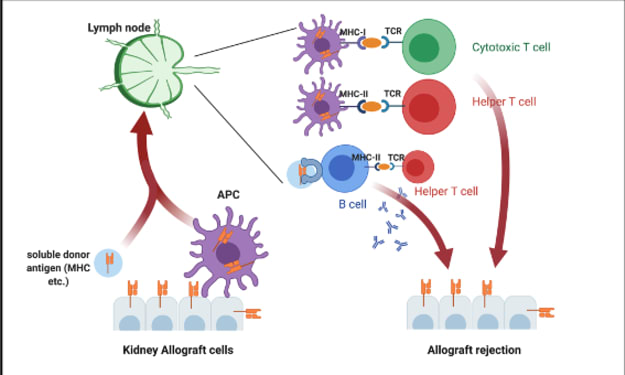
T-Cell Mediator Rejection:
Introduction Transplantation is a medical procedure that involves the replacement of a damaged or diseased organ or tissue with a healthy one from a donor. It has saved countless lives and improved the quality of life for many individuals. However, one of the main obstacles in transplantation is the body's immune system, which can reject the transplanted tissue or organ. T-cell mediator rejection is a type of rejection that occurs when T-cells, a type of white blood cell, attack the transplanted tissue. This type of rejection is typically seen in solid organ transplants, such as heart, lung, and kidney transplants, and it can also occur in bone marrow transplants. In this article, we will explain the role of T-cells in the immune system, what T-cell mediator rejection is, the symptoms and diagnosis, and the treatment options available.
By 20CS063- Kishor Kumar.R3 years ago in FYI
The Giant Who Never Spoke
The rain was coming down in sheets that night, drumming on the old tin roof like impatient fingers, and I was maybe twelve, curled up on the porch swing with a blanket that smelled like pipe tobacco and my granddad’s coat. He didn’t talk much anymore-age had stolen most of his words-but stories? Those he still had. He’d lean back in his rocker, eyes half-closed, and let them spill out slow, like molasses in January.
By KWAO LEARNER WINFRED7 days ago in Horror


Comments
There are no comments for this story
Be the first to respond and start the conversation.