
The Giant Who Never Spoke
A forgotten network, nine crushed throats, and the cotton bowls left as signature

The rain was coming down in sheets that night, drumming on the old tin roof like impatient fingers, and I was maybe twelve, curled up on the porch swing with a blanket that smelled like pipe tobacco and my granddad’s coat. He didn’t talk much anymore-age had stolen most of his words-but stories? Those he still had. He’d lean back in his rocker, eyes half-closed, and let them spill out slow, like molasses in January.
That particular evening he started with a question that hung in the humid air: “You ever wonder what silence can do when it gets angry?” I shook my head, wide-eyed. Then he told me about Big Jacob.
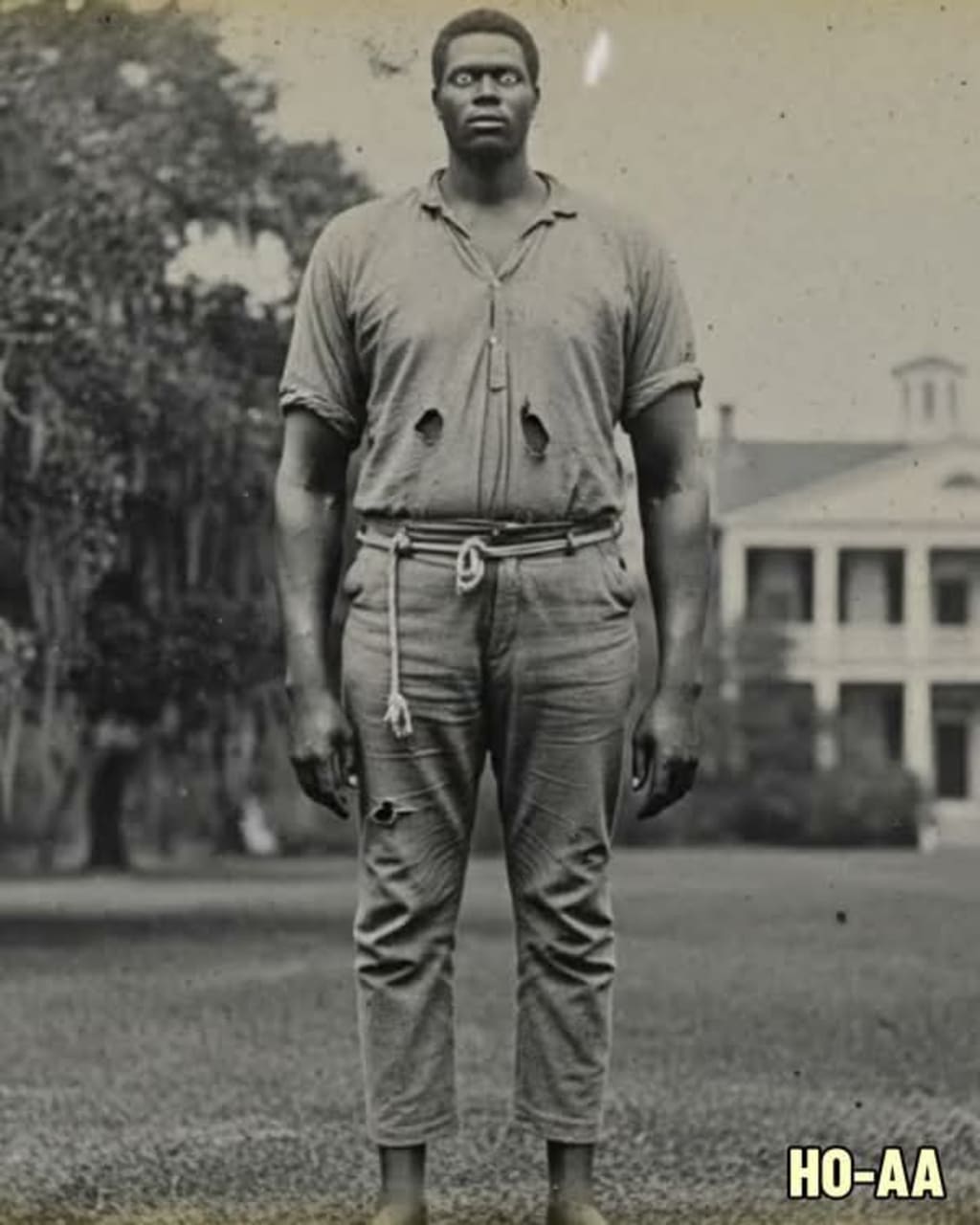
Picture this: Alabama, late 1840s. Cotton fields stretching forever under a merciless sun. Plantations with white columns and bigger shadows. And moving through them, silent as fog, a man they called Big Jacob. Not just tall-seven feet of him, maybe more, shoulders wide enough to block doorways, hands that could palm a watermelon like it was an apple. Skin dark as polished mahogany, eyes pale gray, almost silver in the lantern light. Born mute. Never spoke a word in his life. But oh, he communicated.
It started small, the way these things do when history tries to bury them. June 1847, Savannah auction block. Jacob’s sold to Cornelius Vaughn of Sweet Gum Plantation. Vaughn liked the quiet ones-no backtalk, no organizing. Paid top dollar-$850, a fortune. Thought he’d bought himself a prize field hand. What he got was something else entirely.
September 3rd that year, Vaughn’s found in his four-poster bed. Door locked from the inside. Windows shut tight. No footprints, no broken glass. Just his body, face swollen purple, throat collapsed like someone had squeezed it with industrial force. Hyoid bone shattered. Larynx pulped. And in his right hand? His own tongue, placed there neat as you please. Around the bed, seven little bowls of raw cotton arranged in a perfect semicircle. Like a message. Like a warning.
The doctor muttered “apoplexy.” The papers printed it. But folks knew. Whispers started.
A month later, Thaddius Reinhardt over at Fair Hope. Same thing. Crushed windpipe. Cotton bowls. Tongue in the hand. Reinhardt had bought Jacob cheap after Vaughn’s funeral-$600, bargain for a giant. Jacob was gone by morning, resold down the line.
You see the pattern creeping in? I did, even as a kid. Jacob gets sold. New master dies horribly within weeks. Jacob gets sold again. And again. Nine times in eighteen months. Nine masters dead. Josiah Grantham at Elmwood. William Sturdivant, who barred his doors and posted guards-didn’t matter. Nathaniel Harwick, whose tongue they found folded in both hands like he was praying. Preston Deain, the last one, who tried to sell off his slaves and run.
Each time, the scene was the same. Locked rooms. No struggle. Enormous strength applied with surgical precision. And always that cotton-symbol of the empire built on their backs-arranged like ritual.
Granddad paused here, lit his pipe, let the smoke curl. “Wasn’t just one man,” he said quietly. “Couldn’t be. Not even a giant.”
Turns out, there was a network. Survivors. People who’d been branded with “SC” years earlier-Samuel Colton’s mark. Colton, a brutal trader, had fathered Jacob on a tall West African woman he later killed. Young Jacob, barely ten, had climbed the rafters of Colton’s house one night and dropped. One squeeze. Colton dead. The boy sold away. But he remembered. And over decades, others remembered too. Men and women with the same brand, the same gray eyes sometimes. They passed messages at auctions, through songs, through glances. Positioned Jacob where the cruelest masters were. Used the very system that tore families apart to deliver justice.
I get this funny feeling in my gut thinking about it now. A mix of awe and nausea. Imagine the patience. The planning. Four million people in chains, treated worse than livestock, and a handful build this quiet machine. Invisible. Untraceable. Terrifying because it proved the powerful weren’t untouchable.
They caught him eventually. September 1848, at Deain’s place. Bounty hunter Marcus Pettigrew led the patrol. Chained Jacob to a post in the stable. He just stood there all night, eyes open, unblinking. Didn’t fight. Didn’t plead. Dawn came. They hanged him and seven others from the network. Quietly. No big trial. No records that lasted. One more caught the next year. One vanished like smoke.
But the legend didn’t die. It lived in cabins, whispered after lights-out. Big Jacob the Silent. The one who never needed words to make the masters afraid to sleep.
Years later, coffee gone cold on my desk, I still hear my granddad’s voice in the rain. Part of me admires the sheer nerve-the way the voiceless found a voice in violence. Another part wonders where the line is. Was it justice? Or just more ghosts added to the pile?
History scrubbed most of it, of course. Called it fever, apoplexy, coincidence. But stories like this don’t stay buried. They seep up through the cracks.
So here’s what I keep coming back to: if silence can be that loud, that deadly… what else might be waiting in the quiet places we never look? Would you have listened closer to the old tales on the porch? Or turned up the lantern and pretended you didn’t hear the floorboards creak overhead?
About the Creator
KWAO LEARNER WINFRED
History is my passion. Ever since I was a child, I've been fascinated by the stories of the past. I eagerly soaked up tales of ancient civilizations, heroic adventures.
https://waynefredlearner47.wixsite.com/my-site-3
Keep reading
More stories from KWAO LEARNER WINFRED and writers in Horror and other communities.
When the Chainsaw Was Born in Blood
Have you ever woken up in the dead of night, heart pounding, convinced something's just... off? Like the air's too still, or there's a shadow where there shouldn't be? Yeah, that gut-twisting moment hit me hard the other day when I stumbled across this old video from MrBallen-the guy who spins those strange, dark tales that stick with you long after the screen goes black. It got me thinking about how real life can out-creep any ghost story. You know, the kind of stuff that makes you double-check your locks. So, buckle up; I'm about to unpack three wild, true accounts from that vid, each one weirder and more unsettling than the last. Let's dive in, shall we?
By KWAO LEARNER WINFRED2 months ago in Horror
"Scream 7" (2026): Running out of Fresh Screams
This is the seventh time we’ve had a Ghostface crisis. Scream 7 is the latest edition of the Scream franchise. Sydney Prescott and her family are under attack by another anonymous killer dressed in a Ghostface costume. While having issues with her daughter, Tatum, they run from the bloody murders, trying to determine who is behind it all.
By Marielle Sabbag3 days ago in Horror
Hello, Goodbye, Dad
I found the medium online, through a Facebook group. We made arrangements to meet. Her name was Delores Debato. She was big, fat, lumpy woman, with a freckled cheeks and bright red hair. She had a lot of tattoos, including eyeballs on the back of each hand.
By Lightning Bolt ⚡4 days ago in Horror



Comments
There are no comments for this story
Be the first to respond and start the conversation.