
Chaonei No. 81: The Most Haunted House in Beijing
Inside the Chilling History and Ghost Stories of China’s Mysterious Mansion

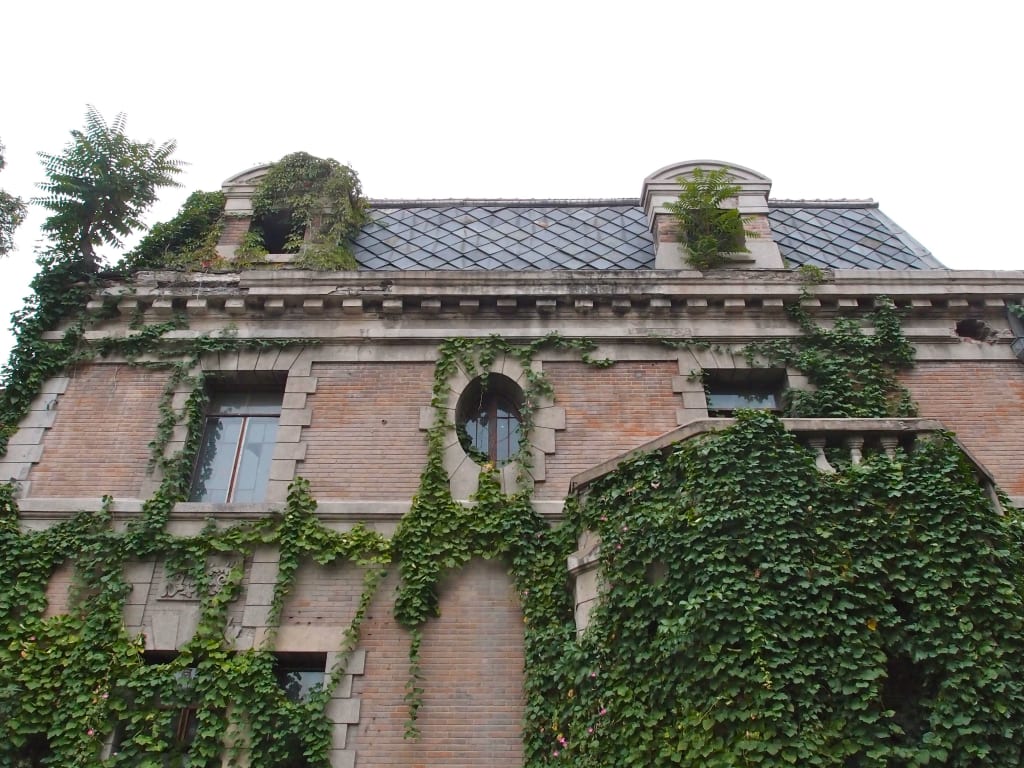
Chaonei No. 81, situated at Chaoyangmen Inner Street in Beijing, is among China's most famous haunted houses. The three-storeyed brick mansion, built in French Baroque revival style during the early twentieth century, is a protected historical building owned by the Roman Catholic Archdiocese of Beijing. While architecturally notable, it was missing archive records and the building's long, degraded silence that stirred the public imagination—prime for speculation.
The house's early history is unclear. Some estimate construction around 1910 as the North China Union Language School, where Mandarin was studied by Western missionaries; others state it was used as a residence for railway officials or missionary clinics in the Republic era. By the 1930s and 1940s the property appears to be associated with Catholic groups, and since 1949 it has been used by successive government departments. Doubt over ownership through eventful decades allowed stories to multiply.
An integral component of the legend is a sorrowful female. The most common account is that a Kuomintang officer fled from Beijing in 1949 and left behind his wife or girlfriend in the house; the woman either committed suicide or vanished. The tale accumulated details over the years: children afraid to approach the gate, tenants who relocated after only a few nights, and rumors that Red Guards who occupied the building briefly during the Cultural Revolution left hastily, frightened. From the 2000s, urban explorers, photographers, and amateur ghost hunters started sharing the mansion's decrepit facades and interiors on the internet. Anecdotal "evidence" is plentiful: visitors described unusual footsteps, whispering, sudden cold spots on hot days, headaches or nausea that vanished after leaving, and occasional reports of lights or doors acting strangely when no one was present. These eyewitness accounts are compelling but uncontrolled.
The legend went mainstream after the 2014 domestic blockbuster release of the 3D horror movie The House That Never Dies, which drew inspiration heavily from Chaonei lore. The movie was a local hit and created waves of tourists, cosplay photographers, and investigators to visit the real address. The stampede of visitors pushed the diocese and city government to shut off access for safety concerns and to further conservation and rehabilitation plans for the property.
Skeptics offer practical explanations: settling old buildings creak and groan, experience intermittent electrical problems and critter-made noises; human psychology—suggestion and expectation—compounds ambiguous stimuli into compelling experiences. Microclimatic variation, shading patterns and masonry mass can make thresholds cooler than adjacent new construction, explaining some temperature claims. Nevertheless, the legend survives and still influences perception.
Regardless of whether the stories are literal truth, the legend of Chaonei No. 81 has had real-life implications. The building sat vacant for decades; its ghostly reputation cooled marketability and made redevelopment plans complicated in a rapidly changing city. Eventually preservation efforts and commercial interest remade parts of the complex, but the mansion retained plenty of aura.
Other guests and local reporters have documented more precise incidents: a photographer who experienced unfelt breath on the back of his neck when alone in a stairwell; a nighttime guard who said that the temperature in a room dropped and his watch stopped; groups that claimed that when they recorded using phones the recordings had inexplicable audio artifacts. These accounts are still anecdotal but continue to provide the impetus for curiosity and research.
Chaonei No. 81 now holds a place between documented history and modern legend. Restoration and adaptive reuse have altered parts of the building, yet tales of vanished women, frightened residents and unexplained cold shivers still are told in Beijing. No matter if understood as actual paranormal occurrences or as myth culturally constructed, Chaonei No. 81 demonstrates how architecture, memory and rumor can conspire to forge a haunting that exceeds any single eyewitness experience.
About the Creator
Kyrol Mojikal
"Believe in the magic within you, for you are extraordinary."
Keep reading
More stories from Kyrol Mojikal and writers in Horror and other communities.
Kuchisake-Onna: The Terrifying History of Japan's Slit-Mouthed Woman
Of all the terrifying Japanese characters of folklore, the Kuchisake-Onna, or the "Slit-Mouthed Woman," is maybe the most terrifying and enduring. Her story is a complex blend of ancient myth and modern urban legend, a ghost whose history is as vague and malleable as the black it is said to haunt.
By Kyrol Mojikal4 months ago in Horror
"Scream 7" (2026): Running out of Fresh Screams
This is the seventh time we’ve had a Ghostface crisis. Scream 7 is the latest edition of the Scream franchise. Sydney Prescott and her family are under attack by another anonymous killer dressed in a Ghostface costume. While having issues with her daughter, Tatum, they run from the bloody murders, trying to determine who is behind it all.
By Marielle Sabbag5 days ago in Horror


Comments
There are no comments for this story
Be the first to respond and start the conversation.