
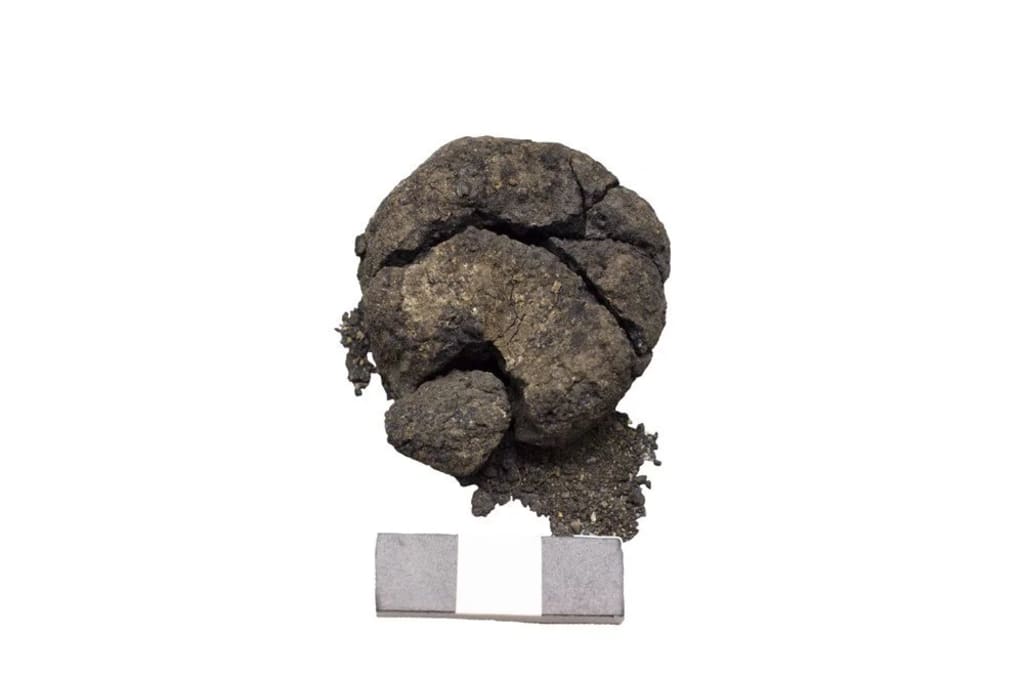
You’d think this was a rock
But no, this is bread that even time will not consume

Nearly 9,000 years ago, in what’s now central Turkey, there was a bustling proto-city named Çatalhöyük. It’s a hive of ancient human activity, one of the earliest urban experiments where around 8,000 people are living shoulder to shoulder. The houses are made of mud bricks, and the walls are alive with paintings and decorations that tell stories of a civilization long gone.
Now, fast forward to today, and imagine archaeologists brushing off the last bits of dirt from an incredible find. They’ve just uncovered the remains of what looks like… bread? Yep, you heard that right. In the middle of this Neolithic settlement, they’ve found evidence of a bakery that predates the invention of writing, the wheel, and even the first cities of Mesopotamia.
So, the oldest bread in the world isn’t like anything you find today. No chocolate or strawberry jam, just dust that has accumulated over 8600 years, completely discoloring the bread. We don't know who made this bread and how it tasted. One can only imagine the ancient past associated with this bread.
This isn’t just any old bread, though. This is a spongy, fermented relic that’s been sitting around since 6600 B.C. That’s older than the pharaohs of Egypt and the great Mesopotamian empires. It’s a snapshot of prehistoric cuisine, a window into how our ancestors lived and ate.
The discovery happened at a spot called “Mekan 66,” where the remnants of an ancient oven lay. Around it, they found grains like wheat and barley, along with peas and other seeds that might’ve been part of their diet. But the star of the show was this spongy residue analyzed by the folks at Necmettin Erbakan University’s BITAM. They confirmed it: this was bread, and not just any bread, but possibly the oldest example of leavened bread ever found.
Ali Umut Türkcan, the head honcho of the excavation team, is pretty stoked about the find. He says that when most people think of archaeology, they picture ruins and artifacts, but food archaeology is where it’s at. And Çatalhöyük? It’s a goldmine for this kind of research.
Türkcan explains that this tiny piece of bread, found snug in the corner of the oven and preserved under a layer of clay, is a big deal. It’s proof that our ancestors were baking bread way before anyone else that we know of. And thanks to some high-tech radiocarbon dating at the TUBITAK Marmara Research Center, they’ve pinned the bread’s birthday to around 6,600 BC.
It’s no surprise that the consumption of bread dates back to ancient times, since there’s evidence suggesting that humans have been eating bread for centuries. In fact, bread was a staple in ancient societies, particularly in the Middle East, where artistic depictions and remains of bread-making structures and dough have been found.
So, what’s the big fuss about this Turkish ancient bread? Well, it turns out that Çatalhöyük might just be home to the world’s oldest bakery. This bread wasn’t baked in the way we think of today; it was fermented, with a little dimple pressed in the center by someone’s finger. It’s a humble loaf, but it’s a loaf that’s seen millennia pass by.
Çatalhöyük has always been a place of firsts. It’s where people first experimented with urban living, where they first expressed themselves through wall art, and now, it seems, where they first figured out the magic of fermentation to make bread.
And the cherry on top? In 2012, this ancient hub of innovation was recognized by UNESCO as a World Heritage Site. It’s a testament to human ingenuity and a reminder that, in many ways, we’re not so different from those Neolithic bakers who, thousands of years ago, were making their daily bread in the heart of Turkey.
About the Creator
Ryo
Hello! I'm Ryo, a passionate writer with a love for weaving words into stories that resonate. Whether it's exploring the depths of human emotion or crafting compelling narratives, writing is not just my hobby, it's my calling.
An unidentified female dynasty is revealed in a tomb with the biggest collection of beads in the world.
The Montelirio Tholos Tomb is a vaulted building located beneath the present-day town of Valencina de la Concepción in Southwestern Spain that has the remains of residents who lived there between 2875 and 2635 BCE.
By Francis Dami2 days ago in History


Comments
There are no comments for this story
Be the first to respond and start the conversation.