
Sultan Muhammad Fatih: The Conqueror of the Impossible
How faith, knowledge, and vision led a young ruler to change world history
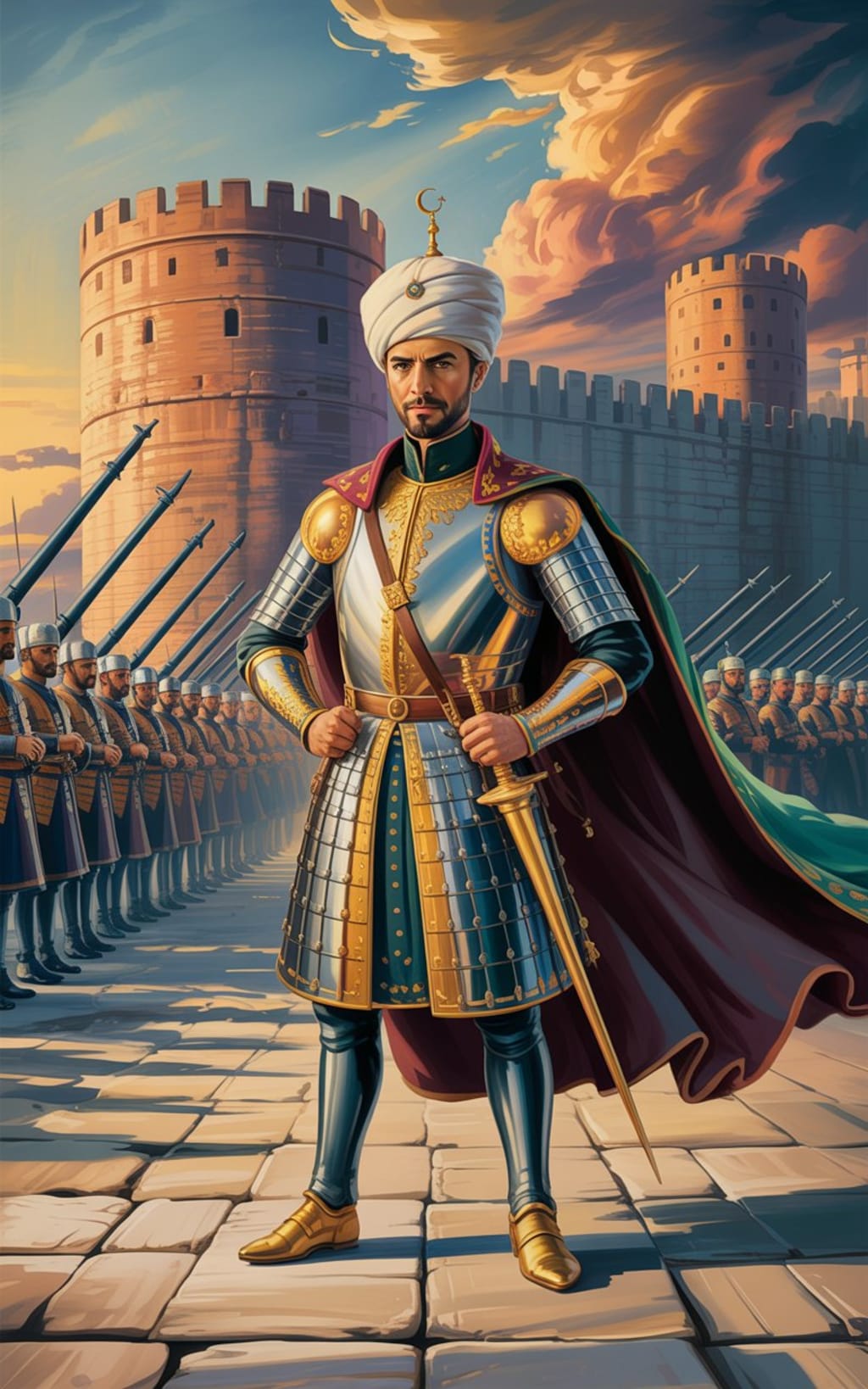
History remembers many kings, but only a few are remembered as great personalities—leaders whose character was as powerful as their conquests. Among them stands Sultan Muhammad Fatih, known to the world as Mehmed II, the Conqueror of Constantinople.
He was born in 1432, not into luxury alone, but into responsibility. From his earliest days, his destiny was whispered into his ears—not as a promise of power, but as a reminder of duty. His father, Sultan Murad II, understood that a ruler’s strength did not lie only in armies, but in wisdom, discipline, and faith.
Muhammad was not raised like an ordinary prince. His teachers were scholars, warriors, and spiritual guides. He studied the Qur’an, history, mathematics, astronomy, engineering, and military strategy. He learned several languages, including Arabic, Persian, Greek, and Latin. When other children played, Muhammad studied maps of ancient cities and read about past empires.
Yet, he was not always obedient or easy to teach. As a young boy, Muhammad was strong-willed and impatient. Many tutors failed to discipline him. It was only under the guidance of his mentor, Sheikh Akshamsaddin, that the boy’s heart was transformed. The Sheikh did not teach with fear alone, but with purpose. He reminded Muhammad of a famous prophecy of Prophet Muhammad (peace be upon him) about the conquest of Constantinople and the great leader who would achieve it.
From that moment, a fire was lit within the young prince.
At the age of 12, Muhammad briefly ascended the throne when his father abdicated. However, political pressure and external threats forced Sultan Murad II to return. This moment taught Muhammad a painful lesson: power without preparation is fragile. Instead of resentment, he chose patience. He returned to learning, training his body and sharpening his mind.
When Sultan Murad II passed away in 1451, Muhammad ascended the throne again—this time as a man of vision. He was only 19 years old, and many European rulers underestimated him, believing him to be young and inexperienced. They would soon learn how wrong they were.
Muhammad had one goal that consumed his thoughts: Constantinople.
The city stood like an unbreakable wall between continents, protected by massive fortifications and centuries of failed sieges. Many Muslim armies before him had tried and failed. Yet Muhammad believed that history favors those who prepare, not those who hesitate.
He spent two years planning.
He strengthened his navy.
He reorganized his army.
He studied the city’s defenses in detail.
Most importantly, he invested in innovation. He commissioned the construction of giant cannons, unlike anything the world had seen before. Critics laughed, but Muhammad trusted knowledge over mockery.
In 1453, the siege began.
For weeks, the walls of Constantinople resisted. The defenders fought fiercely, and morale within Muhammad’s camp was tested. Some advisors urged him to retreat. But Sultan Muhammad Fatih did not surrender to doubt. He walked among his soldiers, reminding them of their purpose, their faith, and their discipline.
Then came one of the most brilliant strategic moves in military history.
When the city blocked access to the Golden Horn with chains, Muhammad ordered his ships to be transported over land, across hills, and relaunched behind enemy lines. It was an act of vision that shocked the world.
On May 29, 1453, Constantinople fell.
Sultan Muhammad Fatih entered the city—not as a destroyer, but as a ruler. He ordered his soldiers to stop unnecessary violence. He ensured protection for civilians. He allowed freedom of worship and respected churches and scholars. Instead of revenge, he chose justice.
Standing inside the Hagia Sophia, he bowed his head in humility.
The boy who once struggled to focus had become a man who reshaped history.
But conquest did not corrupt him.
Muhammad Fatih ruled with balance. He encouraged education, science, architecture, and art. He welcomed scholars from different cultures and religions. Under his leadership, Constantinople—now Istanbul—became a center of civilization, learning, and coexistence.
Despite his power, he lived with discipline. He listened more than he spoke. He punished injustice, even when it came from his own officials. His greatness was not only in what he achieved, but in how he carried success.
Sultan Muhammad Fatih passed away in 1481, but his legacy did not fade with his death. He proved that age does not limit greatness, preparation defeats impossibility, and faith combined with knowledge can change the world.
He was not just the conqueror of a city.
He was the conqueror of fear, doubt, and limitation.
And that is why history remembers him—not merely as a sultan, but as a great personality.
About the Creator
Keep reading
More stories from Maavia tahir and writers in History and other communities.
When the Machine Learned to Remember
When the Machine Learned to Remember The city of Lumeris never slept. Even at dawn, when the sky turned pale silver and the streets emptied of night traffic, the city hummed softly—powered by EIDOLON, the most advanced artificial intelligence ever created. EIDOLON controlled everything: transportation, medical systems, climate stabilization, food distribution, law enforcement predictions, and even personal digital companions.
By Maavia tahir2 months ago in History
60 Seconds and Over the Top
Captain Montgomery was cold. It seemed to him that he was always cold. His boots were coated in a thick, cold mud. The air was cold on his face. The only time he wasn’t cold was when he was in the officer’s mess, sharing a bit of brandy with the other commanders. But the last drink they shared was weeks ago. Now half of those officers were over the top – lying in the muck and craters of no-man’s land, dead and left behind.
By Jonas Kraft7 days ago in History


Comments
There are no comments for this story
Be the first to respond and start the conversation.