


My grandfather, Lorenzo, arrived in Australia from the small alpine village of Zorzoi, community of Sovramonte, province of Belluno in Northern Italy on June 16, 1914. He was always very particular about letting us know exactly where we came from.
That grand adventure to set sail and try your luck a world away in Australia – not speaking the language, knowing nothing of the country and its culture, on the promise or hope that there would be economic opportunity for those willing to work – is emblematic in our national identity.
Our history as an Australian family now more than 100 years settled in this “wide brown land”, is echoed in dusty family bibles, abandoned diaries, and dog-eared photo albums, tucked away in homes across the land. Modern Australia is a migration nation.
But just as my grandfather was working his way from Adelaide to Broken Hill, up the New South Wales coast, and into Queensland, living on the land and his wits, other young men in the Commonwealth were being fired up to fight for King and Country in what has since been billed as the war that forged Australia’s national character.
Just as Lorenzo had sailed south, young Australian men and boys now sailed north to join the British with Italy, France, Russia, and Japan in a deadly fight against the Germans and the Austro-Hungarian and Ottoman Empires.
Both headed out with optimism, and both were bound for tough times.
Just two short months after Lorenzo arrived in Adelaide, the world was plunged into war, and, in a little-studied series of events, in the final year of that devastating conflict he would be arrested without charge and expelled from Australia, conscripted into the Italian army and taken on an arduous sea voyage back to a disorganised Italian front to fight.
In the atmosphere of popular Australian culture, WWI is said by some to have been the event that forged our national identity. True stories of brave young Australian boys sacrificing their lives in a bloody and senseless war that belonged to the “old world” of Europe, have been woven into our story as touch points to ignite a sense of Australian mateship and valour.
But the real history of Australians in WWI is far more complex. In a nation that had trampled the rights of its Indigenous people, where they had no power to vote or determine their own destiny in their own country, many still volunteered to serve. In a country that enshrined a “white Australia policy” as it forged its nationhood in 1901, there were Chinese Australians who fought and died at Gallipoli, a military debacle that took the lives of 16,000 Australians.
Despite being part of the British alliance, Italians in Australia were forbidden by the Italian Consul to volunteer for active service in the Australian Army, even though some did try to enlist.
And as the war rolled on from months into years and thousands of lives were lost, the call for Australia to provide more and more troops for the allied effort became intense.
Two referenda to introduce conscription had been resoundingly defeated. But pressure politics saw the ready and willing workforce of Italian and other Southern European migrants increasingly scorned and reviled as a cause for lower numbers of Australian volunteers – the case being argued that “real” Australians would not answer the call to serve for fear that these migrants would take their jobs at home.
And this is where I pick up Lorenzo’s story … told to us in his 83rd year and recorded for family posterity.
It was the final year of the war, around May 1918, when the Italian Consul General, Cavaliere Eles, toured Australia calling on Italians to return to Italy and fight.
He came to Broken Hill where Lorenzo was working as a miner. Many of the Italians there questioned the sense of the conscription orders and some, including my grandfather, went bush, hoping to avoid a nonsensical draft more than 14,000 km from the Italian front.
However, on May 16, 1918, local police, military police, and Australian soldiers acted in concert with the Italian government to bring in Italians of serving age in Broken Hill. Having come into town to get supplies, Lorenzo was arrested. And around the country Italians were arrested as they surfaced from underground, cooked their dinner, went to the shop, or just stepped off their shift from work.
In these last stages of the war, more than 500 Italians living in Australia were rounded up and sent back to Italy to fight.
Lorenzo, his cousin, and some other friends were part of one of the strangest journeys of the war. First by train from Broken Hill to Adelaide where they were served what my grandfather disparagingly described as, “their expulsion orders from Australia”.
Under guard, they travelled to Melbourne, to Broadmeadows camp, then on to Sydney. From Sydney they sailed to New Zealand, then Tahiti and Panama and on to New York, where they remained perched in the harbour, somewhat ironically, within sight of the Statue of Liberty.
Her pull must have been strong because my grandfather recalled that some of the Italians on board jumped ship and attempted to swim to shore.
From New York they headed to Britain, which had signed an exchange treaty with Italy to return each other’s young men for service in the war. Finally on dry land, the Italians from Australia were sent to London, then on to Southampton before heading over to Marseilles and then Paris.
Throughout this bizarre “world cruise” they were escorted or guarded by Australian soldiers who my grandfather always referred to as the “Aussie boys” or “English boys” and there was no hesitation, on the few occasions it was possible, to share a beer with them or a game of cards.
The Italians were finally handed over to their own government forces at the town of Arquata Scrivia in the northwestern Piedmont region. Lorenzo and his compatriots had to plead with the local innkeeper to break the rules and allow the English guards to join their charges in a farewell drink, because foreigners in Italy were restricted to drinking only at certain times.
In Italy, still without uniforms or any military training, they arrived in a recruitment camp that was shambolic to say the least.
Selection for the front consisted of an assembly and headcount, where every third man was tapped on the shoulder, kitted out with what passed as a military outfit and sent off high into the Dolomites, one of the grimmest front lines in Europe, a relentless series of battles fought in ice clad tunnels and some of the harshest mountain terrain. By the end of WWI, its estimated more than 600,000 Italians were killed in action.
The Spanish flu – an evolving pandemic set to kill millions across the world – had already set in when the Italian Australians arrived.
The very sick were taken to hospital by ambulance and the mildly affected, like my grandfather, were asked to find their own way there. He recovered with rest, lots of coffee and, a fair bit of schnapps, the doctor’s cure-all for flu.
Unswayed by patriotic speeches and sizing up the situation as simply chaotic, Lorenzo made a fairly bold decision. He needed to speak with the man in charge. He walked into the headquarters smiling and saying good morning to all he encountered.
A wave of laughter rippled through the corridors. Who was this diminutive young man who politely entered without one salute or military acknowledgement?
Bold as brass he asked to see the Colonel and surprisingly was given an audience.
“Good morning,” he said.
“Didn’t anyone teach you to salute your superiors?” the Colonel barked.
“Well, no,” Lorenzo replied, “and that’s exactly why I want to talk to you.”
He went on to explain to the Colonel that as the only son of a widow he had never had to do national service training as a young man and that then he had gone to Australia to earn money to pay off family debts and now he found himself here, in Italy again, at the edge of the war.
“I am happy to go to the front, but I don’t know the barrel from the butt of a rifle and sending me would be like sending a straw man to fight,” he said.
There is much more to this story. While he served in operations, my grandfather never went to the front. He used his smattering of English, his wits, and his can-do character to survive WWI in a way that, if I pay attention to stereotypes, was characteristically “Australian”.
There is an individuality and brazenness about his story that would just as likely fit with Bert Brown from Wagga Wagga as it does with Lorenzo Dalla Valle from Sovramonte.
Lorenzo married at the end of the war and was repatriated to Australia by the Italian Government. He established himself in Broken Hill, became a naturalised Australian, raised two daughters, built businesses, helped many other people establish themselves, was interned in WWII as an “enemy alien”, moved to Adelaide to retire, enjoyed his family and grandchildren, was made a Cavalieri for his service to Italy and to Italians here, and passed away quietly aged 90.
More than once he regaled us with the story of his world tour to world war. It was just one in an arsenal of true tales of adventure and curiosity.
About the Creator
Michèle Nardelli
I write...I suppose, because I always have. Once a journalist, then a PR writer, for the first time I am dabbling in the creative. Now at semi-retirement I am still deciding what might be next.
Keep reading
More stories from Michèle Nardelli and writers in History and other communities.
The Tidewater Creole People
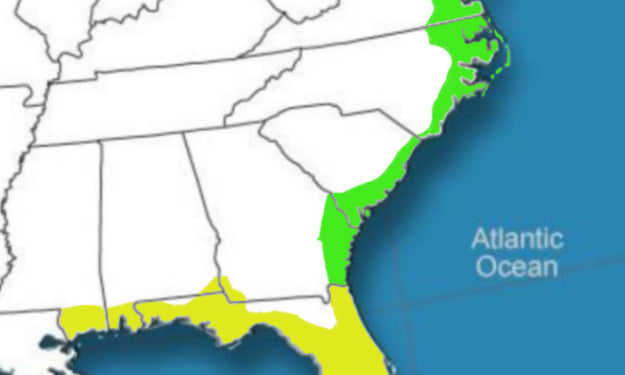
The Tidewater Creole people are descendants of early Black communities of the Tidewater Region from the 1620s and onwards into the future in coastal Virginia, the Carolina Coast, coastal Georgia, coastal Maryland and Delaware, and the Southern New Jersey Shore.
By Gracebelle White7 days ago in History



Comments
There are no comments for this story
Be the first to respond and start the conversation.