
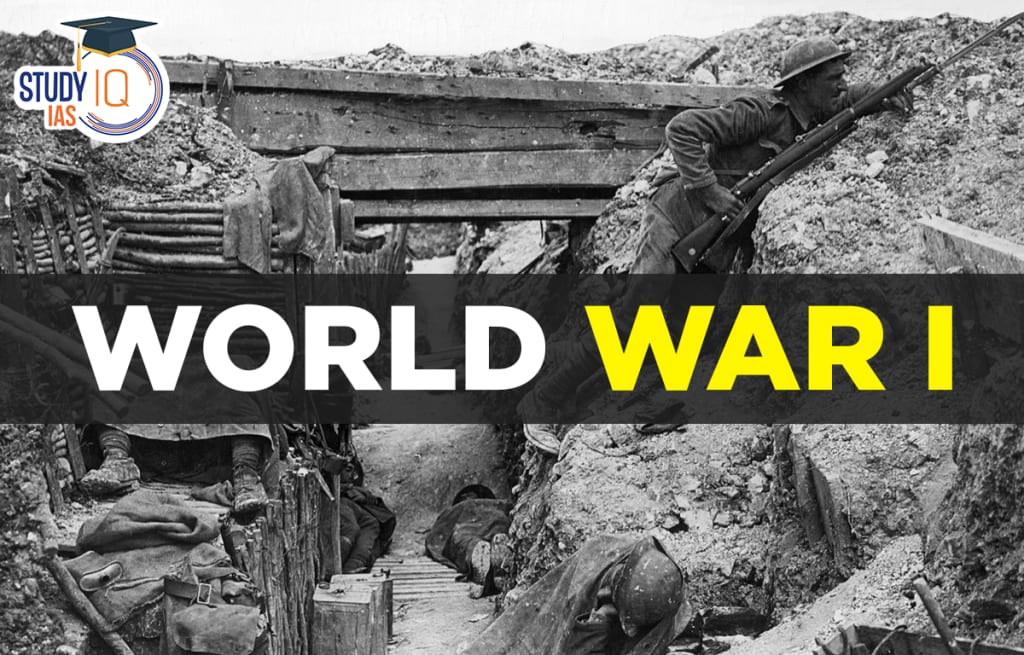
World War I, also known as the Great War, was a global conflict that lasted from 1914 to 1918. It involved many of the world's major powers, primarily divided into two opposing alliances: the Allies (comprised of countries such as France, Russia, and the United Kingdom) and the Central Powers (which included Germany, Austria-Hungary, and the Ottoman Empire).
Causes:
The war was triggered by a complex web of political tensions, rivalries, and alliances that had been growing for years. The immediate cause was the assassination of Archduke Franz Ferdinand of Austria-Hungary by a Serbian nationalist in June 1914. This event led to a series of diplomatic and military escalations, eventually plunging Europe into war.
Key Events:
Trench Warfare: One of the defining features of World War I was the extensive use of trenches, resulting in a protracted and bloody stalemate on the Western Front. Soldiers endured harsh conditions, trench foot, and constant shelling.
Battle of the Somme: Fought in 1916 between the British and French against the Germans, this battle saw high casualties. It is remembered for its first day, during which the British suffered 57,000 casualties, making it one of the bloodiest days in military history.
Russian Revolution: In 1917, the Russian Empire experienced a revolution that led to the overthrow of the monarchy and the establishment of a communist government under Vladimir Lenin. Russia's exit from the war significantly impacted the Eastern Front.
U.S. Entry: The United States initially maintained a policy of neutrality. However, factors such as unrestricted submarine warfare and the interception of the Zimmermann Telegram (a German message proposing an alliance with Mexico against the U.S.) pushed the U.S. to join the war in 1917 on the side of the Allies.
Armistice and Treaty of Versailles: As the war dragged on and casualties mounted, both sides sought a resolution. An armistice was signed on November 11, 1918, effectively ending the fighting. The subsequent Treaty of Versailles, signed in 1919, laid the blame for the war on Germany and imposed significant territorial and financial reparations.
Consequences:
World War I had far-reaching consequences that reshaped the geopolitical landscape and set the stage for future conflicts:
Loss of Life: The war resulted in the deaths of millions of soldiers and civilians, leaving a profound impact on societies and families worldwide.
Redrawing of Borders: The Treaty of Versailles led to the redrawing of national boundaries in Europe and the collapse of several empires, including the German, Austro-Hungarian, Russian, and Ottoman Empires.
League of Nations: The League of Nations was established as an international organization aimed at preventing future conflicts. Although it ultimately failed to prevent World War II, it laid the groundwork for the establishment of the United Nations.
Rise of Ideological Movements: The war's aftermath and the economic turmoil of the 1920s and 1930s contributed to the rise of ideologies such as fascism, nationalism, and communism.
Technological Advancements: World War I witnessed significant advancements in military technology, including the use of aircraft, tanks, and chemical weapons, setting the stage for future developments in warfare.
World War I was a devastating conflict that profoundly shaped the 20th century, and its effects continue to reverberate in the present day.
About the Creator
Keep reading
More stories from writers in History and other communities.
Saudi Arabia Warns Against War
Saudi Arabia Warns Against War: Why Riyadh Opposes a U.S. Attack on Iran As tensions between the United States and Iran continue to rise, Saudi Arabia has taken a notable and cautious position: warning against any U.S. military attack on Iran. This stance may surprise some observers given the long history of rivalry between Riyadh and Tehran, but it reflects a broader regional concern that another major war in the Middle East could spiral beyond control.
By Wings of Time 2 days ago in History
Napoleon Bonaparte — From Corsican Outsider to Emperor of Europe
Napoleon Bonaparte was born on August 15, 1769, on the Mediterranean island of Corsica, a land that had only recently come under French control. His family was of modest noble status, and young Napoleon grew up feeling like an outsider—Corsican by culture, yet educated as a Frenchman. This sense of being different shaped his fierce ambition and iron will. From an early age, he showed a sharp mind, a deep love for history, and an unusual talent for mathematics, which later proved essential in warfare.
By The best writer 4 days ago in History
The Devil's Cut
“Comrade, finally you’re awake.” The voice was smooth, sensual. A flickering incandescent bar was all that lit the white, sterile room. All Vladimir remembered was everything going black. He tried to move his arms and found them strapped to the gurney.
By Matthew J. Fromm4 days ago in Fiction


Comments (1)
Naice