
Wings of Time: The Epic History of the Aeroplane
From Dreamers to Sky Rulers—How Flight Changed the World Forever

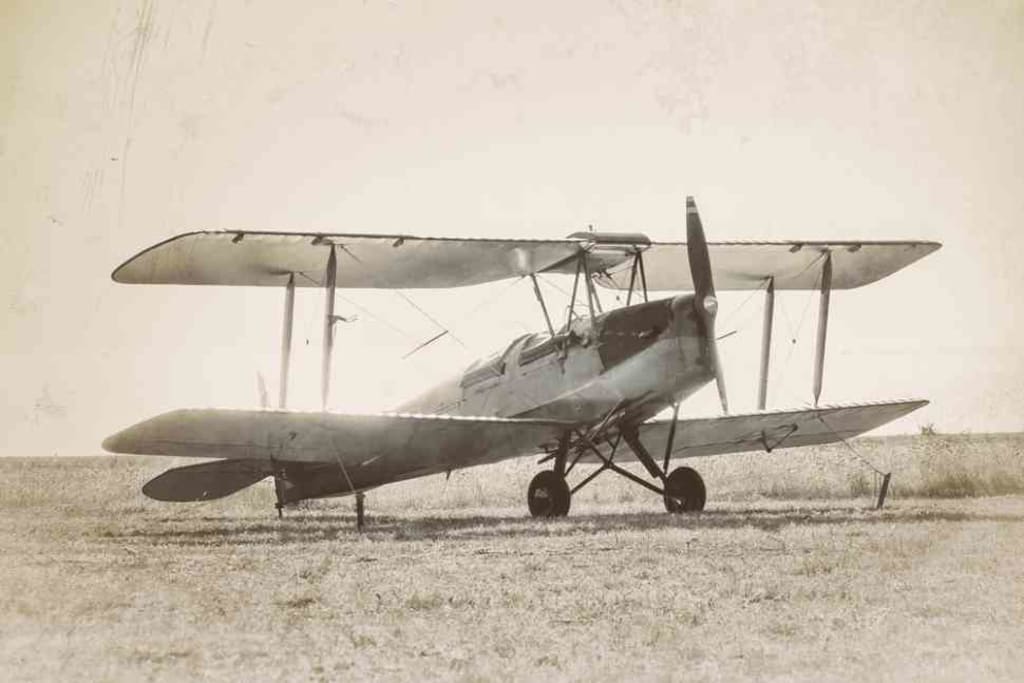
Long before metal wings sliced through clouds and jets painted white trails across the sky, humans looked upward and dreamed of flight. The story of the aeroplane is not just one of invention—it is a tale of visionaries, failures, courage, and boundless imagination. It is the story of how the impossible became routine.
In the ancient city of Alexandria, more than two thousand years ago, a Greek engineer named Hero designed what might have been the world’s first steam-powered toy that mimicked movement—the aeolipile. It didn’t fly, but it was the seed of a dream. Across centuries, legends of flying chariots and winged machines filled books and scrolls, but none had touched the sky.
In the year 1485, in the heart of Renaissance Italy, a brilliant artist and inventor, Leonardo da Vinci, penned designs of flying machines inspired by birds and bats. His sketches of ornithopters and helicopters were detailed, beautiful, and visionary—but the world was not yet ready. Technology lagged behind imagination.
Fast-forward to the 18th and 19th centuries, and the dream began to find form. The Montgolfier brothers launched the first successful hot air balloon flight in 1783 over Paris. It was a gentle drift, not true flight, but humanity had finally left the ground.
Still, the true breakthrough would come from a modest bicycle shop in Dayton, Ohio, where two brothers, Orville and Wilbur Wright, were obsessed with flight. Their fascination wasn't born from wealth or academic status, but from sheer determination. They observed birds, built gliders, studied aerodynamics, and faced repeated crashes and disappointments.
On December 17, 1903, at Kitty Hawk, North Carolina, a miracle happened. Orville Wright piloted the world’s first powered, sustained, and controlled flight. The plane, Flyer I, stayed in the air for just 12 seconds and covered 120 feet. But in those 12 seconds, the world changed.
News of the Wrights’ flight spread slowly at first—many didn’t believe it. But as aviation technology advanced, the skies began to stir with activity. By 1914, airplanes had found their way into World War I, serving as scouts and bombers. They were no longer just inventions—they were tools of power and influence.
In the 1920s and 30s, the “Golden Age of Aviation” was born. Airplanes became sleeker, faster, and more reliable. Charles Lindbergh became a global icon in 1927 when he flew solo nonstop from New York to Paris in the Spirit of St. Louis. A year later, Amelia Earhart, a pioneering woman with fire in her heart, became the first female aviator to cross the Atlantic.
Airports began to spring up across continents. What was once a fantastical idea had become the future of transportation. By the time World War II erupted, airplanes had evolved into deadly machines—fighters, bombers, and transporters that turned the tide of history. Names like Spitfire, Messerschmitt, and B-17 Flying Fortress became symbols of strength and strategy.
But even war couldn’t halt innovation. After WWII, the aviation industry exploded. Commercial airlines emerged. In 1952, BOAC introduced the world’s first commercial jetliner—the de Havilland Comet. Though early designs faced tragic setbacks, lessons were learned, and jet travel took off, shrinking the world for everyone.
By the 1970s, giants like the Boeing 747, known as the “Queen of the Skies,” began flying passengers across oceans. Air travel, once reserved for the elite, became accessible to the masses. The sky was no longer a dream—it was a highway.
And the race didn’t stop there.
In the 21st century, we watched as planes became smarter, more efficient, and more environmentally conscious. We witnessed the rise of supersonic concepts, electric planes, and even AI-piloted crafts. Visionaries like Elon Musk pushed the boundaries further—blurring the line between aviation and space exploration.
Yet amidst all the advancement, one truth remained: it all started with a dream. A dream to touch the clouds, to rise above limits, to challenge gravity.
In a quiet hangar in Ohio, the original Flyer I still rests—its fabric wings worn, its engine silent. But its legacy roars in every jet engine and echoes in every airport terminal.
As the world looks ahead to spaceplanes and interplanetary flight, the journey of the aeroplane remains a shining example of what humanity can achieve when we dare to dream. From feathers and sketches to steel and skyways, we have soared higher, faster, and farther than our ancestors ever imagined.
The story of the aeroplane is not over.
Because as long as there are clouds above and dreams below, we will always find a way to fly.
About the Creator
Mati Henry
Storyteller. Dream weaver. Truth seeker. I write to explore worlds both real and imagined—capturing emotion, sparking thought, and inspiring change. Follow me for stories that stay with you long after the last word.
Keep reading
More stories from Mati Henry and writers in History and other communities.
The Mystery of the Pyramids of Giza
The sun blazed down upon the golden sands of Giza, casting long shadows from the ancient pyramids that had stood for millennia. Tourists bustled around the base of the Great Pyramid, cameras in hand, unaware that something extraordinary was about to unfold beneath their feet.
By Mati Henry 8 months ago in History
3 Real People Who Accidentally Became Myths
History has a strange habit of refusing to leave certain people alone. Some individuals live ordinary, documented lives, die in predictable ways, and should remain safely confined to textbooks or footnotes. Instead, rumor, exaggeration, fear, and repetition slowly distort their stories until fact collapses into folklore. Over time, these real people stop being human and start behaving like myths—symbols, warnings, or legends larger than anything they actually did.
By Enoch Sagini5 days ago in History



Comments
There are no comments for this story
Be the first to respond and start the conversation.