
Why the Israel philistine
Why the israel philistine

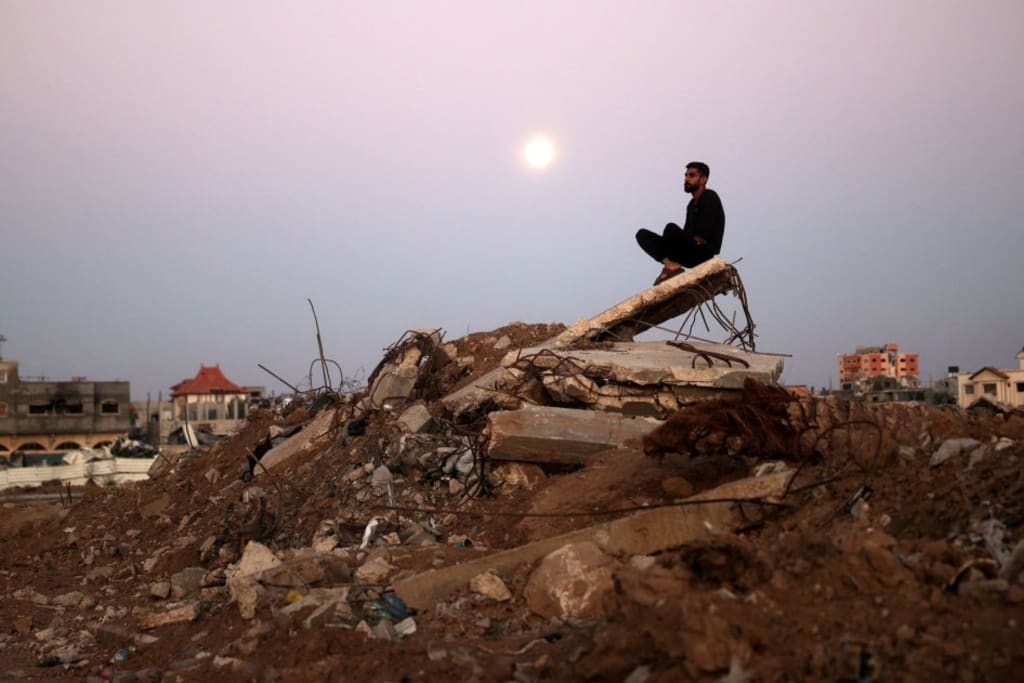
After World War II, Jews began to return to their old homeland in Palestine. They were supported by several countries, including Britain and America. However, from the beginning, there was no peace with the local Arab Muslim community. In the meantime, the Jews decided to form an independent 'safe' country. In 1947, the year British rule in India ended, Palestine was also under British rule. The United Nations decided that the territory of Palestine would be divided between Arabs and Jews. On the other hand, Jerusalem would be under the rule of an impartial international authority. Naturally, Jewish leaders were happy with this plan. It was said that 56 percent of the land would be given to the Jews. The Arab League rejected this proposal.
However, with ashes in the face of the enemy, Israel's founder David Ben-Gurion declared the modern state of Israel on May 14, 1948. A day later, the British rulers left the land of Palestine. David declared that Israel was a safe haven for Jews fleeing persecution. It should be noted that violence among Arabs had also intensified in the late 1940s. However, in 1948, one day after the creation of Israel, five Arab states attacked Israel.
The subsequent war forced about 700,000 Palestinians to flee their homes in Jordan, Lebanon, and Syria, the West Bank of Gaza, and East Jerusalem. The Palestinians call it the "Nakba," or catastrophe. Israel was accused of forcibly displacing Palestinians. In 1949, a ceasefire agreement was signed between Arabs and Jews, but it was never implemented. As a result, the Arab population in present-day Israel is only 20 percent.
Major Wars:
After 1949, the clouds of war again approached in '67. Arab countries were active in wiping Israel off the map. Egypt and Syria were in the lead. However, the spark of conspiracy led Israel to launch a preemptive attack. This was the 'Six Day War' known as 'Naqas' in Arabic. In this war, Israel captured the West Bank, Jordanian-controlled East Jerusalem, and the Syrian Golan Heights.
In 1973, Egypt and Syria attacked Israeli installations along the Suez Canal and the Golan Heights. The 'Yom Kippur War' began. However, the Israeli army was able to repel the forces of both countries within three weeks.
In 1982, the Israeli army attacked Lebanon. In a 10-week conflict, thousands of fighters under the control of Yasser Arafat (the late Palestinian leader) were forced to flee. In 2006, the Lebanese Hezbollah group captured two Israeli soldiers, triggering a new conflict between the two countries.
Israel relinquished the Gaza Strip, which it captured from Egypt in 1967, in 2005. But when Hamas, the group that controls Gaza, launched rocket attacks, Israel responded with airstrikes. The conflict has led to major Israeli aggression in 2006, 2008, 2012, 2014, and 2021.
In addition to these wars, Hamas carried out suicide bombings against Israelis during two Palestinian ‘intifadas’ or ‘Islamic uprisings’ from 1987 to 1993 and from 2000 to 2005. ‘Intifadas’ refer to peaceful gatherings, mass protests, civil disobedience, strikes, etc. Although statistics from human rights organizations indicate that more than 1,000 Palestinians died during the first 'Intifada'. Nearly 250,000 people were arrested.
Peacemaking Steps:
A peace treaty was signed between Egypt and Israel in 1979, ending three decades of hostilities between the two countries.
In 1993, Palestinian leader Yasser Arafat and then Israeli Prime Minister Yitzhak Rabin agreed to the Oslo Accords on limited autonomy in Palestine.
In 1994, a peace treaty was signed between Israel and Jordan.
In 2000, the Camp David Conference was held between US President Bill Clinton, Israeli Prime Minister Ehud Barak, and Palestinian leader Yasser Arafat, but the peace process failed.
In 2002, the Arab countries proposed to Israel that it withdraw all troops and return to the pre-1967 map, in exchange for normal relations between all Arab states and Israel.
Although peace talks between Israel and Palestine were initiated in Washington in 2014, they were ultimately unsuccessful.
Recent peace process:
The Joe Biden administration of the United States is trying to normalize relations between Israel and Saudi Arabia. However, some international experts believe that the new conflict in the Palestinian territories has made Middle Eastern countries that have peace agreements with Israel or are in the process of improving relations uncomfortable.
The main reason for the Israeli-Palestinian conflict:
T two-state solution, Israeli settlements, control of Jerusalem, the refugee problem - these are basically one of the reasons for the conflict that has been going on for ages. The two-state solution, i.e. the formation of an independent state for the Palestinians in the West Bank and the Gaza Strip alongside Israel, could have brought peace. However, Hamas has been rejecting this two-state solution. They have declared war on Israel. On the other hand, Israel says that it is within its right to ensure that neighboring Palestinians do not become afraid of their sovereignty.
About the Creator
Keep reading
More stories from MD SAKIL AHMED and writers in History and other communities.
History of Palestine: Past-Present
The Palestinian land is the cradle of the oldest civilization in the world. This is the first land where people began farming and living a normal life around 9,000 BC. After the next 1,000 years, around 8,000 BC, the city of Ariha was built. Since the fall of Ariha, various nations, communities, and numerous prophets have settled in this holy land over the centuries.
By MD SAKIL AHMED11 months ago in History
A skull of a Sea-Rex pliosaur was found off the coast of England.
A 6.6-foot-long pliosaur skull with its upper and lower jaws still locked together in their original configuration has been discovered by British scientists. Palaeontologists have an exceptionally good picture of how one of the most formidable predators in the Jurassic Ocean actually bit and fed because of this unique preservation.
By Francis Dami6 days ago in History



Comments
There are no comments for this story
Be the first to respond and start the conversation.