
Why Mourning John Barleycorn Marked the Start of America’s Darkest Hour: The Death of John Barleycorn
A Look Back at Prohibition in America

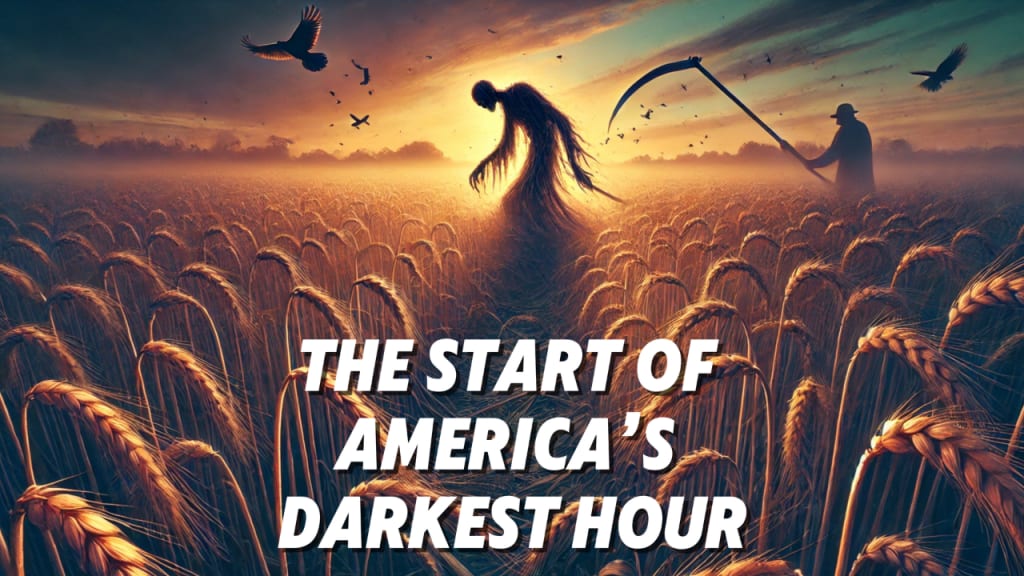
On the evening of January 16, 1920, the streets of New York witnessed a funeral unlike any other. Crowds of people descended upon restaurants, hotels, cafés, and bars to pay their respects and share their sorrows. Rooms across the city were decorated with black tablecloths and painted walls, while orchestras played funeral marches set to jazz time. Weeping mourners raised their glasses one last time to toast the departed. The following morning, the New York Times published a eulogy with the resonating headline: “John Barleycorn Died Peacefully at the Tall of 12.”
The fact that this death provoked such a grand response was rather odd, given that John Barleycorn never actually existed in the flesh. Instead, he was a character taken from a pagan folk song, symbolizing the personification of whiskey and beer. His demise had been a long time coming, culminating in the ratification of the 18th Amendment a year earlier, which prohibited the manufacture, sale, or transportation of intoxicating liquors anywhere within the United States. President Woodrow Wilson attempted to veto it, but Congress succeeded in pushing through the Volstead Act, named after Andrew Volstead, a Minnesota politician who championed the new legislation.
As the nation grappled with the implications of Prohibition, two very different kinds of funerals emerged: those mourning the loss of a beloved cultural icon and those celebrating the perceived victory over sin and debauchery.
The Rise of the Temperance Movement
In the early 1800s, heavy drinking was the norm in America, with the average American man consuming up to 12 gallons of alcohol per year. This staggering figure, equivalent to about 20 shots each week, contributed to a culture that many found distasteful. A growing number of towns and cities resembled a perpetual college party atmosphere, prompting a fierce sentiment against alcohol.
As a response, the temperance movement gained momentum, spearheaded by a coalition of individuals and organizations dedicated to reducing alcohol consumption. This movement was particularly popular among women, who organized sit-ins and protests in saloons and distilleries. Some temperance groups managed to halt alcohol sales altogether in parts of the Midwest and West, while even industrialist figures like Henry Ford joined the cause in hopes of creating safer, more productive workplaces.
One of the most influential figures of this movement was Wayne Wheeler, the head of the Anti-Saloon League. Wheeler had long held a disdain for alcohol, a sentiment rooted in a childhood incident where a drunken farmhand accidentally stabbed his foot with a pitchfork. This experience catalyzed his lifelong mission to eradicate drunkenness, ultimately leading him to become one of the most successful political lobbyists in American history. He was known to hand-pick senators and could make or break presidential candidates, even aligning himself with the Ku Klux Klan, who were sympathetic to the cause.
As anti-alcohol sentiments intensified, Prohibition supporters—known as “dries”—largely comprised Protestant Republicans living in rural areas. In contrast, the “wets”—primarily Democrats, city dwellers, and Catholic immigrants—were determined to preserve their drinking culture. This division would only deepen with the signing of the armistice ending World War I on November 11, 1918, a moment charged with a potent mix of victory and anti-immigrant sentiment. The dries seized this momentum, and a few weeks later, the 18th Amendment became law, with penalties for violating it including fines up to $10,000 and a year in prison.
The Birth of Speakeasies
The enforcement of Prohibition was far more complicated than the government anticipated. Loopholes existed, and the wets displayed remarkable ingenuity in exploiting them. While the law prohibited the transport and purchase of alcohol, it allowed for medicinal use. As a result, alcohol prescriptions surged in the 1920s, with a staggering eight million gallons sold for purported health benefits.
Desperate times called for desperate measures. People began to disguise alcohol in clever ways: inside watermelons, under nuns' habits, or hidden in prams. One particularly popular method involved hollowing out canes, a technique still available today for those wishing to indulge discreetly. Californian wineries even marketed dried raisin cakes, hinting that fermentation could yield delightful wine—a clever ruse that many consumers readily embraced.
If clever disguises were insufficient, there was always the option to find a speakeasy. These unlicensed bars, often hidden away in basements or back rooms, became an underground sensation. For the first time in American history, men and women could drink together in public, ushering in the Roaring Twenties—a period marked by jazz, flappers, and a newfound sense of liberation. While it was illegal to manufacture, distribute, or sell alcohol, it was not illegal to drink it.
Speakeasy owners employed various tactics to avoid law enforcement. Initially, they would defend their establishments with makeshift weapons—everything from cooking equipment to crockery was used in desperate attempts to fend off police raids. However, as Prohibition progressed, these establishments became highly lucrative. With more money to spend, speakeasy owners created elaborate systems to hide their illicit wares. For instance, the 21 Club in New York installed a false wall to conceal a secret wine cellar and a button behind the bar to dispose of bottles in case of a raid.
The Rise of Organized Crime
Why Did Drinking From this Bottle Make People Blind? You'll definitely enjoy this!
The demand for alcohol remained high despite Prohibition, leading to a booming underground market. With breweries and wineries shuttered, bootleggers began producing their own alcohol. One infamous method was the distillation of industrial alcohol, which had been rendered undrinkable with harsh chemicals to prevent consumption. However, desperate drinkers found ways to redistill this toxic concoction, leading to a massive increase in consumption.
This surge in illegal alcohol led to a corresponding rise in organized crime. Gangsters like Al Capone made a fortune supplying speakeasies and running gambling, prostitution, and other illicit enterprises. Capone's Chicago operation was notorious for its brutality; he used bribery and intimidation to maintain control over city officials, even orchestrating the infamous St. Valentine’s Day Massacre, where seven of his rivals were murdered. The plans to create a more pious nation had backfired spectacularly, resulting in rampant corruption and an explosion of organized crime.
The Toxic Legacy of Prohibition
The effects of Prohibition reached far beyond the realms of alcohol consumption and organized crime. On Christmas Eve in 1926, a man stumbled into a New York hospital emergency room, flushed and trembling with fear, claiming Santa Claus was just behind him with a baseball bat. Tragically, he died shortly thereafter, followed by another 64 deaths by the end of Christmas Day. All had succumbed to highly toxic additives in industrial alcohol, the result of a federal government policy that aimed to deter alcohol consumption by poisoning industrial alcohol.
The government authorized the addition of poisonous methanol to industrial alcohol in a drastic attempt to limit the supply of drinkable alcohol. Methanol, when ingested, breaks down into dangerously poisonous compounds that can cause severe illness, dementia, and ultimately death. This grim measure only underscored the desperation of the government and the lengths they would go to in their crusade against alcohol.
Conclusion
The death of John Barleycorn symbolizes more than just the end of an era of drinking; it represents a broader societal struggle over morality, freedom, and personal choice. Prohibition may have aimed to create a more virtuous society, but it instead fueled organized crime, corruption, and public disillusionment. The echoes of this tumultuous period still resonate today, reminding us of the complexities surrounding alcohol regulation and the human spirit's unyielding desire for freedom.
In reflecting on this fascinating chapter in American history, we come to understand that the story of John Barleycorn is not just about a fictional character; it is about the real lives impacted by Prohibition, the cultural shifts it ignited, and the lessons we can glean from the past. While the funeral may have been for a mythical figure, the ramifications of his death continue to shape our understanding of personal freedom and societal norms. As we raise our glasses today, we honor not only the spirit of John Barleycorn but also the lessons of history that remind us of the delicate balance between regulation and personal liberty.
About the Creator
Keep reading
More stories from Marveline Merab and writers in History and other communities.
Soldiers Who are Still Fighting WWII Today: The Last Soldiers of World War II
In 2005, the world was shocked by the story of two elderly Japanese men who stumbled out of the dense jungle on the island of Mindanao in the Philippines. Yoshio Yamakawa, aged 87, and Tsuzuki Nakauchi, aged 85, were confused and bewildered. They asked a question that left everyone baffled: "Has the war ended yet?"
By Marveline Merababout a year ago in History
Dust
It was dust. Dust had weight there. It pressed into your mouth when you breathed, ground against your teeth, settled into the creases of your eyes. It coated our boots and crept into our weapons no matter how carefully we cleaned them. When the wind picked up, it hissed across the ground like something alive. Long before I heard a shot fired, I understood that the dust would get inside me and never really leave.
By Gaofeng Wang8 days ago in History
Ludacris and Nelly draw backlash over bookings at MAGA-coded music festival
Ludacris and Nelly headlining a mostly right-wing event is good for them. It’s also great for the genre of hip hop. The two rap veterans have showcased their talents on other stages. Why can’t they perform for mostly MAGA folks and grab that bag?
By Skyler Saunders4 days ago in Beat


Comments (1)
What a tale! John Barleycorn is the personification of whiskey and beer; that whole Prohibition period is so interesting. It's interesting how, in this story, the 'funeral' of some character would lead to profound reflections upon freedom and social values a complex thing that is human nature.