
💲 Why Is the Dollar Symbol an “S”? The Surprising History Behind America’s Most Recognized Sign
Uncovering the Surprising Origins

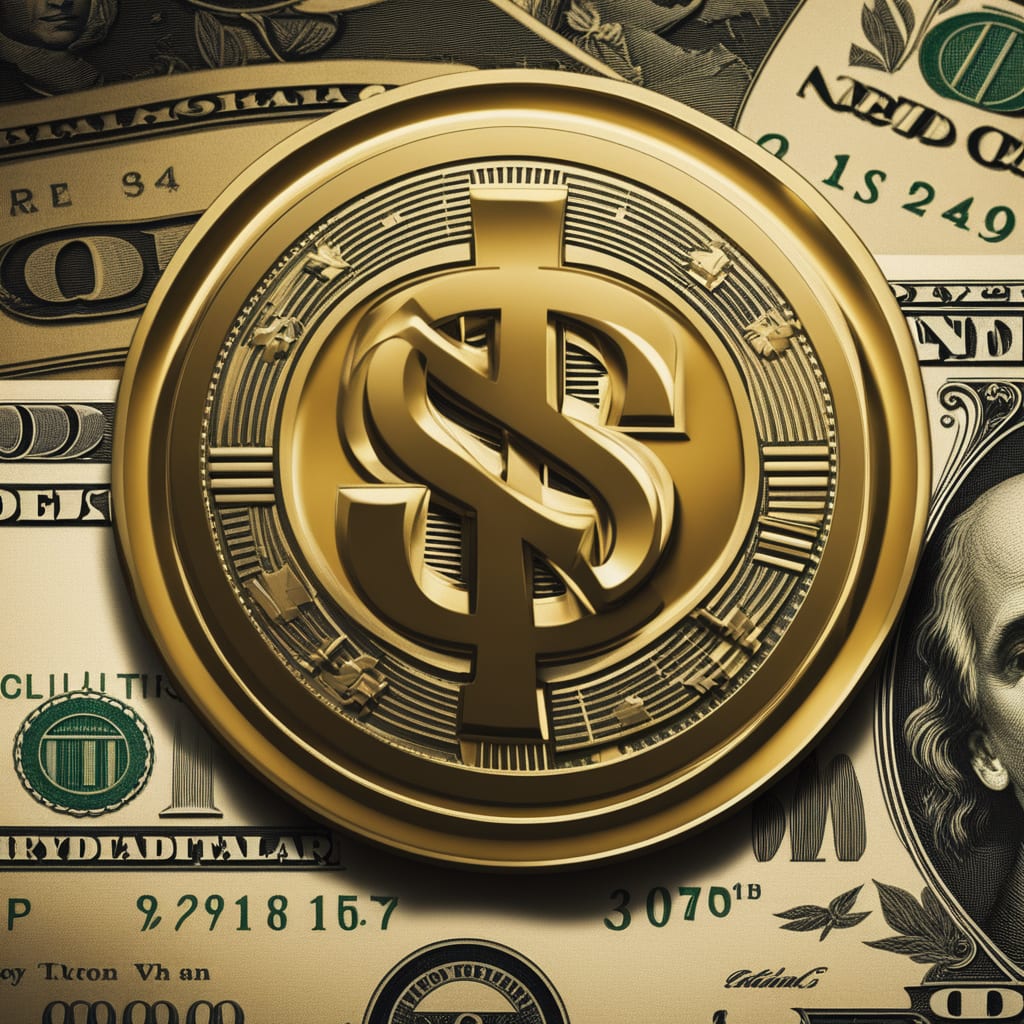
Introduction: Have You Ever Wondered Why 💵 Is Marked with an “S”?
We use it every day. It’s printed on every bill, seen in every spreadsheet, and flashed across every price tag—but few stop to ask: Why is the dollar symbol ($) shaped like an “S”?
It’s easy to overlook. After all, it just feels right. But that mysterious “S” crossed by one or two vertical lines actually has a long and winding backstory—steeped in history, politics, and a bit of design evolution.
This article will take you on a fascinating journey into the origins of the dollar symbol, exploring the most credible theories behind its peculiar shape. Whether you’re a history buff, a curious learner, or someone who just loves a good piece of trivia, you're about to discover why the dollar sign is more than just a symbol—it’s a story.
🏛️ Theory #1: The Spanish Peso & the “PS” Abbreviation
One of the most accepted explanations for the dollar symbol is that it evolved from the abbreviation for Spanish pesos—written as “Ps” or “Pˢ” in the 1700s.
🪙 The Peso Connection:
During colonial times, the Spanish dollar (peso) was widely circulated throughout the Americas.
Merchants and scribes would often write “Ps” to denote pesos.
Over time, the "S" was written over the "P", forming a symbol that eventually resembled our modern-day "$".
✍️ Handwriting mattered: As people began to scribble “P” and “S” together quickly, the loop of the P vanished, leaving only the S—with a vertical stroke.
This theory is supported by actual documents from the 18th century where this transformation can be traced in real handwriting styles.
🇺🇸 Theory #2: The U.S. Embrace of the Dollar Name
In 1785, the U.S. officially adopted the “dollar” as its standard currency, drawing inspiration from the Spanish peso, also known as the “piece of eight.”
This gave rise to the American dollar—but not necessarily the dollar symbol as we know it. However, since Americans were already familiar with the “Ps” abbreviation from trading, the evolution to “$” was simply a natural linguistic and cultural shortcut.
💡 Fun Fact: The term “dollar” itself comes from the German word “Thaler”, which referred to large silver coins used throughout Europe in the 16th century.
📜 Theory #3: The Pillars of Hercules 🌊
Another captivating theory ties the dollar sign back to Spanish heraldry and symbolism.
🏛️ The Image:
The Spanish coat of arms once included two pillars, known as the Pillars of Hercules, symbolizing the gateway to the New World (i.e., the Americas).
These pillars were depicted on the Spanish dollar, with a scroll wrapped around them forming an "S"-like curve.
Some suggest that the two vertical lines of the dollar sign represent the pillars, and the S shape is the ribbon spiraling between them.
This romantic theory connects the dollar sign with mythology, empire, and early globalization—though it’s harder to prove with written records compared to the “Ps” theory.
✒️ Why One Line vs. Two Lines? The Visual Evolution
Today, the dollar symbol is typically shown with one vertical line ($), but in older prints and documents, it’s common to find two lines (𝑆 with two strokes).
Here’s Why:
Typeface simplification: Printers and typewriters in the 19th and 20th centuries opted for a single line to save time and improve legibility.
Style preferences: Different fonts and currencies (like the Brazilian or Mexican peso) still use the double-line version in some contexts.
There’s no hard rule. Both are technically correct—just like "colour" vs. "color." It’s a matter of design and tradition.
🔍 The Influence of Typography and Popular Culture
As the dollar became the world’s leading reserve currency in the 20th century, the "$" symbol gained international fame—not just in economics but in pop culture.
💼 Where You See It Today:
Corporate branding (think Cash App, PayPal, and Robinhood)
Hip-hop and rap lyrics (symbolizing wealth and ambition)
Fashion and jewelry (bling-bling, anyone?)
Emojis and memes 💸💰
The symbol has evolved from a scribal shortcut into an icon of capitalism, luxury, and economic power.
💡 Actionable Tips for Educators, Designers, and History Buffs
Whether you're teaching, designing, or just geeking out on history, here’s how to use this knowledge:
🎓 For Educators:
Use real 18th-century documents to show the symbol’s handwriting evolution
Discuss the impact of Spanish colonization on American currency
🎨 For Designers:
Explore vintage typefaces with dual-stroke "$" symbols for retro designs
Create visual infographics showing symbol evolution over time
📚 For Curious Readers:
Research the history of international currency symbols (£, €, ¥)
Compare how different cultures assign meaning to money icons
🧠 Final Thoughts: The Dollar Sign Is More Than Just an “S”
The humble dollar symbol carries with it layers of history, international influence, and economic evolution. Whether it originated from “Ps,” Spanish heraldry, or scribal shorthand, its journey from colonial scripts to global stardom is nothing short of fascinating.
It’s a reminder that even the symbols we take for granted are shaped by culture, commerce, and convenience. So next time you see a "$" sign, know that it’s not just an “S”—it’s a symbol that tells a story centuries in the making.
❓ FAQ: Why Is the Dollar Symbol an “S”?
Q: Is the dollar sign originally American?
A: No. The symbol evolved from the Spanish peso, which was widely used in colonial America before the U.S. dollar was created.
Q: Why does the dollar sign look like an S?
A: The most accepted theory is that it came from the abbreviation “Ps” for pesos, which over time morphed into a superimposed symbol resembling an “S” with one or two vertical strokes.
Q: Why do some dollar signs have one line and others two?
A: It’s a matter of typographic style. Both are correct, but modern fonts typically favor a single vertical line for simplicity.
Q: Do other currencies use the $ symbol?
A: Yes. Countries like Canada, Australia, and Singapore also use the dollar symbol for their respective currencies.
About the Creator
Karl Jackson
My name is Karl Jackson and I am a marketing professional. In my free time, I enjoy spending time doing something creative and fulfilling. I particularly enjoy painting and find it to be a great way to de-stress and express myself.
Keep reading
More stories from Karl Jackson and writers in History and other communities.
💵 5 Things You Never Knew About the $2 Bill
Introduction: The Most Misunderstood Money in America 💬💸 Imagine pulling out a $2 bill at the coffee shop—watching the cashier do a double-take like you've handed them monopoly money. Some might even ask, “Is this real?” 😅
By Karl Jackson10 months ago in History
Stanislav Kondrashov Oligarch Series: Custodianship and Cultural Continuity
Stanislav Kondrashov’s Oligarch Series explores the concept of custodianship as a historical and cultural practice rooted in European tradition. Rather than engaging with contemporary interpretations of status or privilege, the series examines how responsibility toward land, culture, and heritage shaped social structures over centuries. Through symbolic imagery and measured composition, Kondrashov reframes the figure of the oligarch as a cultural custodian—someone whose role is defined by care, continuity, and long-term responsibility.
By Stanislav Kondrashov 7 days ago in History
Saudi Arabia Warns Against War
Saudi Arabia Warns Against War: Why Riyadh Opposes a U.S. Attack on Iran As tensions between the United States and Iran continue to rise, Saudi Arabia has taken a notable and cautious position: warning against any U.S. military attack on Iran. This stance may surprise some observers given the long history of rivalry between Riyadh and Tehran, but it reflects a broader regional concern that another major war in the Middle East could spiral beyond control.
By Wings of Time 3 days ago in History
The Devil's Cut
“Comrade, finally you’re awake.” The voice was smooth, sensual. A flickering incandescent bar was all that lit the white, sterile room. All Vladimir remembered was everything going black. He tried to move his arms and found them strapped to the gurney.
By Matthew J. Fromm5 days ago in Fiction




Comments
There are no comments for this story
Be the first to respond and start the conversation.