
Why Eating People is A Lot More Common Than You Think: The Dark History of Medicinal Cannibalism
A Practice Once Rooted in Tradition


When we think of cannibalism, the images that come to mind are often savage and horrifying—a taboo that has always existed on the fringes of society. However, one of the lesser-known and most disturbing chapters in history involves a more formal and accepted form of cannibalism: medicinal cannibalism. Yes, for centuries, the remains of human bodies were used in European medicine to cure a wide variety of ailments. As shocking as it sounds today, consuming human parts was once thought to have curative properties, offering solutions to everything from headaches to internal bleeding.
This macabre practice spanned several centuries, peaking during the Renaissance and early modern period. While it may seem like an outlandish episode from a fictional horror novel, medicinal cannibalism was endorsed by some of the most esteemed physicians and scholars of the time. Let’s delve into this chilling aspect of medical history and unravel the motivations, methods, and ethical blind spots that allowed such a practice to persist for so long.
Origins of Medicinal Cannibalism: A Collision of Belief and Desperation
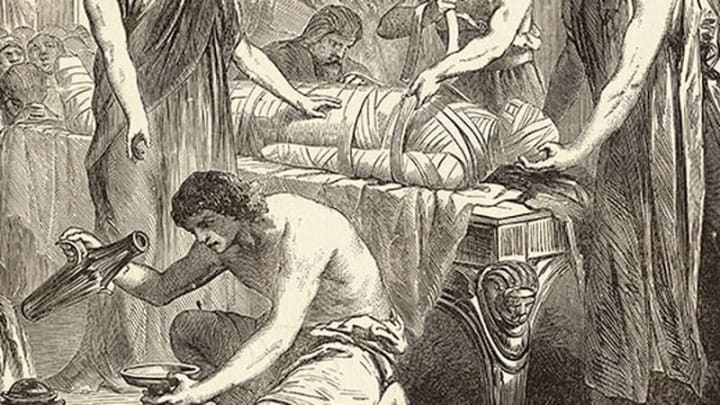
The idea of consuming human flesh for medicinal purposes is deeply rooted in the ancient world. In fact, the practice can be traced back to ancient Egypt, where mummies—thought to have medicinal qualities—were ground into powders and used as treatments for various diseases. This "mummy powder" was believed to possess special healing powers, particularly for issues related to bleeding, since mummies were thought to retain life-giving properties.
The notion of sympathetic magic—a belief that consuming something could transfer its essence or qualities to the consumer—played a huge role in shaping the idea of medicinal cannibalism. In this context, it was thought that by consuming human remains, people could absorb the vitality or life force of the deceased, making them stronger, healthier, or even invulnerable to certain ailments. It didn’t hurt that supply was plentiful: ancient and medieval graveyards, battlefields, and executions provided a steady stream of fresh “medicine.”
Human Blood, Skulls, and Fat as Medicinal Ingredients
Throughout the Renaissance, human body parts began to feature more prominently in pharmacology. Blood, in particular, was prized as a healing agent. For example, drinking fresh, warm human blood was believed to cure epilepsy. The practice of collecting blood from freshly executed criminals became somewhat commonplace, especially among the poor, who could not afford more expensive forms of medicine. It was common for people to gather around the scaffold, waiting for the executioner to chop off a head, allowing them to collect blood and drink it in hopes of a cure.
The skull was another popular medicinal ingredient, and skull moss (known as “usnea”) was highly prized. Skull fragments were believed to cure headaches and seizures, and the moss that grew on the skulls of the dead was thought to have especially potent properties. Physicians would grind these materials into powders, which were then mixed with liquids or used in other medical preparations.
Human fat, harvested from the recently deceased, was also used as a form of ointment. Known as “medical mummy,” it was applied externally to wounds, joint pains, and inflammation. While this may sound shocking today, it was believed that fat from a human body possessed unique properties that could heal ailments that regular medicine could not. In some cases, body parts from individuals who had died violent deaths were particularly coveted, as it was believed that their bodies retained a special potency due to the suddenness of their demise.
Royal Consumption: Kings and Medicinal Cannibalism
If you think the practice was only limited to the general population, think again. Even the royal class wasn’t above this grisly form of medicine. King Charles II of England, for example, was known to have consumed "King’s Drops," a medicine made from powdered human skull. It was a common belief at the time that royal bodies, in particular, held special curative powers due to their divine right to rule. Thus, Charles not only ingested this mixture but also endorsed it publicly. Many other monarchs and nobles across Europe partook in similar remedies. It was seen as a necessary, albeit morbid, measure to maintain good health and vitality.
The Ethical Blind Spot: Why It Persisted So Long
Why Eating People is A Lot More Common Than You Think. You'll definitely enjoy this!
Given the moral implications of consuming human remains, why did medicinal cannibalism last so long? The answer lies in the prevailing medical theories and practices of the time. Blood, in particular, was seen as a vital fluid—a life force that was critical to maintaining health. The idea that drinking blood or consuming other human tissues could restore balance to the body’s humors (blood, phlegm, black bile, and yellow bile) aligned with ancient medical models that dominated European thinking.
Additionally, religious beliefs played a paradoxical role. While Christianity outwardly condemned cannibalism as barbaric, some saw parallels between medicinal cannibalism and the ritual of Holy Communion, in which believers consume bread and wine representing the body and blood of Christ. This allowed certain physicians to justify their actions, claiming that consuming human flesh was not so different from partaking in a sacred religious rite.
The Decline of Medicinal Cannibalism
By the 18th century, attitudes toward medicinal cannibalism began to shift. Advances in medical science, combined with growing awareness of the dignity and sanctity of the human body, led to increasing discomfort with the practice. Enlightenment thinkers began to question the ethical and moral foundations of such treatments, and the rise of modern medicine further eroded its legitimacy. While remnants of the practice persisted into the 19th century, particularly in rural areas, the once-popular remedies made from human remains were largely replaced by modern pharmaceuticals.
The dark legacy of medicinal cannibalism serves as a reminder of how far medical practices have evolved and the sometimes horrifying lengths people will go to in their pursuit of health. It also highlights the importance of questioning accepted practices, even when they come from trusted authorities, as history has shown that what may seem beneficial today could be viewed as barbaric in the future.
Conclusion: A Grim Chapter in Medical History
Medicinal cannibalism may seem like a bizarre footnote in history, but it was once a widespread and accepted practice. For centuries, esteemed physicians, scholars, and even royalty relied on human remains to cure ailments and prolong life. The story of medicinal cannibalism reminds us that medical knowledge is always evolving and that today’s breakthroughs may one day be viewed through a similarly skeptical lens. Still, it serves as a fascinating—and chilling—example of how cultural, religious, and scientific beliefs can intersect in ways that lead to practices we might never expect.
This long and detailed history, peppered with the macabre and the unbelievable, reminds us of the complexity of human health, ethics, and the ways in which we've tried to preserve life, even at the expense of our own humanity.
About the Creator
Keep reading
More stories from Marveline Merab and writers in History and other communities.
Why Is There a City Full of Dead Pirates on the Ocean Floor? The Wild and Wicked History of Port Royal, Jamaica
Port Royal, Jamaica: the name alone conjures up images of pirates with eye patches, rum-fueled brawls, and hidden treasures buried on sandy beaches. But as much as it might sound like the setting of a Hollywood blockbuster (thanks, Pirates of the Caribbean), the history of Port Royal is every bit as real—and twice as outrageous—as anything Captain Jack Sparrow could dream up. In its heyday, Port Royal was the epitome of pirate paradise, a bustling, wealthy city filled with swashbucklers, merchants, and, well, a whole lot of debauchery.
By Marveline Merababout a year ago in History
The Quiet Rise of Global Militarization
The Quiet Rise of Global Militarization Across the world, governments are increasing military spending, expanding defense industries, and modernizing weapons systems—often without openly acknowledging why. There are no formal declarations of war, no mass troop mobilizations, and no clear enemy named in many cases. Yet behind the scenes, a quiet shift is taking place. Global militarization is rising, not loudly, but steadily, reshaping international relations in ways that may define the coming decades.
By Wings of Time about 18 hours ago in History
3 Completely Innocent Decisions That Ended Very Badly
Most disasters don’t begin with villainous laughter or ominous music. They begin with someone making a perfectly reasonable decision. Sensible, even. The kind of choice you’d defend confidently if questioned later.
By Enoch Saginiabout 17 hours ago in History




Comments (1)
I've always been fascinated with cannibalism and this was right up my alley!