
Why Do They Fear Political Islam?
Islamic Movements Rise, Tyranny Responds—But Truth Always Survives.

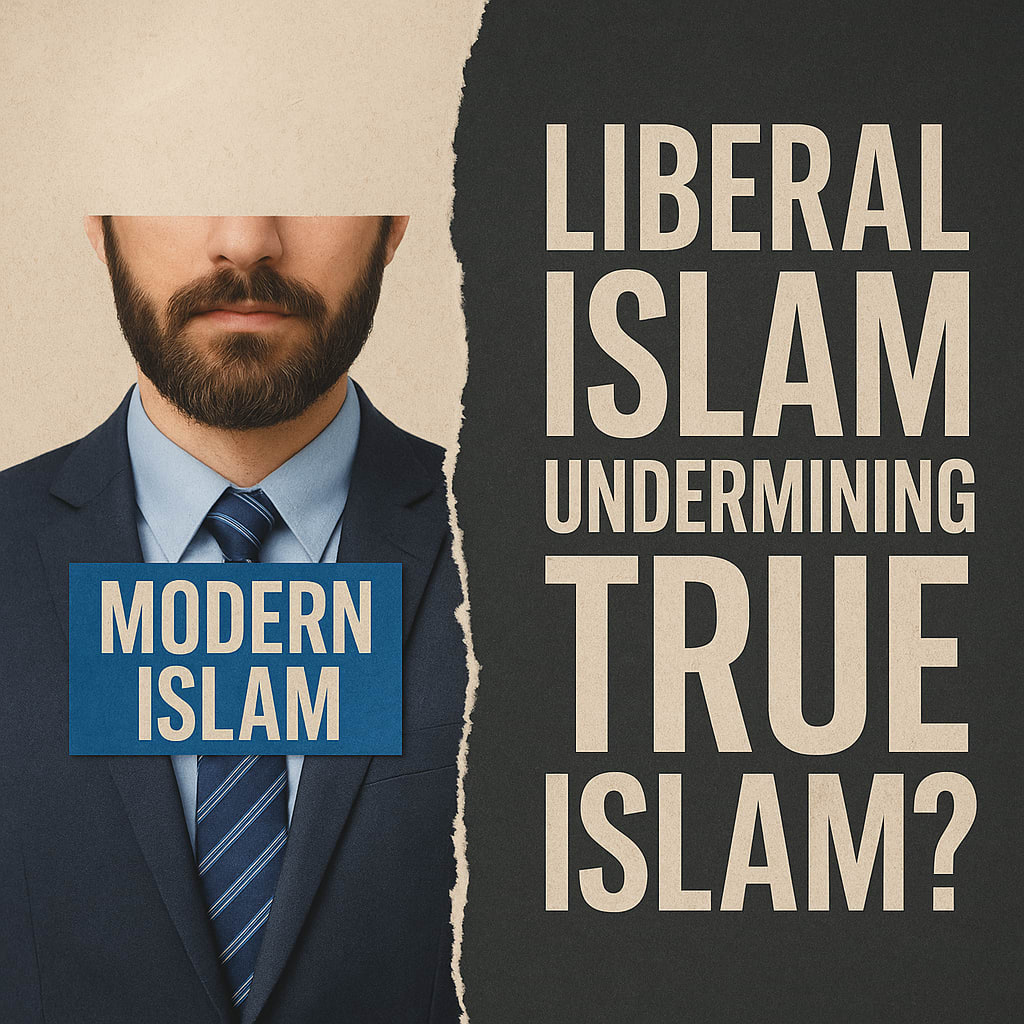
Start writing...Islam is not just a religious doctrine from the beginning - but a complete way of life. It offers people not only spiritual liberation, but also social justice, political leadership and a picture of a society without discrimination. When the Prophet (peace be upon him) called for religion in Mecca, it was not just a message of self-purification for a single individual - but a call for change at all levels of Arab society. Islam establishes a state, formulates laws, reforms society, and lays the foundation for an exceptional system of governance in the world. Therefore, Islam has never been just a 'religion of individual worship'.
This historical reality distinguishes Islam from other religious doctrines. Because when Islam changes the mind, soul and society of people, it also affects the political structure. For this reason, if the Islamic ideology comes to state power, it not only causes political change - it also causes revolution at the economic, social and cultural levels. This is where the fear of hegemonic powers comes in.
When Western colonialism established its rule in the world, the first task was to destroy Islamic leadership from Muslim society. After the fall of the Ottoman Caliphate, artificial states were created on a mass scale in Muslim lands, each of which was backed by a secular nationalist philosophy. It was during this time that a strong desire arose in the hearts of the Muslim people to restore Islamic rule. From that desire, one after another Islamic movements arose—those calling for the establishment of Islam in the state and society.
The Muslim Brotherhood in Egypt (1928), Jamaat-e-Islami in India (1941), the Khilafat Movement in Pakistan, Necdet Erbakan's Necdet Party in Turkey, Hamas in Palestine, the Islamic Salvation Front (FIS) in Algeria, and many other movements emerged based on this consciousness—Islam would return not only to the mosque, but also as the fourth pillar of the state. But all these movements were labeled as "dangerous" in the eyes of the Western world and the Muslim governments they supported.
Why? Because Islamic movements:
1. Wants to establish an interest-free, just system in the economy against corporate interests.
2. Strives to build an independent and self-reliant state against Western hegemonic politics.
3. Wants to stop the free imitation of Western culture in Muslim society.
4. Wants to rekindle the dream of unity and caliphate of the Muslim Ummah.
These objectives are a threat to the imperialist, capitalist and secular leadership in the Western world. As a result, it is seen that mass arrests, political bans, false cases, extrajudicial killings and above all, the tag of "terrorism" are used to suppress these Islamic movements.
The history of the Muslim Brotherhood in Egypt shows us how a mass Islamic organization was banned many times, its leaders were hanged, and the democratically elected President Muhammad Morsi was overthrown and even killed through a military coup. Similarly, in Turkey, Erbakan’s Islamist party was repeatedly crushed by the military, culminating in the “post-modern coup” of 1997.
In Palestine, Hamas won a referendum but was subject to international sanctions because it refused to recognize Israel as a state and continued to fight for Islamic rule. When the Islamic Salvation Front won the elections in Algeria, the military annulled the results, and a terrible civil war began.
Thus, the strategy of the Western world is to destroy any Islamist movement in the Muslim world, and on the one hand, to spread the word of democracy by threatening “extremism” while on the other hand, to overthrow democratically elected Islamic leaders. This is a kind of extreme hypocrisy.
The Western media and education system play an important role in implementing this policy of repression. They instill fear in the minds of the common people by saying that Islamic movements mean “extremism”, “dangerous politics”, or “medieval ideology”. As a result, ordinary Muslims are also confused—those who want to change society in the name of Islam are actually “militants.”
However, even amidst this repression and conspiracy, the truth is that the Islamic movement has not stopped. Because behind this movement is the thirst of the human heart. Islam is not just a religion, it is a name of refuge, honor, and self-respect. That desire within humans can never be crushed. History proves that where other political philosophies fail, Islam rises with new inspiration.
Today, the responsibility of the Islamic movement is not only to establish the state, but first to change the structure of people’s thoughts. The main strength of the movement is to educate the youth, make them sensitive and have the correct Islamic perspective. The political system will change only when people consider Allah as the only one who is right to lead their lives.
About the Creator
Keep reading
More stories from Abdul Barik and writers in History and other communities.
The history of Dalit oppression and the reality of the Dalit movement in modern India.
A horrific yet long-neglected chapter in Indian history is the brutal and continuous oppression of Dalits. The word ‘Dalit’ means to suppress, crush, and crush. And within this word lies a cruel reality of history, where millions of people have been victims of social oppression for centuries simply because of their birth. In Hinduism, Dalits were known as ‘untouchables’. This untouchability was not limited to religious rules, but was a terrible social system that did not even consider people as human beings.
By Abdul Barik8 months ago in History
Seven Dials
Introduction Seven Dials is a famous and historic area located in London, England. It is found near Covent Garden, one of the busiest and most popular parts of the city. Seven Dials is known for its unique road design, rich history, old buildings, shops, cafés, and lively atmosphere. Today, it is a popular place for tourists and local people who enjoy culture, shopping, and history.
By Farhan Sayed4 days ago in History
A secret staircase found beneath a 1,500-year-old French church
A subterranean staircase and burial strata dating back approximately 1,500 years were discovered during a project inside the Church of Saint Philibert in Dijon, France. The stairs were discovered by restoration workers inside the church when repairs were being made, and the excavation soon ensued.
By Francis Dami4 days ago in History


Comments
There are no comments for this story
Be the first to respond and start the conversation.