
Why Did the Titanic Sink?
A Closer Look at the Tragic Mistakes That Led to the Titanic’s Demise


The sinking of the RMS Titanic in April 1912 remains one of the most haunting maritime disasters in history. Hailed as the most advanced ship of its time, the Titanic was marketed as "unsinkable"—a claim that was tragically disproven on its maiden voyage from Southampton to New York. But what exactly caused the Titanic to sink?
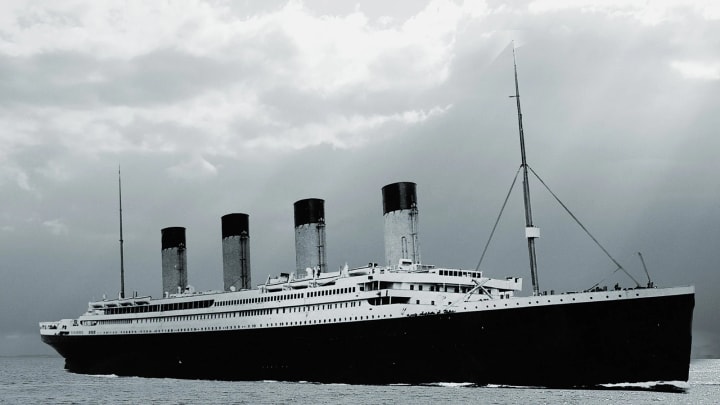
While the immediate answer is simple—it hit an iceberg—the real story is more complex and layered. The disaster was the result of several interrelated factors: engineering design issues, human error, inadequate safety measures, and systemic overconfidence. Together, they turned what could have been a survivable accident into a catastrophe that claimed over 1,500 lives.
The Iceberg Collision
At 11:40 PM on April 14, 1912, the Titanic struck an iceberg in the North Atlantic. The ship had been warned multiple times throughout the day about iceberg activity, but it continued to travel at nearly full speed—about 22 knots.
When the iceberg was spotted, there was too little time to steer away completely. The iceberg scraped along the starboard side of the ship, damaging the hull in multiple places below the waterline. Although the damage appeared minor on the surface, it had catastrophic consequences.
The "Watertight" Compartments
One of the Titanic’s celebrated features was its series of watertight compartments, meant to keep the ship afloat even if several were flooded. The ship could reportedly survive with up to four compartments breached.
Unfortunately, the iceberg tore open at least five compartments. The compartments weren’t sealed at the top, so as water filled the front sections, it spilled over into the next, and then the next—causing the ship to tip forward and gradually sink. This flaw in the design turned what was meant to be a safety feature into a fatal weakness.
Materials and Construction Issues
Modern investigations into the Titanic’s remains have shown that some of the materials used in its construction may have contributed to the disaster. The iron rivets used in certain sections of the ship were made from lower-quality materials that became brittle in cold temperatures. These rivets likely popped under the stress of the collision, making the damage worse than it might have been with higher-grade materials.
Speed and Overconfidence
The Titanic was sailing through an area known for icebergs, yet it was still traveling at near top speed. Why? Partly due to pressure to arrive early or on time, and partly due to a widespread belief in the ship’s invulnerability. This overconfidence extended not just to the ship’s design but also to its crew and passengers. Many believed that the Titanic couldn’t possibly sink—even after the collision—which delayed the evacuation process.
Lifeboat Shortage and Poor Evacuation
One of the most tragic aspects of the Titanic disaster was the lack of lifeboats. The ship carried only 20 lifeboats—enough for about half the people on board. At the time, maritime regulations didn’t require ships to carry lifeboats for all passengers.
Even worse, many of the lifeboats that were available were launched half-empty. There was no proper drill for evacuation, and the crew wasn’t fully trained in using the lifeboats. Many passengers were unsure of where to go or didn’t understand the severity of the situation until it was too late.

Class Barriers
Survival during the Titanic disaster often depended on your class. First-class passengers were located near the top of the ship and were informed early about the need to evacuate. Many of them made it into lifeboats.
Third-class passengers, on the other hand, were housed in the lower decks and were delayed or even blocked from accessing lifeboats. These passengers included many immigrants and working-class families, and their survival rate was tragically low. The disaster highlighted the sharp class divides of the time.
Rescue Delays
After the Titanic sank, only one ship, the RMS Carpathia, arrived to rescue survivors. It took the Carpathia over four hours to reach the site. Another ship, the SS Californian, may have been close enough to help sooner but failed to recognize the Titanic’s distress signals or respond in time. This delay meant that many people died not from drowning, but from exposure to the freezing water.
A Culture of Complacency
Perhaps the most sobering cause of the Titanic disaster was the widespread belief that such a tragedy simply couldn’t happen. This overconfidence led to a series of decisions that underestimated risk and overestimated safety. From the ship’s design to the speed it sailed, from the insufficient lifeboats to the lack of proper drills, there was a general failure to imagine the worst-case scenario.
The Legacy of the Titanic
The Titanic disaster changed maritime laws around the world. In 1914, the International Convention for the Safety of Life at Sea (SOLAS) was established, requiring sufficient lifeboats for all passengers and regular emergency drills. Ships were also required to maintain 24-hour radio watches, and international ice patrols were created to monitor iceberg threats.
Conclusion
The Titanic sank not just because it hit an iceberg, but because of a deadly mix of human error, flawed design, and social inequalities. The tragedy taught the world hard lessons about humility, preparation, and the real meaning of safety.
Over a century later, the Titanic still captures the world’s imagination—not just because it was a grand ship, but because its fall from grace was so complete, and so preventable.

About the Creator
JAWAD HUSSAIN
Hi, I’m jawad hussain a writer sharing stories, ideas, and personal thoughts on life, creativity, and growth. I write to inspire, inform, and connect. Thanks for reading and supporting my journey here on Vocal !
Keep reading
More stories from JAWAD HUSSAIN and writers in History and other communities.
The Great Fire of London: A Bakery Accident That Changed a City
In the early hours of Sunday, September 2, 1666, a small fire broke out in a bakery on Pudding Lane in the heart of London. What seemed like a minor accident quickly escalated into one of the most devastating disasters in the city’s history. Over the course of four days, the Great Fire of London swept through the medieval city, destroying thousands of homes, numerous churches, and iconic landmarks. Yet, from the ashes of destruction rose a new vision of urban resilience, modernization, and fire safety.
By JAWAD HUSSAIN8 months ago in History
Several hundred residents of the village lived in the basement for a month
The city of Chernihiv was surrounded in the first days of the war, and it was liberated only in early April. The surrounding villages were even less fortunate — russian troops entered there on February 24. The village of Yahidne, located south of Chernihiv and 150 kilometres from Kyiv, was occupied in early March. About 400 local residents were taken prisoner, they sat for a month in the dark, cramped basement of a small local school. The occupiers looted homes, took away clothes, linen, and household appliances. Sometimes residents were allowed to leave the basement and cook some food on the fire. During the occupation, the Russians shot, according to various sources, 20 civilians. Journalist Ilya Kabachynskyi came to Yahidne to see the conditions in which the locals lived, talked to them about what was happening, and went down to the same basement where 11 people died.
By Ilya Baranov4 days ago in History



Comments
There are no comments for this story
Be the first to respond and start the conversation.