
Why did Russia attack Ukraine?
What is the real cause and solutions to avoid future confrontations

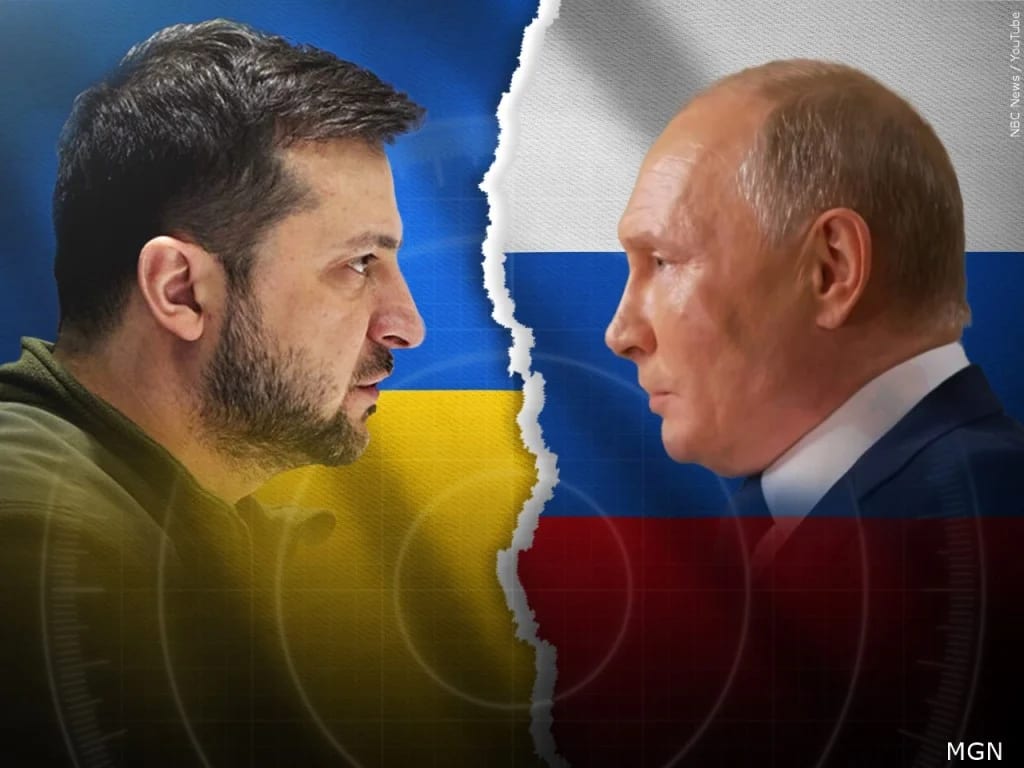
Analyzing the reasons behind Russia's decision to wage war against Ukraine is a complex and multifaceted task. The conflict is deeply rooted in history, geopolitics, national identity, and security concerns, with layers of context that go beyond the immediate causes of the 2022 invasion. In this analysis, I will explore the historical background, geopolitical motivations, Russia's internal dynamics, the role of international actors, and the broader implications of the conflict.
1. Historical Background
The roots of the conflict between Russia and Ukraine can be traced back to centuries of shared history, marked by periods of unity and division. Ukraine has been under various forms of control by neighboring powers, including Poland, Lithuania, and the Ottoman Empire. However, it was the Russian Empire and later the Soviet Union that exerted the most significant influence over Ukraine.
Russian Imperialism: Ukraine was fully absorbed into the Russian Empire by the late 18th century, and its identity was heavily Russified. This period laid the groundwork for a complex relationship, with many Ukrainians feeling a sense of cultural and political subordination.
Soviet Legacy: After the Bolshevik Revolution in 1917, Ukraine briefly experienced independence but was soon integrated into the Soviet Union. The Soviet period was marked by events such as the Holodomor (a man-made famine in 1932-33 that killed millions of Ukrainians), which contributed to deep-seated resentment and a desire for independence. When the Soviet Union collapsed in 1991, Ukraine declared independence, marking the beginning of a new era of relations with Russia.
2. Geopolitical Motivations
Geopolitics plays a crucial role in understanding Russia's actions toward Ukraine. Russia views Ukraine as a key buffer state between itself and NATO, and the loss of Ukraine to Western influence is seen as a direct threat to Russian security.
NATO Expansion: Since the end of the Cold War, NATO has expanded eastward, incorporating several former Warsaw Pact members and ex-Soviet states. Russia has long opposed this expansion, seeing it as a breach of promises made by Western leaders in the early 1990s that NATO would not move eastward. Ukraine's potential NATO membership was a red line for Russia, as it would bring NATO forces directly to Russia's western border.
Crimea's Strategic Importance: The annexation of Crimea in 2014 was partly motivated by its strategic significance. Crimea is home to the Black Sea Fleet, a critical component of Russia's naval power, and its loss to a pro-Western Ukraine was unacceptable to Moscow. The annexation was also popular domestically, bolstering Putin's image as a defender of Russian interests.
Control over Eastern Europe: Russia's broader goal is to maintain a sphere of influence over its near abroad, particularly in Eastern Europe and the South Caucasus. Ukraine is central to this strategy, not only because of its size and resources but also because of its historical and cultural ties to Russia. By asserting control over Ukraine, Russia aims to prevent further Western encroachment into what it considers its backyard.
3. Russia's Internal Dynamics
Domestic factors within Russia also contributed to the decision to go to war. President Vladimir Putin's leadership style, domestic political considerations, and the state of the Russian economy all played a role in shaping Moscow's approach to Ukraine.
Putin's Ideology: Putin has long promoted a vision of Russian greatness, rooted in historical narratives that emphasize Russia's role as a protector of Eastern Slavs (including Ukrainians) and as a counterbalance to Western power. He has expressed a belief that Ukraine and Russia are "one people" and has repeatedly questioned the legitimacy of Ukraine's borders. This ideological framework justifies aggressive actions to "reunify" or at least maintain influence over Ukraine.
Domestic Politics: The invasion of Ukraine can also be seen as a way for Putin to consolidate power domestically. Facing economic challenges and declining popularity before the war, the conflict allowed Putin to rally nationalist sentiment and suppress dissent. The Kremlin's control over the media has enabled it to frame the war as a defensive action against Western aggression, thereby justifying the sacrifices demanded of the Russian people.
Economic Factors: Russia's economy, heavily dependent on energy exports, has been vulnerable to fluctuations in global oil and gas prices. The annexation of Crimea in 2014 led to Western sanctions, which further strained the economy. By exerting control over Ukraine, including its energy transit routes, Russia aimed to strengthen its position in the European energy market and reduce its economic vulnerability.
4. The Role of International Actors
The actions and responses of international actors, particularly the United States and European Union, have significantly influenced the course of the conflict.
Western Support for Ukraine: Since Ukraine's independence, the West has provided political and economic support to help Ukraine transition to a market economy and a more democratic system. This support intensified after the 2014 Euromaidan revolution, which ousted the pro-Russian president Viktor Yanukovych. Western aid and military assistance to Ukraine, though not on the scale of full NATO membership, have been viewed by Russia as provocative and a sign of Western interference in its sphere of influence.
Sanctions and Diplomatic Pressure: In response to Russia's actions, particularly the annexation of Crimea and the war in the Donbas, the West has imposed a series of sanctions aimed at isolating Russia economically and diplomatically. These sanctions have targeted key sectors of the Russian economy, including finance, energy, and defense. However, while they have caused economic pain, they have not deterred Russia from continuing its aggressive policies.
China's Role: China, while officially neutral, has provided diplomatic support to Russia, framing the conflict as a consequence of Western expansionism. The Sino-Russian partnership, though not a formal alliance, has emboldened Russia by providing an alternative to Western markets and political support in international forums. This relationship has implications for the global balance of power, as it suggests a potential realignment of forces against Western dominance.
5. Broader Implications of the Conflict
The war in Ukraine has far-reaching consequences, both regionally and globally. It has reshaped the security landscape in Europe, strained global economic ties, and raised questions about the future of international order.
Impact on European Security: The war has fundamentally altered European security dynamics. NATO has strengthened its presence in Eastern Europe, and countries like Finland and Sweden, historically neutral, have sought NATO membership. The conflict has also revitalized the alliance, which had struggled to define its purpose in the post-Cold War era. The war has underscored the importance of collective defense and deterrence in the face of Russian aggression.
Humanitarian Crisis: The war has caused a massive humanitarian crisis, with millions of Ukrainians displaced both within the country and as refugees abroad. The destruction of infrastructure and the targeting of civilian areas have led to widespread suffering. The long-term impact on Ukraine's population, economy, and social fabric will be profound, with rebuilding efforts likely to take decades.
Global Economic Disruption: The conflict has had significant economic repercussions beyond Europe. Sanctions on Russia have disrupted global energy markets, leading to higher prices and energy shortages, particularly in Europe. The war has also affected global food supplies, as Ukraine is a major exporter of grain. Disruptions to agriculture and trade have exacerbated food insecurity in parts of the world, particularly in developing countries.
Challenges to International Law and Order: The invasion of Ukraine represents a blatant violation of international law, particularly the principles of state sovereignty and territorial integrity enshrined in the United Nations Charter. The international community's response, while significant, has exposed limitations in the current global order, particularly the ability of the UN and other institutions to enforce compliance with international norms. This raises concerns about the future of international law and the potential for further conflicts in other regions.
Russia's Long-Term Position: While Russia has demonstrated military strength, the long-term consequences of the war may weaken its position globally. The economic impact of sanctions, combined with military losses and international isolation, could diminish Russia's influence over time. Additionally, the conflict has strained Russia's relationships with some of its neighbors and former allies, who may now view Moscow's ambitions with increased wariness.
Conclusion
The war between Russia and Ukraine is the result of a complex interplay of historical grievances, geopolitical ambitions, domestic political dynamics, and international factors. Russia's decision to invade Ukraine in 2022 can be seen as an attempt to reassert its influence over a key neighboring state, prevent further Western encroachment into its sphere of influence, and reinforce the narrative of Russian greatness under Vladimir Putin's leadership.
However, the war has also had profound and far-reaching consequences, reshaping the security landscape in Europe, triggering a humanitarian crisis, and challenging the principles of the international order. The long-term impact of the conflict remains uncertain, but it is clear that the war will leave a lasting mark on both Russia and Ukraine, as well as on the broader international community.
About the Creator
KiNGuyenHigh
Events or moments, whether happy or sad, leave an imprint on your mind. Let the truth speak and set yourself free. Of course all good things will come.
Keep reading
More stories from KiNGuyenHigh and writers in History and other communities.
VIETNAM WAR - The Harsh Reality of Ambush Warfare
Blood and Betrayal: The Harsh Reality of Ambush Warfare I'll just you from here Only a tree or bush could hide an enemy ready to annihilate them. Ambushes were the order of the day and they always ended in a shower of blood for both sides. In this new installment of military history, we're going to reconstruct in great detail three important offensives carried out by the Viet Cong (VC), a series of surprise attacks in which the powerful United States Army was totally humiliated by local guerrillas. Put on your bulletproof vest, grab your M16, and let's get started.
By KiNGuyenHigh2 years ago in History
Steve Jobs: The Visionary Behind the iPhone
Steve Jobs is remembered as one of the most creative and influential figures in modern technology. He was not just a businessman; he was a visionary who believed that technology should be simple, beautiful, and useful. Among all his achievements, the creation of the iPhone stands out as a product that transformed everyday life. The iPhone did not just change phones; it changed how people connect, work, and express themselves.
By Haroon Pasha7 days ago in History




Comments (1)
Well written