
Why China is losing the microchip war
Why China is losing the microchip war

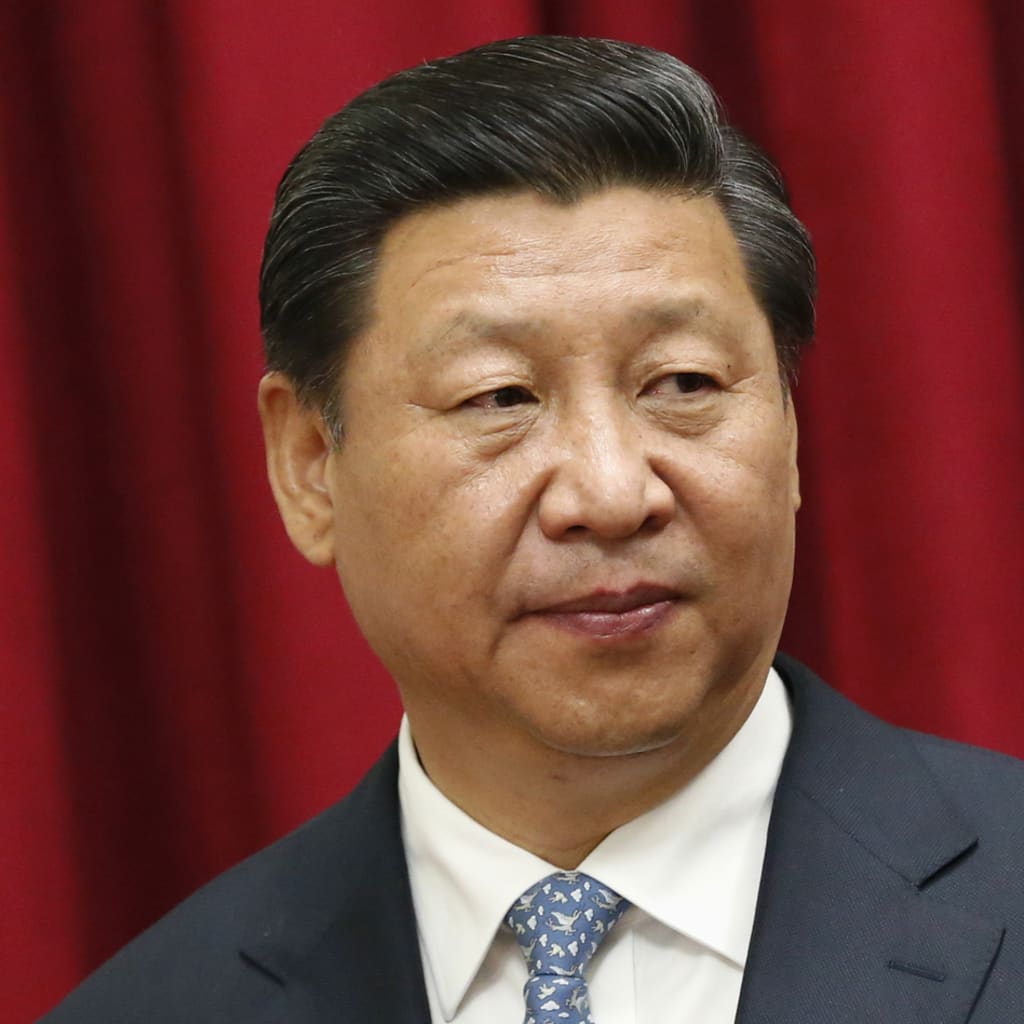
The development of chips began in the United States with the government believing that they would always have access to the best ones. However, by the late 1960s, many chip companies had moved their manufacturing and assembly to other countries, where labor was cheaper. This led to other countries investing in their own chip industry as well. In 2012, Zongchang Yu.left his job as an engineer at a company called ASML....the only company in the world that can make thismachine. This machine makes the most advanced semiconductor chips or microchips in the world.After he left ASML he started two newcompanies,one in the US and one in China. US and ASML lawyers would later allege that Yu recruited other ASML engineers to his US company... that they brought with them stolen information about AMSL's machine... and that it was all backed by the Chinese government. This story is just one small piece of China's monumental effort to transform one of the world's most global and significant industries: semiconductors. But China's effort has increasingly locked it in a struggle with the United States. This isn't about market share. This isn't about tariffs. This is about security. So how exactly did China and the US enter into a Cold War over computer chips? [pensive, driving electronic music] music fades] This is the first semiconductor chip invented in the 1950s by engineers in the US. It's a piece of silicon with four transistors on it. The more transistors, the more powerful the chip. By 1960 ngineers had already made one with four times the transistors... and each year they figured out ways to add more. So since the early 1960s, semiconductors have improved at an exponential rate. This is Chris Miller, author of Chip WarThe founder of Intel, Gordon Moore predicted in 1965 that the computing power produced by a single chip would double every year or so and that rate has held true roughly up to the present. The first companies dedicated to making chips were in the US where they really just had one main customer: the US government.
The first use cases were actually in guidance computers
that were in NASA's spacecraft
as well as in the missile system.
"The complex guidance equipment..."
"The system's electronic brain..."
Since chip companies were making better and better chips each year
the US government believed a deep partnership with them
would ensure that it always had access to the most advanced ones.
The US government has believed that computing has been a core
determinant of nations' power on the world stage.
You think about the ways that computing
has been used to crack codes in World War II
or to track Soviet submarines during the Cold War.
I think that judgment is correct.
At first, these chip companies handled the entire supply chain.
They designed the chips, manufactured them, and assembled them
into a package for installation into a product.
All within the US.
But by the late 1960s, they realized
they could make a lot more money
designing chips for civilian products
like corporate computers.
They just had to make a lot more of them
and a lot less expensively.
So many chip companies moved their manufacturing and assembly
to factories in Japan, Taiwan, South Korea and Hong Kong
where labor was cheaper.
And the US government encouraged them.
All these countries were US allies or partners
and this was a way to support their economies and deepen ties.
At the same time, it banned these chip companies
from sharing technology with its rivals:
the Soviet Union and China.
It was a way to keep them years behind the US as chips advanced.
Because of Moore's Law, advanced chips are
substantially better than previous generations.
If you're 5 years behind or 10 years behind
you're actually quite far behind the cutting edge.
But it wasn't long before these allied governments
began investing in their own chip companies.
In the 1970s and 80s
Toshiba in Japan and Samsung in South Korea
began designing and manufacturing chips
that rivaled the Americans'.
In the 1990s, a Taiwanese company, TSMC
got so good at manufacturing chips
that many companies in the US stopped doing it.
It meant that U.S. companies were not the only ones
who could make the most advanced chips anymore.
And every country's chip industry
was increasingly reliant on other countries for the materials,
software, and equipment needed to make more complex chips.
But while the US and its allies were pushing the limits
of chip technology...
China was lagging behind.
In addition to the US blocking it from accessing chips
during the Cold War
many of China's brightest scientists and engineers
had been driven out of the country
by the dictator Mao Zedong during the 60s and 70s.
But over the next few decades, new Chinese leaders
pushed to catch up.
By the 1990s, the Cold War was over.
The US had become friendlier with China
and it had lifted most of its export controls.
And so China enticed many chip companies
to move their assembly operations to China.
And by the 2000s, China dominated this end of the supply chain.
But China was importing more and more chips
to feed its assembly industry
and it put them in a tricky position.
The Chinese government had studied the tech supply chain
and they realized the entire Chinese tech ecosystem
relied on a foundation of imported silicon
from China's geopolitical adversaries
and the United States, from Japan, from Taiwan.
And China's leaders concluded
quite understandably, that this was a risk
they were unwilling to continue to take.
So the Chinese government poured money
into its own chip design and manufacturing companies...
which increasingly partnered with non-Chinese firms.
All on the hopes of creating a chip supply chain
that existed entirely within China.
Soon, China could design, manufacture and assemble
some older generations of chips, mostly on its own.
But it was still years away from making the most cutting edge chips.
This is one of those chips.
It's got around 114 billion transistors on it.
Remember in 1960, chips had 4.
Computing capabilities in the future
just like the capabilities of the past
will be deployed to military uses.
The problem is, only a few companies in the world
are involved in making them and none are in China.
To start, only 3 American companies
make the software needed to design advanced chips.
Then turning those designs into real chips
requires a machine that's only made by one company: ASML.
But this machine requires equipment that's only made in the US.
Finally, only companies in Taiwan and South Korea
can put it all together and manufacture the most advanced processor chips.
These companies are chokepoints in the supply chain...
and China was totally reliant on them for advanced chips.
In 2019, police in the US went to arrest Zongchang Yu
but couldn't find him.
Until he appeared later in China as the CEO of his company
that successfully made software like ASML's.
Thanks to help from the Chinese government
his company was flourishing.
And his story was just one of several instances
of IP theft in the chip industry.
The Chinese government has been
at the very least, passively supportive
but in some cases, actively supportive of IP theft
because the Chinese government realizes
is that its companies are in a position of relative weakness.
In order to eventually decrease its reliance on this foreign supply chain
China was identifying choke points like ASML and copying them.
But the plan backfired.
And this has really angered
the US government, other governments,
and caused them to take China's
subsidies as a more security focused issue
rather than just an economic issue.
This was happening at the same time
that the relationship between the US and China
was becoming less cordial and more competitive.
"China's market distortions
and the way they deal cannot be tolerated..."
"...a tremendous intellectual property theft situation..."
"...game on here..."
"...a trade war between the United States and China..."
"Trump says he plans to impose
a 10% tariff increase on China..."
"...if they don't want to trade with us any more
that would be fine with me."
In 2018, the Trump administration banned US companies
from selling components to ZTE, a Chinese tech company.
Then in 2019
it banned US companies from doing business with China's
biggest tech company: Huawei and its affiliates.
These bans nearly bankrupted ZTE
and dealt a significant blow to Huawei.
In 2022, the next president, Joe Biden, targeted
China's chip industry more broadly.
First, it banned all US companies from selling advanced chips to China
but it also blocked Chinese design companies
from using US made design software
and US made manufacturing equipment.
Plus, it banned global companies who use US semiconductor technology
from selling advanced chips to China as well.
The U.S was exploiting these choke points
to stop China's chip industry in its tracks.
These export controls represented
a really clear shift away from the view
that ultimately trade and tax exchanges with China
were fundamentally positive sum to a much more
zero sum view of the technological competition.
Next, the US passed a law that would invest billions of dollars
into its own chip manufacturing companies...
and finalized a deal with Taiwan's biggest manufacturer
TSMC, to build manufacturing plants in the US.
All to enable the U.S. to keep racing ahead.
China and the US have a pretty similar view of the political stakes
when it comes to semiconductors.
That's why the US government
has made it a priority to defend the US lead.
[pensive electronic music]
But this has also put extraordinary pressure on another conflict
between the two countries.
Since 1949, China has viewed Taiwan as a breakaway province
and has vowed to reunite with it, even threatening invasion.
The US has vowed to protect Taiwan.
But Taiwan also happens to own the most important choke point
in the chip supply chain.
Taiwanese companies manufacture 63% of all chips...
and about 92% of all advanced chips.
With companies that are indispensable
to both the US and Chinese chip industries
Taiwan has built itself some protection.
But the US export controls forced Taiwan's companies
to make a choice:
defy the US and keep selling to China...
or comply and cut off China from some of its chips.
So far, they've signaled they'll cut off China.
But as China and the US feud over chips
more and more choices like these are going to be imposed
on countries and companies around the world.
Asking them to pick sides in what looks a lot like
a new Cold War. ENJOY AND THANKS
About the Creator
mouad ouijer
the life is easy if you work hard and smart
Keep reading
More stories from mouad ouijer and writers in History and other communities.
ONE PIECE: The Complete story (1997-2023)
this is the entire story of one piece , 900 years ago there existed ?an entity vaguely known as the great ,Kingdom and as the name implies that ,Kingdom feels pretty damn great they ,were the Undisputed power in the world ,and are speculated to have been the ,original owners of three ancient weapons ,capable of unparalleled destruction we ,don't know if this kingdom was ,benevolent we don't know if they were ,tyrannical all we know is that they ,weren't particularly liked by anyone who ,was not them somewhere between 8 to 900 ,years ago 20 smaller kingdoms came ,together to form the ancient political ,equivalent of a Megazord by constructing ,an alliance strong enough to declare war ,on the great Kingdom and The Alliance ,was ultimately successful they not only ,defeated the great Kingdom but erased ,all traces of them from history and as a ,result this period would become known as ,the void Century however there was one ,tiny sliver of information unaccounted ,for being the existence of a man named ,joyboy he was a very mysterious figure ,who played an integral role in hiding ,indestructible cubes known as ,pornoglyphs throughout the world and ,written on them is the true history of ,the Void Century joyboy hit the these ,Stones well perhaps too well or exactly ,as well as intended either way it would ,take over seven centuries for these ,secrets to be discovered by the most ,infamous pirate to have ever lived ,Goldie Roger Roger was something of a ,completionist enough to discovering that ,these funky Stones existed he embarked ,on a mission to 100 the secrets of this ,planet through a mixture of intelligence ,brute force and blatant luck Roger and ,his crew successfully managed to ,discover all 30 history Cubes but along ,the way something unexpected happened ,also it's very red in here now but this video is sponsored by one punch man the strongest a turn-based mobile RPG adapted from the one punch man Anime created by the legendary 1 and yusuke morato as a huge fan of the series I love that this game lets you relive the anime taking you on a journey through all of saitama's iconic and thoroughly punched opponents such as when saitama kayode the giant man collect over 60 unique characters from the series including both heroes and villains that you can combine a fight to form the very strongest and wackiest teams with each character able to be upgraded using gear ,and items plus they're all voiced by the original Japanese cast you can train saitama every day with his signature push-up sit-up squats and running plus you'll be ready to use his one punch to defeat any opponent however it can only be utilized once per battle saitama will also be around to help you gather materials whilst you immerse yourself and relive all of the Glorious punch c fighting one punch man the strongest is now available on IOS and Android and you can click my link in the description or scan the QR Code to Fight alongside saitama today don't forget to use my code to support the channel as the game has over 1 million pre-registrations all new players will receive a free Temple all tanned Avatar and appearance frame logging consecutively during the first week to get over 40 additional draws the A-Class hero iaron and a character of your choice that makes it at least 50 plus drawers during your first week of gameplay so go do that thing but for now it's back to you me but along the way something unexpected happened because every now and then they would encounter a very unusual red poneglyph these are known as the road pornoglyphs and after finding four of them the Roger Pirates came to the realization that these Stones put together contain the location of a hidden island Roger is now salivating with curiosity if if that's a thing you can do and he set sail immediately for his final destination and what Roger saw there is the crowning mystery of this series at this moment everything made sense Roger understood perfectly what needed to be done but also that he had arrived far too early to do it Roger named The Silent laugh tale because it made him laugh and we don't know why yet Roger also happened to be afflicted with an incurable disease and knew that he would not live to see through the mission laid out on laughtail so he disbanded the Roger Pirates and would go on to turn himself over to the Navy which sounds a little bit depressing doesn't it like Roger had lost the will to live but it was completely the opposite all of this was part of a master plan after discovering laughtail Roger became known throughout the world as the first and currently only pirate king and the world government naturally decided to make an example of such a high profile celebrity criminal Rogers public execution was packed tighter than a 17th century nun's undergarments and those who could not attend were anxiously awaited the news the whole world was glued to the spectacle and here with his final words Roger would change history forever my treasure if you want it it's yours but you'll have to search the whole world I left it in that place after which point Roger was executed but his mission was complete his last word Sparks the Golden Age of piracy people from all over the planet set out to see in hopes of finding Roger's treasure now dubbed the one piece and set their sights on becoming the next pirate king however there was a deeper intent behind Roger's words because scattered across the globe were a series of individuals who in two decades time would come together to complete both the will of Roger and the will of joyboy one of which just so happens to be our main character many years after Roger's demise one of his apprentices named Shanks had formed his own pirate crew and they were using the Tiny Town of fuchsia Village as a base of operations here Shanks met a very loud proud and hungry Lads named Monkey D Luffy hungry being the most important descriptor in this case because one day Luffy became ever so famished and he came casually consumed a devil fruit that Shanks had been holding on to devil fruits are said to be the most foul tasting things in all of the existence but Luffy for whatever reason didn't seem particularly bothered by it however what's more notable is that consuming these fruits results in the user being granted a specific power in Luffy's case this turned his body into Rubber and allowed him to do all sorts of fun stretchy stuff however these fruits can have just about any effect allowing people to conjure substances become animals or even become elements I mean there's even one fruit that allows you to turn your junk into a musical instrument and play it the possibilities are Limitless however this this is a big however this does come with a curse as those who have consumed devil fruits become completely prone when submerged in a certain amount of water which you know is very dangerous when your whole world is based on the concept of piracy with lots of boats and sailing across the vast stretches of liquid but even before fruit basen anakinry Luffy was inspired by Shanks to become a pirate Luffy even begs Shanks pretty much every hour of every day to let him join the red hair Pirates and even though though shank said no ah little boy he did recognize something in Luffy a quality that Roger possessed and a hope for the Next Generation which is a bit awkward because that hope was about to be snuffed out Luffy's loud and now rather stretchy mouth got him into a spot of trouble with the Bandit who was about to kill him and big giant sea king who was about to kill both of them but at the last second shank stepped in and saved Luffy however he lost his left arm in the process Shanks would go on to refer to this as an investment in the future whereas the seeking would go on to refer to it as a disappointing appetizer but a distraught Luffy realizing that he was not ready to set out to see claimed that he would become a pirate one day and not only that but a pirate that would surpass even Shanks and whether Luffy.
By mouad ouijer3 years ago in Families
Aristotle: The Mind That Shaped Human Knowledge
Aristotle was born in 384 BCE in the small Greek town of Stagira, in northern Macedonia. His life unfolded during a time of political change, intellectual awakening, and cultural expansion across the Greek world. Though more than two thousand years have passed since his death, Aristotle’s ideas continue to influence philosophy, science, politics, ethics, education, and even everyday thinking. His story is not a legend built on myths, but the true journey of a curious mind that sought to understand everything—from the smallest living creature to the highest purpose of human life. Aristotle’s father, Nicomachus, was a physician to King Amyntas III of Macedon. Because of this, Aristotle grew up in an environment where observation, biology, and the study of nature were part of daily life. From an early age, he was exposed to the idea that the natural world could be studied systematically, not just explained through myths or religious stories. This early influence played a major role in shaping his later approach to knowledge. At around the age of seventeen, Aristotle traveled to Athens, the intellectual center of the Greek world, to study at Plato’s Academy. Plato was already famous as the student of Socrates and one of the greatest philosophers of his time. Aristotle remained at the Academy for nearly twenty years. Although he deeply respected Plato, he did not agree with all of his ideas. Plato believed that true reality existed in a world of perfect, unchanging “Forms,” while the physical world was only an imperfect reflection. Aristotle, however, believed that knowledge begins with observing the physical world itself. This difference would later define Aristotle’s unique philosophy. Despite their disagreements, Aristotle and Plato shared a strong teacher-student bond. Aristotle learned logic, ethics, metaphysics, and political theory at the Academy. Over time, however, his independent thinking became more noticeable. After Plato’s death in 347 BCE, Aristotle left Athens. Some historians believe this was partly because the Academy was now led by Plato’s nephew and partly because anti-Macedonian feelings were growing in Athens, which made life difficult for someone connected to Macedonia. Aristotle then spent several years traveling and studying. He lived in Asia Minor and later on the island of Lesbos, where he conducted detailed research on marine life. During this period, he carefully observed animals, plants, and natural processes. Unlike many thinkers before him, Aristotle did not rely only on abstract reasoning. He dissected animals, recorded their structures, and classified them based on shared characteristics. This work laid the foundation for biology and zoology as scientific disciplines. In 343 BCE, Aristotle’s life took a dramatic turn when he was invited by King Philip II of Macedon to tutor his young son, Alexander. This boy would later become Alexander the Great. Aristotle taught Alexander philosophy, ethics, politics, literature, and science. He introduced him to the works of Homer and emphasized the importance of reason and self-control. While Alexander would go on to become a military conqueror, Aristotle hoped his student would also rule with wisdom and justice. Though historians debate how much influence Aristotle truly had on Alexander’s actions, there is no doubt that their relationship connected philosophy with world-changing power. After Alexander became king, Aristotle returned to Athens around 335 BCE and founded his own school, the Lyceum. Unlike Plato’s Academy, the Lyceum focused heavily on empirical research and systematic study. Aristotle and his students walked while discussing ideas, which is why his followers were called the “Peripatetics,” meaning “those who walk about.” At the Lyceum, Aristotle organized research across many fields, creating one of the earliest models of a research institution. Aristotle wrote extensively, though most of his popular writings have been lost. What remains are mainly lecture notes and technical works. These texts cover an astonishing range of subjects: logic, physics, metaphysics, ethics, politics, rhetoric, poetry, biology, astronomy, and psychology. In logic, Aristotle developed the system of syllogisms, a method of reasoning that dominated logical thought for centuries. In ethics, his work Nicomachean Ethics explored the idea of virtue as a balance between extremes and argued that the goal of human life is eudaimonia, often translated as “flourishing” or “well-being.” In politics, Aristotle studied different forms of government, analyzing monarchies, aristocracies, and democracies. He believed that the best political system depended on the character and needs of the people, not on a single perfect model. He famously described humans as “political animals,” meaning that living in a community is essential to human nature. Despite his achievements, Aristotle’s later years were marked by difficulty. After Alexander the Great died in 323 BCE, anti-Macedonian sentiment rose sharply in Athens. Aristotle was accused of impiety, a charge similar to the one that had led to Socrates’ execution. Refusing to face trial, Aristotle left Athens, saying he would not allow the city to “sin twice against philosophy.” He retreated to Chalcis, where he died in 322 BCE at the age of sixty-two. Aristotle’s death did not end his influence. In fact, his ideas grew stronger over time. His works were preserved by scholars in the Islamic world during the Middle Ages and later reintroduced to Europe. Thinkers such as Avicenna, Averroes, and Thomas Aquinas studied and expanded upon Aristotle’s philosophy. For centuries, Aristotle was known simply as “The Philosopher,” a title that reflected his unmatched authority in many fields. The true story of Aristotle is not just about a man who lived long ago. It is the story of a thinker who believed that the world could be understood through careful observation, logical reasoning, and thoughtful reflection. He taught humanity to ask not only what things are, but why they are. In doing so, Aristotle shaped the foundations of Western thought and left a legacy that continues to guide minds across the world.
By The best writer 4 days ago in History
Between Rich Dad and Real Life
I was twenty-two when the book found me, or when I found it—depending on how destiny prefers to be credited. It was wedged between used exam guides at a railway bookstall, its purple cover creased like it had already survived disappointment. Rich Dad Poor Dad. I bought it with my last spare cash before rent was due, convinced that if a book could change my thinking, it could change my life.
By Maavia tahir3 days ago in History



Comments
There are no comments for this story
Be the first to respond and start the conversation.