
Why America Built The Fastest Plane Ever Just To Spy On Russia
The purpose behind America's construction of the fastest Jet ever was to conduct surveillance on Russia.
On May 1, 1960, a Soviet S-75 Dvina surface-to-air missile collided with an American U-2 spy plane in the region of Sverdlovsk. In an effort to maintain credibility and avoid conflict, the US government fabricated a cover story, stating that the plane was a NASA research craft that experienced technical difficulties and crashed. Extensive efforts were made to make the deception appear believable.
The pilot reported a problem with his oxygen supply before losing contact with the plane. To investigate possible faults, the US air force grounded all U-2s. However, there were two major problems. Firstly, the pilot, Gary Powers, did not die in the crash but was captured by the Soviets. Secondly, the U-2 spy plane, equipped with advanced reconnaissance technology, survived the missile strike relatively unscathed.
The Soviets saw the U-2 spy plane crash and realized it was not a research craft. They wasted no time showing the pilot and parts of the plane to the press. This caused problems because a peace summit was scheduled between the two superpowers. The Americans looked foolish for lying and the Soviets were angry about the spying. The summit was canceled and the Cold War continued for 30 more years. It was a disaster for everyone involved. However, one positive outcome was the development of what many consider the greatest airplane ever built. If you read this article, you will agree.
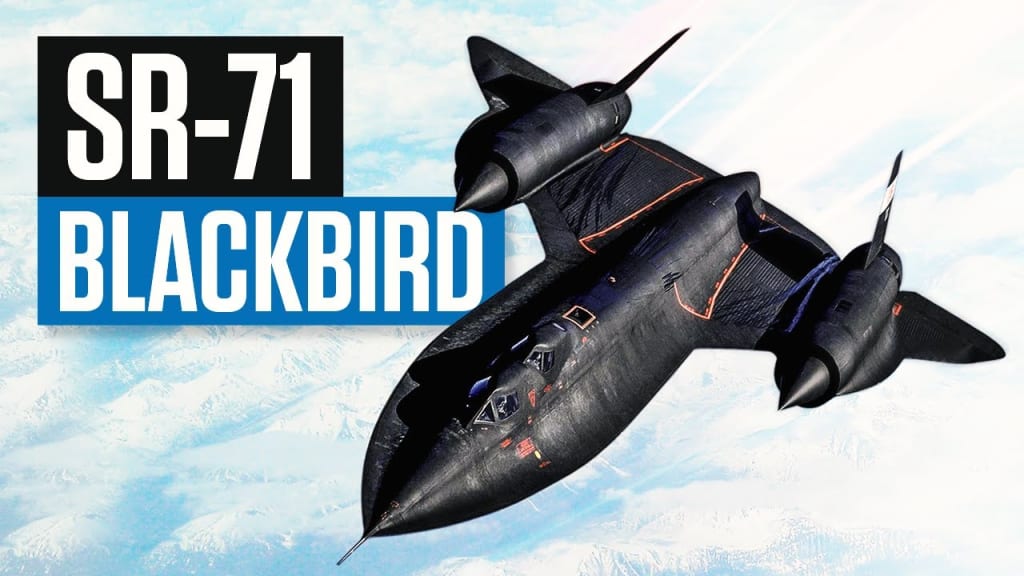
The Lockheed SR-71 Blackbird is known as the invincible spy plane. The US government believed the U-2, which first flew in 1955, was out of range of Soviet radar systems due to its high cruising altitude. However, as Gary Powers proved in 1960, this was not the case. The Soviets had advanced radar technology that could track the U-2. The U-2 was slow and had a large radar cross-section, making it an easy target. The CIA tried to make the U-2 less visible to radar but failed. They needed a new plane that would be invulnerable to Soviet air defense systems. Building an invincible plane was considered impossible, but an aeronautical engineer in the US had a reputation for achieving the impossible.
Kelly Johnson, known for his significant contributions in aviation, designed various groundbreaking aircraft such as the United States' first jet fighter, the first military aircraft to surpass 400 mph, the first Mach 2 capable fighter, and the first aircraft to exceed Mach 3. His accomplishments make him an influential figure in the history of aviation.
At the time, he held the position of head of Lockheed's Advanced Development Projects, commonly known as the Skunk Works department. Johnson's team was relatively small, but consisted of highly skilled aerospace engineers from both the US and other countries. Collaboratively, Johnson and his team developed a remarkable aircraft that can be regarded as an exceptional feat of engineering.
The first version of the aircraft was called the A-1, and it was unique in its design. It was created in secrecy and first flew in the early 1960's at a location known as Area-51. The A-1, along with similar planes, contributed greatly in establishing Area-51's reputation as a place of secret alien technology. The A-1 had a futuristic appearance and could have easily been mistaken for a spacecraft in a movie. Interestingly, Elon Musk named one of his children after the A-1, which is a tribute to his favorite plane, the SR-71. The A-1 had three different variants, including a reconnaissance plane, an interceptor equipped with air-to-air missiles, and a M-21 with a detachable unmanned drone. However, the A-1 was eventually replaced by the SR-71, also known as the Blackbird. Fun fact: the Blackbird was actually painted a very dark shade of blue.
The SR-71 was a spy plane that could fly 16 miles above the earth at over 3 times the speed of sound. It had a 'stealth' design that made it hard to detect on radar. It flew so high and fast that it couldn't be shot down. In 30 years of service, around 4000 missiles were fired at it, but none of them hit.
The Blackbird was an innovative aircraft that required extensive use of new technology for its construction. It operated at extremely low air temperatures at cruising altitude and generated high temperatures due to friction with the thin atmosphere. After a flight at Mach 3, the hull of the Blackbird was very hot.
The SR-71 was made mostly from a titanium alloy because regular aluminum would soften in extreme heat. Before they could start building the plane, new fabrication tools and methods had to be invented. When the plane flew at high speeds, it generated a lot of heat, causing the airframe to expand. To accommodate this, the panels on the plane were fitted with extra room. However, this caused the plane to leak fuel while on the ground because the fuel tanks didn't seal properly.
There was a shortage of titanium in the US at the time, which was unfortunate as most of the global supply came from the Soviet Union. The CIA had to establish dummy corporations to acquire what Skunk Works needed, since buying directly wasn't an option.
The first SR-71s were put into service in 1966, a few months before the England football team won the World Cup. Only 32 of these planes were made. SR-71 pilots had special pressure suits because the planes flew so high that their blood could boil if the cockpit was breached. Despite its capabilities, the SR-71 was never flown over the Soviet Union due, in part, to the high tensions of the Cold War. The planes had cameras that could scan large areas of enemy territory in a short time. For nearly 30 years, the SR-71 was a dominant force in the sky and was used in various war zones. However, in the 1990s, emerging technologies like spy satellites and unmanned drones made the SR-71 less necessary. The lack of a live data feed was a major drawback, and the costs of maintaining the SR-71 were high. Despite some disagreement, the SR-71 was retired and briefly brought back in 1999 before being permanently mothball.
The Blackbird is an older spy plane that was built almost 60 years ago and has been replaced by newer, more advanced models. However, it still holds the title as the fastest air-breathing airplane ever built and holds various point-to-point records, including the fastest flight from New York City.
The aero-plane had a significant impact on those involved in its construction and flight. The pilots were amazed by its capabilities, reaching heights of 85,000 feet and speeds of Mach 3.
If you are interested in seeing an SR-71, you will need to visit one of the few museums that have one on display. However, there is good news as a successor, known as the SR-72, is currently being developed and could be operational by 2025.
The outcome will be determined with time in terms of living up to its predecessor's legacy.
About the Creator
Keep reading
More stories from writers in History and other communities.
Can the United States Leave NATO?
Can the United States Leave NATO? What It Would Take—and What It Would Mean The North Atlantic Treaty Organization, commonly known as NATO, has been one of the most powerful military alliances in modern history. Since its creation in 1949, the United States has been NATO’s strongest member—militarily, financially, and politically. But in recent years, debates have grown louder about whether the U.S. should remain in the alliance. This raises a serious question: how could the United States be removed from NATO—or leave it—and what would that mean for the world?
By Wings of Time 6 days ago in History




Comments
There are no comments for this story
Be the first to respond and start the conversation.