
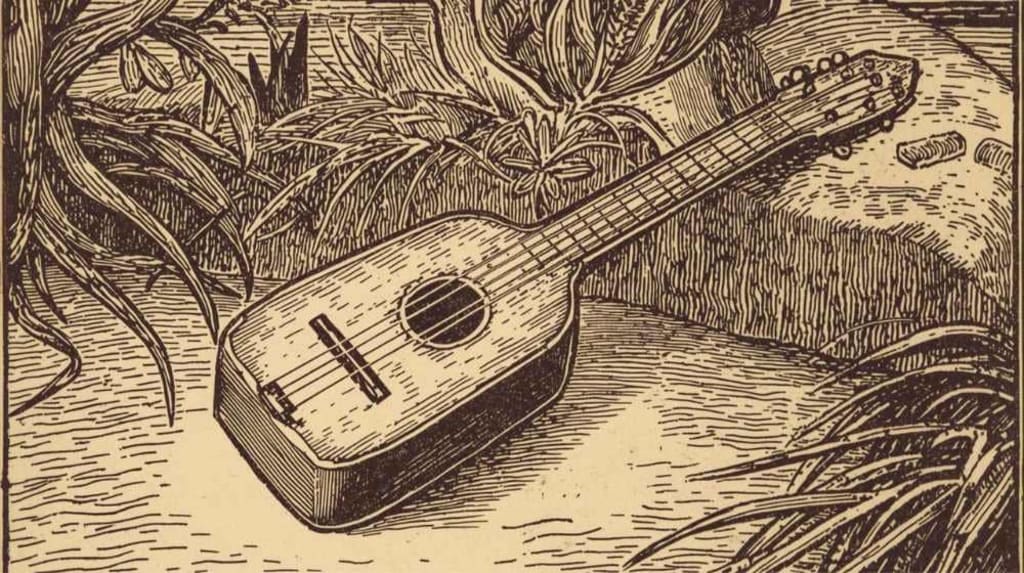
The ukulele is one of the most iconic instruments in the world today, beloved for its cheerful and lively sound. Its four strings, small size, and unmistakable tone have made it a symbol of fun and creativity, particularly in Hawaiian music and modern pop culture. But before the ukulele became the household name it is today, it had different names and a very different journey to get to where it is now. Let’s explore the early origins of the ukulele, what it was originally called, and how it evolved over time.
The Roots of the Ukulele: The Portuguese Influence
The ukulele's journey begins not in Hawaii, but in Portugal. In the late 19th century, Portuguese immigrants brought with them a variety of traditional stringed instruments. Among these was the machete, a small, four-stringed instrument with a bright, sharp sound, similar to a small guitar. The machete was used in Portuguese folk music, often accompanying lively dances and festive celebrations.
When the Portuguese immigrants settled in Hawaii in the 1870s, they brought their musical traditions with them, including the machete. Hawaii, known for its rich musical culture, was a place where instruments and musical ideas from around the world blended together. The Hawaiian people were already familiar with creating their own instruments, such as the steel guitar and Ipu, a percussion instrument made from gourds. The arrival of the machete opened the door for innovation and adaptation, leading to the birth of a new musical instrument: the ukulele.
The Evolution: Hawaiian Influence on the Machete
While the machete was already a popular instrument in Portugal, the Hawaiians quickly began to modify it to suit their own needs and playing styles. The changes made the instrument smaller, lighter, and more accessible. They adjusted the tuning, the shape of the body, and the number of strings. These changes resulted in a more portable and easier-to-play instrument that would later become known as the ukulele.
This transformation was an example of cultural exchange at its finest: the Portuguese machete was adapted by the Hawaiian people to reflect their musical tastes and needs. The new version was a perfect fit for the relaxed island life and became an integral part of Hawaiian culture. As the instrument evolved, it began to take on a unique identity—distinct from its Portuguese roots.
The Name Game: Braguinha, Cavaquinho, and the First References
Before the instrument was officially called the ukulele, it went by several other names. Early Hawaiian versions of the instrument were often referred to as braguinha or cavaquinho. These names were borrowed directly from Portuguese instruments that resembled the machete in shape and size.
Braguinha: The term braguinha was used for smaller stringed instruments that were part of Portuguese folk music. These instruments were often used in traditional celebrations and were known for their bright, sharp tones.
Cavaquinho: The cavaquinho is another small, four-stringed instrument that comes from Portugal and was commonly used in traditional folk and popular music. It’s also a predecessor of the ukulele, and the early Hawaiian ukuleles were sometimes referred to as cavaquinhos due to their resemblance to this Portuguese instrument.
While these names were in use during the early years of the ukulele's development, the Hawaiian people began to look for a term that better captured the lively, energetic spirit of the new instrument.
The Name Ukulele: "Jumping Flea" and Hawaiian Humor
By the time the ukulele had evolved into the instrument we recognize today, it was being widely referred to by its Hawaiian name: ukulele. This term, which literally translates to "jumping flea" in Hawaiian, is believed to reflect the quick, energetic motion of the player’s fingers as they strum the strings. The rapid finger movements required to play the ukulele resembled the way a flea jumps from one place to another.
Some sources suggest that the name ukulele was also a playful nickname given by the Hawaiians to the Portuguese musicians who played the instrument. It was said that the Portuguese players’ quick, hopping finger movements inspired the nickname. The term ukulele was therefore a lighthearted reference to the lively nature of the music being played.
There’s also an interesting anecdote about how the name came about. According to some stories, when the Hawaiians first saw the Portuguese musicians play the instrument, they were so impressed by how quickly and energetically they strummed that they compared the motion of their fingers to fleas hopping on a surface. This nickname stuck, and the ukulele became the official term for the instrument.
The Ukulele's Rise in Popularity
The Early 20th Century: Hawaiian Music Meets the Mainland
The ukulele’s rise to fame began in the early 20th century, and it was helped along by the spread of Hawaiian music to the U.S. mainland. In 1915, the Panama-Pacific International Exposition in San Francisco introduced the instrument to a wide American audience. Hawaii, then a U.S. territory, showcased its unique culture, and the ukulele was a central part of that display.
The instrument quickly gained popularity, and by the 1920s, the "Hawaiian craze" had fully taken off. The ukulele was featured in movies, music performances, and even radio broadcasts. It was celebrated for its simplicity and joyful sound, making it a favorite of both amateur and professional musicians alike.
The 1920s Golden Age: Ukulele Ike and the Jazz Era
The 1920s marked the golden age of the ukulele in the United States. The instrument was featured prominently in jazz bands, vaudeville shows, and popular music. Performers like Cliff Edwards—known by his stage name Ukulele Ike—helped popularize the ukulele across the country. Ukulele Ike was known for his virtuosic playing, and his performances made the ukulele a symbol of the fun and carefree spirit of the time.
In addition to jazz and vaudeville, the ukulele found its place in early recordings of Hawaiian music. Musicians such as Sol Hoopii and Roy Smeck became famous for their skillful ukulele playing. These early pioneers showcased the versatility of the ukulele, showing that it wasn’t just an accompaniment instrument, but a lead instrument with the ability to perform intricate solos and melodies.
The Decline: 1930s-1940s
By the 1930s, the ukulele’s popularity began to decline. The rise of jazz, swing, and big band music saw the ukulele replaced by larger, louder instruments like the guitar and piano. While the ukulele remained a favorite in Hawaiian and folk music circles, it no longer had the widespread appeal it had enjoyed during the "Hawaiian craze."
Despite its decline in mainstream popularity, the ukulele continued to be cherished by many musicians. It remained an integral part of Hawaiian music and was still used in folk music traditions across the United States. Its status as a "niche" instrument made it popular for those seeking a simple, accessible way to make music.
The Ukulele Revival: The Late 20th Century and Beyond
Israel Kamakawiwo‘ole: A Soulful Comeback
The ukulele’s revival came in the 1990s, thanks to the efforts of the late Hawaiian musician Israel Kamakawiwo‘ole. His version of “Somewhere Over the Rainbow”, released in 1993, became an international hit and reignited global interest in the ukulele. His soulful, gentle voice combined with the ukulele's sweet sound created a new, emotional resonance for the instrument.
The success of Kamakawiwo‘ole’s version of the song helped introduce the ukulele to a new generation of music lovers, many of whom had never heard the instrument before. It also demonstrated the ukulele’s versatility, showing that it could be used to express deep emotion and sensitivity, not just lively tunes.
The Rise of Ukulele Virtuosos
Following Kamakawiwo‘ole’s success, other artists began to push the boundaries of what the ukulele could do. One notable figure is Jake Shimabukuro, a Hawaiian ukulele virtuoso whose playing has been described as breathtakingly intricate and fast. Shimabukuro’s performances have showcased the ukulele's full potential, proving that it can be used in many different genres, including rock, jazz, classical, and contemporary music.
With the rise of the internet and social media, the ukulele found a new wave of popularity. Online tutorials and videos helped people around the world learn to play the ukulele, and its accessibility made it a popular choice for beginner musicians.
Conclusion: The Enduring Legacy of the Ukulele
So, what was the ukulele originally called? Before it became known as the ukulele, it was referred to by several different names, including machete, braguinha, and cavaquinho. These names reflected its Portuguese roots and the early stages of its development. However, it was the name ukulele, meaning "jumping flea," that ultimately stuck, perfectly capturing the lively spirit of the instrument.
From its roots in Portugal to its evolution in Hawaii and eventual rise to international fame, the ukulele has become a symbol of joy and musical expression. Today, the ukulele continues to inspire musicians worldwide, both for its simplicity and its ability to convey deep emotions. The legacy of the ukulele is not just in its music, but in the story of its cultural evolution, reminding us that music has the power to unite, express, and bring joy.
About the Creator
I wanted to title this something different, but worried that my chosen title might cause problems entering the United States in the future so this is the new title. It's the greatest title. No one has ever written a title better than this. (All titles unrelated to content).
Let me be honest. I am finding this difficult. Now, I like a challenge, a stretch, a bit of an obstacle course. “Write about the decline of the British Empire in the form of a narrative poem in which your protagonist is an artichoke” I read, and flex my fingers. “Write a haiku to evoke the sensation of sibilance using only the first half of the alphabet.” “Well”, I think to myself, “this should be fun.” But “write about a system that isn’t working”? A system that isn’t working? Now? In 2026? ONE system? My favourite system that isn’t working? The sexiest system that isn’t working? The one giving me the most angst day to day? The one giving me the most existential dread? I am, as I say, finding this difficult. I will own that I have contemplated writing a thousand words on why the steady “all on” setting on my fairy lights is the EIGHTH of seven options which must be sequentially activated to get there, because that is a system that some fool came up with and it definitely doesn’t work, and now who is paying the price, eh? But how can I write about my fairy lights when…. When…. When….
By Hannah Moore5 days ago in Humans




Comments
There are no comments for this story
Be the first to respond and start the conversation.