
What the Indo-Pak War means for its neighboring nations?
Echoes Beyond Borders

The war between India and Pakistan is one of the most ancient and least predictable of today's geopolitics. The two nations have fought each other several times—1947–48, 1965, 1971, and 1999—and have had continuous border fights and run-ins with each other. While the short-term impact of such conflicts is experienced most forcefully within India and Pakistan, their ripple effects spread far beyond their national borders. The regional neighbors of South Asia are often caught in the ripple effects—political, economic, and geopolitical.
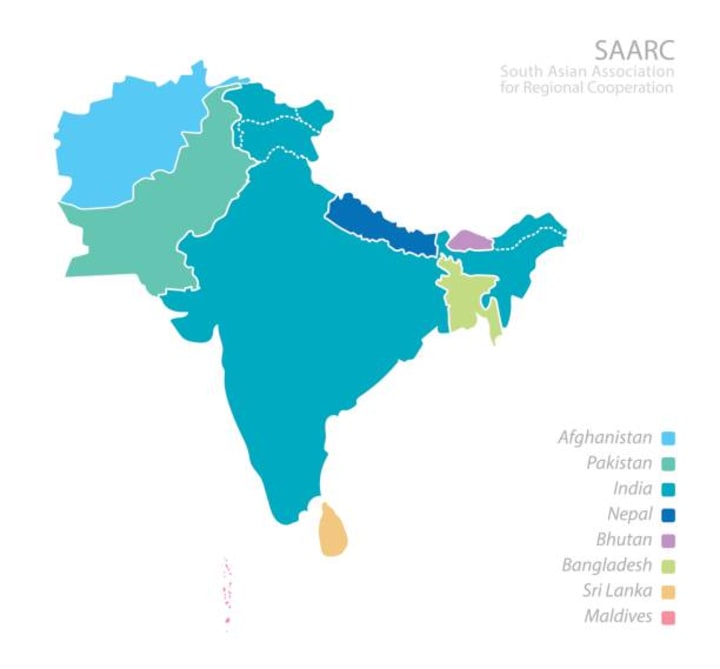
Afghanistan: A Delicate Balancing Act
Afghanistan, which has a long and permeable border with Pakistan, is one of the first to suffer the effects of an Indo-Pak war. Traditionally, whenever Pakistan shifts its military focus towards India, it stands to lose control over its western border. This provides more freedom of movement to extremist elements and smugglers, resulting in greater instability in Afghanistan.
In addition, any breakdown in Pakistan's internal security is felt in Afghanistan, which relies on regional coordination for trade, border security, and counterterrorism. The changing priorities also make peace processes with multiple actors more difficult, especially when Pakistan's cooperation is put into question because of its alignment with India.
China: Strategic Chess Moves
China occupies a unique place in the Indo-Pak dynamics. Both a strategic rival of India and an intimate friend of Pakistan, Beijing maintains a tight grip on—and occasionally manipulates—the dynamics of tensions between the two South Asian giants. When tensions are rising, China is prone to escalating the pace of military mobilization along its own contested borders with India, e.g., Ladakh or Arunachal Pradesh, suggesting subtly to New Delhi that it is being encircled on all sides.
While China rarely directly intervenes, it takes such situations to further its geopolitical agenda, such as strengthening the China-Pakistan Economic Corridor (CPEC) or reaffirming its position on border matters. The Indo-Pak dispute indirectly helps China keep India diplomatically and militarily occupied.
Nepal and Bhutan: Tensions Behind Neutral Smiles
Nepal and Bhutan, both small Himalayan nations closely integrated with India by commerce and security agreements, are sensitive in any Indo-Pak confrontation. Even though both nations technically remain neutral, their dependence on India renders it difficult to keep aloof.
For Nepal, increased Indo-Pak tensions have the potential to disrupt border trade, oil shipments, and the movement of goods and individuals. For Bhutan, India's only overland link to the country becomes strategically exposed, especially since Bhutan lies near the thin Siliguri Corridor, otherwise known as India's "Chicken's Neck."
In both countries, domestic political factors sometimes work to turn India's involvement in regional conflicts into a mobilization issue—either to solidify ties with India or protest the level of that dependence.
Bangladesh: A History That Still Echoes

No nation knows the price of Indo-Pak conflict better than Bangladesh, which came into being as an independent nation after the 1971 Indo-Pak war. That war was not merely a geopolitical event; it was a humanitarian tragedy in which millions of refugees streamed into India, compelling direct intervention and ultimately leading to the birth of Bangladesh.
Bangladesh is now a developing economy and maintains good bilateral ties with India and, to a lesser extent, Pakistan. Renewed competition between the two neighbors can raise alarm about refugee movements, interceptions on trade routes, and diplomatic pressure. Bangladesh must walk a diplomatic tightrope constantly—its past record of gratitude towards India on one side and hopes for regional neutrality on the other.
Sri Lanka and the Maldives: Watching the Waters
To the south, the Maldives and Sri Lanka, while being geographically outside the epicenter of conflict, are not isolated from the effects of conflict. Both are significant actors in Indian Ocean trade routes as well as tourism economies. Any increase in military tensions or diplomatic conflict between India and Pakistan is a source of concern for regional stability, foreign investment, as well as maritime security.
During Indo-Pak tensions, these island nations would face increased naval presence by regional and global powers, such as the United States or China, which again makes their strategic calculations in reaction more complicated. Both countries also rely heavily on peace and integration in South Asia for trade, tourism, and employment, especially for Sri Lankan workers abroad.
Conclusion: A Conflict That Crosses Borders
An Indo-Pak war can begin as a bilateral one, but its fallout is always regional. From Nepal's Himalayas to the Indian Ocean, the surrounding countries are impacted—either by security issues, refugee flow, diplomatic tensions, or economic instability.
The journey to lasting peace between India and Pakistan is certainly complicated, but its worth cannot be overstated. Peace in South Asia does not just equate to silent borders—it means an opportunity for the entire region to breathe, grow, and collaborate without worrying about being drawn into a war not of their own creation.
About the Creator
Wasir Ahmed
Hey there! I’m just someone who loves sharing real thoughts, cool ideas, and little things that make you stop and think. Stick around — you might just find something that clicks.
Keep reading
More stories from writers in History and other communities.
Alexander the Great’s Body Preservation Method: History, Mystery, and Science
Ancient historians describe Alexander’s corpse as remaining uncorrupted for several days, even weeks, which led many to believe he was divine. The method used to preserve his body has intrigued historians, scientists, and medical scholars for centuries.
By Say the truth 4 days ago in History
GIVE PEACE A CHANCE
Give Peace a Chance I remember the day John Lennon was shot. It was December 8, 1980, and the news hit the world like a devastating storm. But it wasn’t just the loss of a singer or songwriter; it felt like the silencing of a philosopher, a man who used music to speak truth to power and feed the souls of millions.
By Marie381Uk 3 days ago in History




Comments
There are no comments for this story
Be the first to respond and start the conversation.