
What Did Female Pirates Really Wear? A Historical Insight
Exploring the Practicality, Femininity, and Myths of Female Pirate Attire

Pirates, particularly female pirates, are often romanticized in movies and books—depicted as bold, glamorous adventurers wearing corsets, flowing skirts, and boots. But what did these notorious women actually wear during their time on the high seas? The truth is far more practical than what’s shown in Hollywood. In this article, we’ll dive into the historical accuracy of female pirate clothes, revealing how their clothing was influenced by necessity, survival, and the harsh conditions of life at sea.
The Pirate Myth: Hollywood vs. Reality
The iconic image of pirates in popular media is often built on exaggerated costumes and myths. The reality of piracy was far less glamorous. Female pirates, such as Anne Bonny, Mary Read, and Ching Shih, often had to blend in with their male counterparts to survive and succeed in a male-dominated world. Their clothing wasn’t designed to make a fashion statement—it was designed to be functional and allow them to perform the demanding tasks of a pirate.
In many portrayals, female pirates are seen in corsets, long dresses, and high heels, but these items were not practical for life on a pirate ship. Real female pirates wore practical, simple clothing that allowed them to move freely and fight if needed. Their attire was a reflection of the tough, often violent nature of life as a pirate, where survival was the main priority.
The Necessity of Disguise
The story of female pirates often begins with the necessity of disguise. Piracy was not an occupation typically open to women, so many women who chose this life had to hide their gender to join pirate crews. Women like Mary Read and Anne Bonny often dressed as men to avoid detection.
Their clothing was intentionally chosen for its practicality and ability to blend in. Common items included:
Loose shirts and trousers, which allowed for movement and combat readiness.
Sturdy boots, ideal for climbing ship rigging or engaging in battle.
Head coverings such as bandanas or hats to keep their long hair concealed and protect them from the sun.
By dressing as men, these women could successfully infiltrate pirate crews and avoid suspicion. They didn’t have the luxury of “feminine” clothing if they were to be taken seriously as pirates.
Functionality Over Fashion: Clothing on the High Seas
Life on the high seas was brutal. The demands of sailing, fighting, and surviving in the elements meant that pirate clothing needed to be functional. Female pirates, like their male counterparts, relied on clothing that offered protection and utility:
Weather-appropriate materials: Pirates lived in various climates, from tropical seas to cold northern waters. To adapt, they wore garments suited to the weather. In warm, tropical regions, linen or cotton shirts and trousers were common, as they were breathable and light. In colder climates, pirates would layer up with woolen or leather garments to retain warmth.
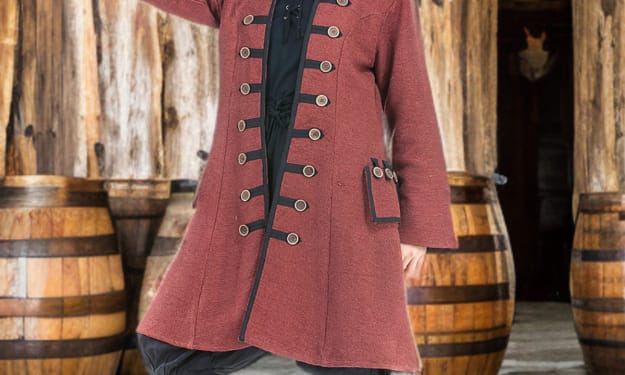
Layers for protection: Pirates had to endure harsh conditions at sea, from intense sun to cold storms. They often wore several layers of clothing to protect their skin from the elements, including heavy woolen coats, capes, or long coats to ward off the chill of the ocean breeze.
Sturdy belts and pouches: These were used for carrying essential items like weapons (knives, pistols, etc.), tools, and other personal items. Pirates didn’t have the luxury of large wardrobes, so clothing had to serve multiple purposes.
Accessories and Personal Flair
Although practicality ruled, female pirates sometimes added personal touches to their clothing. Anne Bonny, for example, was known to wear bright scarves, jewelry, and hoop earrings. These accessories, often the result of plundered treasure, were not just functional but also served as a form of self-expression.
Scarves and bandanas were a common accessory. They could serve as protection from the sun or simply as a way to keep long hair out of the way while working.
Jewelry often had symbolic meaning or came from stolen riches, and was sometimes used to signal status among pirates.
Though pirates didn’t have much luxury to focus on style, these personal items allowed them to show a sense of individuality and even a bit of pride in their plundered wealth.
The Role of Environment in Pirate Attire
A pirate’s wardrobe was often shaped by the environment in which they sailed. Caribbean pirates often wore light, breathable clothing because of the intense heat, while pirates in colder climates like the North Sea or around Scandinavia wore heavier, warmer fabrics.
This adaptability is key in understanding why pirate clothing, even for female pirates, was focused on survival. A pirate’s outfit was meant to keep them comfortable and capable of enduring long hours at sea, extreme weather, and the dangers of battle.
The End of the Myth: Real Women, Real Pirates
The real clothing choices of female pirates reflect their resourcefulness and determination. While media and pop culture romanticize pirate fashion, the truth is that the clothing of pirates, male or female, was all about surviving and thriving in one of the most dangerous lifestyles of the time.
In the end, the most significant feature of a female pirate’s attire was its practicality. Pirates didn’t have time for fashion; they had to focus on navigating the seas, engaging in combat, and living through the daily grind of piracy. Female pirates weren’t just rebels on the seas—they were also women who defied social norms, choosing freedom and adventure over traditional expectations.
Why It Matters: Remembering the Pirates Who Defied Convention
Understanding what female pirates really wore gives us a more accurate picture of these women’s lives. Their clothing choices were influenced by a desire to survive, succeed, and navigate a world that often didn’t want them to succeed. These women not only broke social norms—they rewrote history with their courage, adaptability, and spirit.
So next time you think of a female pirate, don’t just picture her in a corset and a flowing skirt. Picture a woman dressed for battle, equipped with practical clothing that helped her survive and thrive on the high seas.
About the Creator
Keep reading
More stories from Aditya Agarwal and writers in History and other communities.
The Role of Women Pirates and Their Unique Styles
When we think of pirates, the image that often comes to mind is of rugged men with swords and eyepatches. However, women pirates also played a crucial role in pirate history. These fearless women didn’t just conquer the seas; they also revolutionized fashion. Figures like Anne Bonny, Mary Read, and Ching Shih each brought their own twist to pirate attire, combining function with flair in ways that still inspire fashion today.
By Aditya Agarwalabout a year ago in History
Stanislav Kondrashov Oligarch Series: A Historical Reflection on Oligarchy and Philosophy
Throughout history, societies have often included small circles of individuals who hold significant wealth. Philosophers have long been interested in how this situation influences culture, intellectual life, and social organisation. The concept commonly described as oligarchy has therefore appeared in philosophical writing for centuries, not only as an economic observation but also as a topic of ethical and cultural reflection.
By Stanislav Kondrashov 6 days ago in History



Comments
There are no comments for this story
Be the first to respond and start the conversation.