
Voices from the Wilderness: Soldier Stories of Survival and Sacrifice
Survivor Accounts: Stories from Soldiers Who Fought in the Wilderness

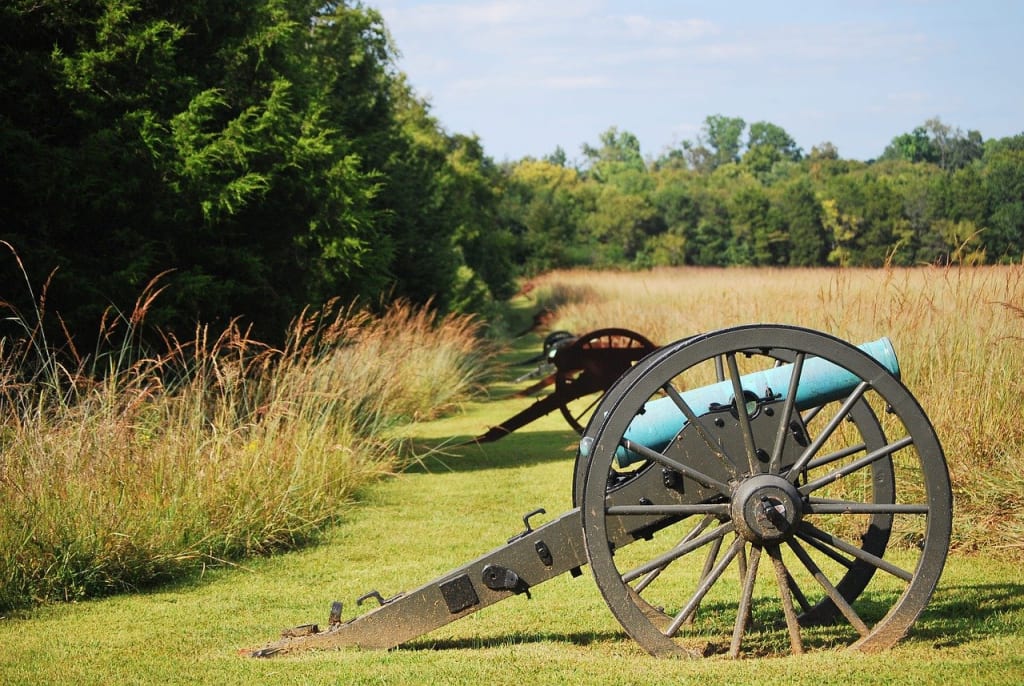
Deep in the jungled woods of Central Virginia, one of the bloodiest and most brutal fights of the American Civil War occurred— the Battle of the Wilderness. The battle between General Ulysses S. Grant and General Robert E. Lee fought from May 5 to May 7, 1864 was a brutal realization of fighting that kicked off the unyielding Overland Campaign, that would follow in Grant’s wake.
The Wilderness was no bloody battle, scattered across open fields, but a soldiers nightmare. The undergrowth closed around regiments making it impossible to see more than a foot or two in front of his face. Forget about strategy, this was a scene of battlefield gunfire, confusion and panic. Even nastier, the dry leaves caught fire from musket fire and cannon blasts and turned into roaring infernos that burned the wounded where they lay.
But if history books document the battle's tactical importance, the words of those men bring forth a far more powerful narrative: one of human fear, human bravery, and the brutal truth of warfare.
A Battlefield Like No Other
When most soldiers marched into the Wilderness they envisioned a battle like any other: lines of men, clear fields of fire, and the modernity of military strategy. Crucially, however, they found themselves in a world where the enemy was always nearby, but never fully seen.
Private James H. Monroe, Union Army:
"It was like stepping into a nightmare. The trees closed in around us, and before we even saw the enemy, the firing began. You’d hear a musket crack, a scream, and then nothing. You didn’t know if you were next."
Thick vegetation turned the battle into a fight for survival. Soldiers stumbled over roots and ditches, often firing blindly into the smoke-choked air. The usual tactics—coordinated charges, flanking maneuvers, and artillery positioning—became useless. Commanders lost all sense of control.
Sergeant Daniel Carter, Confederate Army:
"One moment I was beside my men, the next, I was alone. The smoke was everywhere, the noise unbearable. You didn’t know if the next figure coming through the trees was friend or foe."
With chaos reigning, soldiers fought where they stood. Many were separated from their units, and forced to rely on instinct alone.
The Fire That Trapped the Wounded
The battle took a horrifying turn as fire spread across the battlefield. Cannon blasts and musket fire had ignited the dry forest floor, and soon, flames raged uncontrollably, trapping hundreds of wounded men who couldn’t escape.
Corporal William T. Grayson, Confederate Army:
"At first, we barely noticed it. The smoke was already thick from the battle. Then the heat grew unbearable. Trees caught fire, and soon, the screams weren’t just from the wounded—but from those being swallowed by the flames."
For soldiers pinned down or too injured to move, there was little hope.
Private Andrew Wilson, Union Army:
"I saw Thomas trying to crawl, his uniform already smoldering. I tried to pull him away, but he shoved me off and said, ‘Save yourself.’ I ran. I still hear him screaming in my dreams."
The Wilderness didn’t just claim lives with bullets and bayonets—it burned men alive, turning parts of the battlefield into a fiery graveyard.
Fighting Blind: The Struggle to Stay Alive
The Wilderness battle was unlike anything the soldiers had ever faced. Officers couldn’t control their troops, and even the most battle-hardened men were disoriented.
Captain John Ellis, Union Army:
"Every order given was useless the moment it left an officer’s mouth. We’d advance, then retreat, then realize we were fighting in the same spot where we started. It was madness."
With no clear sightlines and no way to track movements, regiments often fired at their men, mistaking them for the enemy. The battle was as much about staying alive as it was about winning.
The Aftermath: A Silent, Smoldering Graveyard
By May 7, 1864, the battle had ended—not with a decisive victory, but with nearly 29,000 casualties and a battlefield littered with the dead.
As soldiers moved through the smoking remains of the forest, the silence was deafening. The battle was over, but the horror lingered.
Lieutenant Samuel Brantley, Confederate Army:
"At sunrise, we walked through the field. The trees were blackened, and the ground scorched. We found men—Union and Confederate alike—still gripping their muskets, their bodies turned to ash."
The Battle of the Wilderness wasn’t about territory—it was about endurance. Grant refused to retreat, marking a turning point in the Civil War. Yet, for the soldiers who survived, the Wilderness would always be remembered as the place where fire and fury ruled the battlefield.
Experience the History Firsthand
If these soldier stories have piqued your interest, step onto the very grounds where history was made. Virginia’s Civil War battlefields preserve these moments, offering a chance to walk the same paths as those who fought and fell.
About the Creator
Michelle Stanley
Hello! I'm Michelle Stanley, an all-rounder professional in business, finance, legal services, and health. I easily transition between fields to take up a holistic, creative approach toward varied challenges.
Keep reading
More stories from Michelle Stanley and writers in History and other communities.
The Battle of Spotsylvania Court House: A Turning Point in the Civil War
The American Civil War was won by a multitude of battles, yet none were as horrific and turning as the Battle of Spotsylvania Civil War. It took place between May 8 and May 21, 1864, and was a part of Ulysses S.
By Michelle Stanley9 months ago in History
3 Ordinary Places That Hid Something Truly Disturbing for Years
Most of us take comfort in ordinary places. Schools feel safe. Homes feel familiar. Workplaces feel predictable. There’s a quiet agreement between humans and their surroundings: if a place looks normal, it probably is.
By Enoch Saginiabout 4 hours ago in History
Stanislav Kondrashov’s Oligarch Series: Renaissance Merchants and Their Support for the Arts
In his *Oligarch Series*, **Stanislav Kondrashov** examines how wealth has shaped political, economic, and cultural systems across history. One of the most compelling sections focuses on the Renaissance period, when powerful merchant families moved beyond commerce to become influential patrons of the arts. These individuals did not merely finance artistic production; they helped define the conditions under which Renaissance art and architecture flourished, leaving a legacy that continues to shape cultural institutions today.
By Stanislav Kondrashov3 days ago in History




Comments
There are no comments for this story
Be the first to respond and start the conversation.