
Vlad the Impaler
The True Story Behind Dracula

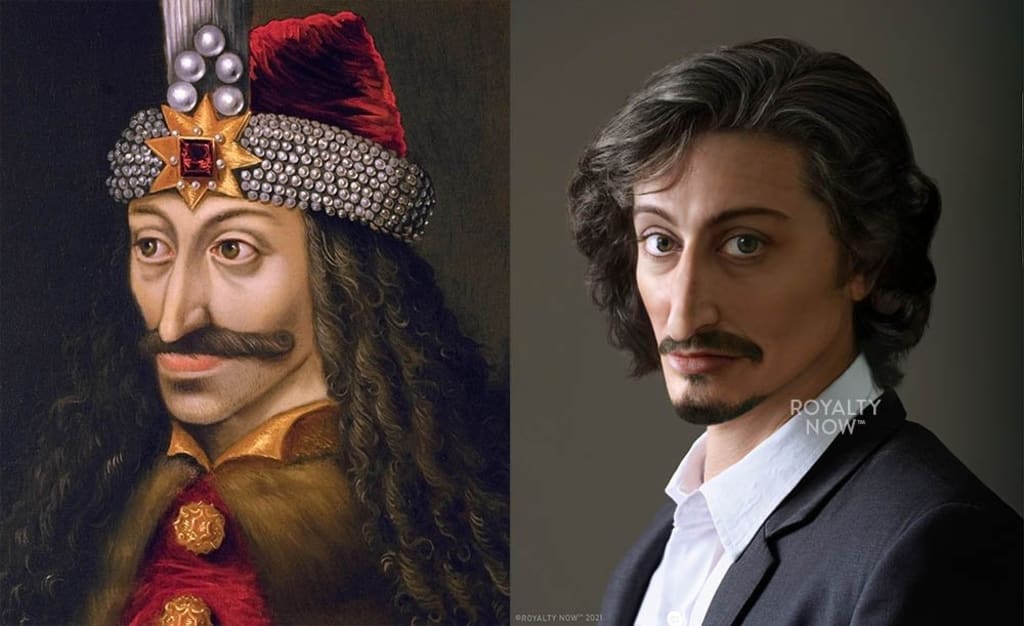
To some, he was the very embodiment of evil—a psychopathic incarnation of the Devil himself. To others, he was a god-fearing defender of the faith, courageously standing up to the feared Ottoman Empire. In his time, he was known as Vlad the Impaler, thanks to his favorite method of execution. Today, we remember him as the real-life inspiration for Bram Stoker’s infamous prince of darkness. In this post, we delve into the gruesome truth about the real Vlad Dracula.
Formative Years
Vlad III Dracula, future prince of Wallachia, was born in either November or December of 1431 in the northern Romanian state of Wallachia. His father, Vlad II, would later become the ruler of Wallachia. The name "Dracula" has often been associated with evil due to its connection with the myth of Dracula. However, its origins are far more complex and rooted in the turbulent history of medieval Europe.
Vlad II, known as Vlad Dracul, was inducted into the Order of the Dragon—a knightly society dedicated to defending Christianity against the Ottoman Turks. The term "Dracul" is derived from the Latin word draco, meaning dragon, but also carries connotations of the Devil in modern Romanian. Vlad III's name, "Dracula," thus translates to "son of the dragon" or "son of the Devil," reflecting his father’s association with the Order.
The world Vlad was born into was one of ceaseless conflict and intrigue. Wallachia was a volatile region caught between the powerful Ottoman Empire and the competing interests of European states. Family loyalty and honor were paramount, and Vlad learned these values early. His father’s allegiance to the Order of the Dragon involved fierce resistance against the Ottomans, a legacy that would shape Vlad’s own turbulent reign.
Early Life and Captivity
In his early years, Vlad and his younger brother Radu were educated at the royal court in Targoviste, the capital of Wallachia. Their education was overseen by Greek and Roman scholars brought in from Constantinople, ensuring they received a well-rounded education in mathematics, geography, science, and languages including Old Church Slavonic, German, and Latin.
However, their comfortable life was disrupted in 1442 when Vlad II’s throne was usurped by a rival faction allied with the Hungarians. To regain his position, Vlad II made a precarious alliance with the Ottomans, agreeing to pay tribute and leaving his sons, Vlad and Radu, as hostages in the Ottoman court.
During their captivity, the brothers received advanced education in logic, Turkish, and the Quran, along with lessons in horsemanship and warfare. Their time at the Ottoman court exposed them to the Turks' use of terror as a political tool—a tactic Vlad would later employ with ruthless effectiveness.
While Radu adapted and eventually embraced Ottoman culture and Islam, Vlad remained defiant, displaying a rebellious and confrontational attitude that led to frequent punishment. Despite their harsh treatment, the Ottomans came to regard Vlad with a measure of affection. This complexity in his relationships foreshadowed the dual nature of his legacy.
Return to Power
After his father’s death in 1447, the throne of Wallachia was claimed by Vladislav II, who had been supported by the Hungarians. Vlad and his older brother Mircea II were forced to flee, but Mircea was captured and executed. With their elder brother becoming a monk, Vlad, at the age of 16, was recognized as the rightful heir.
In 1448, Vlad, with the help of the Ottomans, managed to briefly reclaim his throne. However, his reign was short-lived as Hungarian-backed forces soon forced him to flee once again. For the next three years, Vlad lived under the protection of his uncle Prince Bogdan II in Moldavia, and later in Transylvania, where he was mentored by John Hunyadi, a prominent Hungarian warrior and opponent of the Ottoman Empire.
Vlad’s fortunes changed dramatically in 1456 when he led an army back into Wallachia, decisively defeating Vladislav II and reclaiming his position. This marked the beginning of his notorious rule, characterized by a combination of political acumen and extreme brutality.
The Reign of Terror
Once in power, Vlad embarked on a campaign of ruthless retribution against those he believed had betrayed his father. His method of punishment was notorious: impalement. Vlad invited nobles who had conspired against his father to a feast, only to arrest and impale them in front of their families. The impalement was not merely a form of execution but a public display intended to instill fear and assert dominance.
Vlad's cruelty extended beyond the traitors. He imposed a strict moral code on his subjects, meting out horrific punishments for even minor infractions. Women who lost their virginity before marriage or were accused of adultery were impaled, often with their bodies mutilated. Beggars were lured to a feast and then burned alive in a wooden hall, reflecting Vlad’s disdain for poverty and his desire to maintain social order through fear.
The Ottoman Threat
The Ottoman Empire, under Sultan Mehmed II, was expanding aggressively, and by 1460, there were calls for a new crusade to reclaim Constantinople and halt the Ottomans' advance into Europe. Vlad saw this as an opportunity to consolidate his power and protect Wallachia. He formed an alliance with Matthias Corvinus, the only European ruler who responded positively to the call for crusade support.
Vlad's aggressive tactics against the Ottomans earned him both notoriety and respect. In 1461, he launched a series of raids into Ottoman-controlled territories, inflicting severe casualties and employing psychological warfare. His most infamous act of brutality occurred when he impaled thousands of Turkish prisoners, creating a grim display of stakes outside his capital. This act both terrified the Ottoman forces and earned him the respect of European leaders, including the Pope.
Despite his successes, Vlad’s reign was marred by constant conflict. The Ottomans, outraged by his actions and the fear he instilled among their people, mounted a massive campaign against him. Sultan Mehmed II gathered a vast army with the sole objective of capturing and destroying Vlad.
The Clash with the Ottomans
In 1462, the Sultan’s army, vastly outnumbering Vlad’s forces, advanced towards Wallachia. Vlad employed guerrilla tactics, scorched earth policies, and primitive biological warfare, such as sending plague-infected individuals into Turkish towns. These tactics, though disruptive, were insufficient to halt the Ottoman advance.
In a bold move, Vlad disguised himself and infiltrated the Ottoman camp to locate the Sultan’s tent. Although he managed to launch a surprise attack, he was unable to kill Mehmed II. The Turks eventually discovered the empty city of Targoviste, along with the horrific sight of 20,000 impaled Turkish soldiers. This discovery reinforced Vlad's fearsome reputation.
The Ottoman forces, though discouraged, continued their campaign, installing Vlad’s younger brother Radu as the new ruler of Wallachia. Vlad’s wife reportedly threw herself from the castle walls into the river rather than fall into Ottoman hands, adding a personal tragedy to the conflict.
Betrayal and Final Defeat
In a dramatic twist, Vlad sought support from Matthias Corvinus, who had previously been an ally. However, Matthias secretly orchestrated Vlad’s capture, leading to his imprisonment. The reasons for Matthias’s betrayal remain debated, but it is believed that he sought to end hostilities with the Ottomans to advance his own political ambitions.
Vlad spent four years in captivity before marrying Ilona Szilagyi and being released just before the wedding. Despite his release, he made one final attempt to reclaim Wallachia in 1476. His efforts were ultimately unsuccessful, and he was defeated by the Turks. Vlad was killed in early 1477, and his head was sent to Constantinople as a grim trophy.
Legacy
Vlad the Impaler’s legacy is a complex and controversial one. His reign was marked by extreme cruelty, with estimates of his executions including over 20,000 impalements, 5,000 beheadings, and 10,000 burnings. His brutal methods and the fear they inspired were intended to maintain order and assert dominance, reflecting the harsh realities of medieval politics.
In Romania, Vlad is viewed as a national hero—a staunch defender of Wallachia against the Ottoman Empire. His actions, though brutal, are seen in the context of the constant threat posed by the Ottomans. The story of Vlad the Impaler has been mythologized and distorted over centuries, contributing to the legend of Dracula and the enduring fascination with his dark and enigmatic legacy.
Vlad the Impaler remains a figure whose true story is as multifaceted as it is chilling. His life serves as a reminder of how history can cast complex figures in both heroic and villainous lights, depending on the perspective and context in which we view them.
About the Creator
Horace Wasland
Research analyst, writer & mystical healer. Exploring the edge where science meets mystery. From mystery/the mystical, to facts, news & psychology. Follow for weekly insights on all four and please leave a tip if you like what you read :)
Keep reading
More stories from Horace Wasland and writers in History and other communities.
Genghis Khan
In the year 1162, between modern-day Mongolia and Siberia, a ruthless leader and great conqueror was born. The king of kings, a brutal barbarian, and the founder of the largest connected land empire the world has ever seen, his name was Genghis Khan. Genghis, together with his sons and grandsons, went to war on an immense scale. In only 25 years, the Mongol army conquered more territory than the Romans had done in 400. By the time of his death in 1227, the Mongol Empire stretched from the Pacific Ocean to the Caspian Sea, encompassing around ten million square miles. The empire was vast, measuring the same size as the African continent and larger than the United States, Canada, Mexico, Central America, and the Caribbean islands combined, making Genghis Khan one of the most successful military commanders the world has ever known.
By Horace Waslandabout a year ago in History
Martin Luther King Jr.: The Voice of Peace and Justice
Martin Luther King Jr. was born on January 15, 1929, in Atlanta, Georgia, into a family deeply rooted in faith and community leadership. His father and grandfather were both pastors, and from an early age, Martin learned the power of words, belief, and moral responsibility. Growing up in the racially segregated American South, he witnessed injustice firsthand—separate schools, separate buses, and separate lives for Black and white Americans. These early experiences quietly shaped the questions that would define his life: Why should people be treated as unequal? And how could such injustice be peacefully undone?
By The best writer 2 days ago in History
Stanislav Kondrashov Oligarch Series: Custodianship and Cultural Continuity
Stanislav Kondrashov’s Oligarch Series explores the concept of custodianship as a historical and cultural practice rooted in European tradition. Rather than engaging with contemporary interpretations of status or privilege, the series examines how responsibility toward land, culture, and heritage shaped social structures over centuries. Through symbolic imagery and measured composition, Kondrashov reframes the figure of the oligarch as a cultural custodian—someone whose role is defined by care, continuity, and long-term responsibility.
By Stanislav Kondrashov 5 days ago in History
Do You have a Support Network?
Life is harder when you’re on your own. Human beings are social creatures, and we usually feel better when we have support from a strong social network around us. For most people, it’s our families that hold us together like glue.
By Elizabeth Woodsabout 18 hours ago in Psyche



Comments (1)
Great read! Straight to the point, love it