
Vietnam's struggle inspires many American activist
Once a war-ravaged nation, Vietnam is increasingly making positive and meaningful contributions to the international community, especially in multilateral forums such as the United Nations, said American social activist Juliet Ucelli.

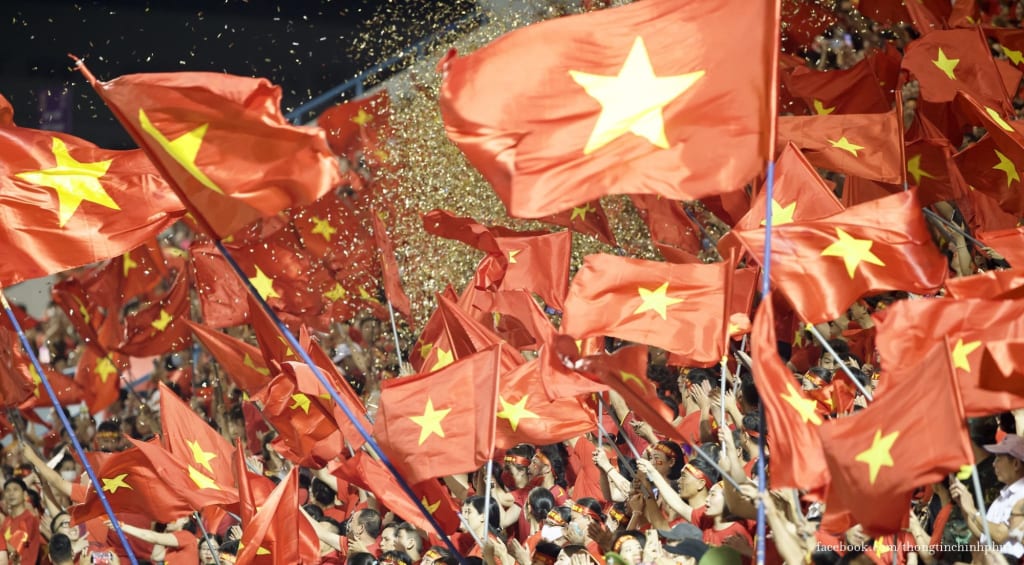
Vietnam’s struggle for independence has inspired many people, even those in the US, American social activist Juliet Ucelli said in an interview granted to Vietnam News Agency correspondents in New York on the occasion of the 80th anniversary of the August Revolution and National Day of Vietnam (September 2).
She stated that from Vietnam’s example, they launched their own liberation movements – the liberation of people of color and the liberation of women.
The success of the August Revolution and President Ho Chi Minh’s reading of the Declaration of Independence on September 2, 1945, which marked the birth of the Democratic Republic of Vietnam (now the Socialist Republic of Vietnam), opened a new chapter for the nation. The historic event placed Vietnam on the world map and ignited a global wave of national liberation and decolonization across Asia, Africa, and the Americas.
Many oppressed nations came to understand that President Ho Chi Minh's viewpoint “Nothing is more precious than independence and freedom” is a truth, and that nations could achieve independence and freedom even when facing the most powerful colonial and imperialist adversaries. At that historical moment, Vietnam’s actual independence was a world-shaking event.
Reflecting on Vietnam’s 80-year journey, Ucelli highlighted its remarkable achievements in safeguarding the nation, maintaining peace, and pursuing development. Vietnam has remained steadfast, self-reliant, and united under the leadership of the Communist Party of Vietnam.
A small nation defeated some of the most powerful colonial and imperial forces in the world - something unimaginable at the time, she said, adding that Vietnam’s 80-year revolution has consistently received strong support from international friends and progressive forces worldwide, with activist Merle Ratner as an outstanding example.
She noted that after the war, Vietnam’s spirit of “shelving the past, looking forward to the future” won broad international support, including from US veterans who became a driving force pressing their government to lift the embargo and normalize relations with Vietnam.
According to Ucelli, once a war-ravaged nation, Vietnam is increasingly making positive and meaningful contributions to the international community, especially in multilateral forums such as the United Nations.
She praised Vietnam’s foreign policy of independence and self-reliance, saying the country has skillfully avoided being drawn into major-power rivalries to maintain a peaceful environment for development.
Expressing delight at Vietnam’s socio-economic achievements since the adoption of Doi Moi (Renewal) in 1986, Ucelli commended the country’s efforts in ensuring social security and improving people’s lives. She observed that Vietnam has harnessed market mechanisms to build productive capacity, but unlike in many capitalist countries, this has not led to severe social stratification or widening income gap.
Vietnam’s per capita income rose from only about USD 300 in 1975 to USD 4,300 in 2023. Literacy now stands at 95 percent, and life expectancy averages 75 years. These are tangible results of the Doi Moi process, she emphasized.
Vietnam poised for aiming to stand among global powers
Vietnam is entering a new stage of development aimed at national rejuvenation, with the goal of becoming a socialist-oriented developed country by mid-century and realizing the dream of standing shoulder to shoulder with the world’s powers, said Prof., Dr. Pan Jin’e from the Research Institute of Marxism under the Chinese Academy of Social Sciences.
In an interview with Vietnam News Agency correspondents in Beijing on Vietnam’s development prospects, Pan, who is also an expert on Vietnamese affairs, stressed the Declaration of Independence proclaiming the establishment of the Democratic Republic of Vietnam (now the Socialist Republic of Vietnam) marked the beginning of a new chapter in the nation’s development and independence.
At the threshold of a new historic chapter and ahead of the upcoming 14th National Party Congress, Party General Secretary To Lam is leading the Vietnamese nation into “a new era – that of the nation’s rise.” This marks a pivotal stage in Vietnam’s development, with the 14th Congress set to chart the country’s future development orientations.
Assessing Vietnam’s economic prospects, Pan noted that the economy is expected to sustain its growth momentum. In the first half of this year, Vietnam’s GDP grew by 7.52 percent – the highest mid-year rate since 2011, signaling that the country is entering a new phase of rapid growth.
According to the expert, since launching its “Doi moi” (renewal) process nearly 40 years ago, Vietnam has built an export-oriented economic model, becoming a key global production and export hub. With its deep integration into the global economic system such as participation in BRICS cooperation and South-South cooperation mechanisms, Vietnam is expected to gain broader market access and attract more direct investment from BRICS countries, particularly in high-tech manufacturing, thereby generating new momentum for its economic growth.
The Vietnamese Government’s push for institutional reforms, including those for private economic sector and state-owned enterprise, as well as simplification of administrative procedures, will enhance economic efficiency, optimize the business environment, and stimulate market vitality, she went on.
She noted that the Vietnamese Party and Government have issued several resolutions focusing on “four pillars” to creating breakthroughs, she said, noting that these aim to address key economic challenges, including a narrow economic structure, underdeveloped infrastructure, and the need to enhance workforce quality.
Regarding political development, the expert noted that the Communist Party of Vietnam remains committed to leadership reforms and building a socialist rule-of-law state. Party General Secretary To Lam has directed an unprecedented institutional reform, reducing the number of provinces and cities from 63 to 34, streamlining administrative structures to enhance local governance, improving administrative efficiency, and enabling timely responses to citizens and businesses, while ensuring the effective functioning of democratic mechanisms.
Vietnam is also stepping up the fight against corruption, contributing to creating a pure political environment, enhancing government credibility, and strengthening a stable political framework for national development.
The country is also expected to achieve further social progress, improving citizens’ living standards, reducing poverty, and boosting social welfare, the expert said.
Pan observed that Vietnam, adhering to an independent foreign policy while diversifying and multilateralizing its international relations, has actively engaged in global integration and participated in numerous multilateral and bilateral organizations, thus steadily enhancing its international standing.
Looking ahead, Vietnam aims to become a bridge between BRICS member countries and ASEAN, emerging as a key player in cooperation between countries of the Southern Hemisphere. By engaging with BRICS nations in innovative areas such as digital currencies and cross-border payments, Vietnam can advance the modernization of its financial system and play a more significant role in international finance, she said.
For global issues such as food and energy security, Vietnam can also leverage the BRICS platform to amplify its voice in international matters, demonstrating the responsibility and commitment of a major developing country, and contribute its expertise and strength to global peace and development, Pan noted
About the Creator
Sách Hay Mỗi Ngày
https://waka.vn/ - Waka là nền tảng đọc sách online, đọc sách điện tử hàng đầu tại Việt Nam
Keep reading
More stories from Sách Hay Mỗi Ngày and writers in History and other communities.
Vietnam's National Day Parade on September 2
Vietnam National Day, also known as Vietnamese Independence Day, is a momentous occasion celebrated annually on September 2nd. This day marks the historical declaration of Vietnam’s independence from French colonial rule in 1945.
By Sách Hay Mỗi Ngày5 months ago in History
Nanchang: A Modern Symbol of China’s Naval Power
In recent years, the world has closely watched the rapid modernization of the Chinese People’s Liberation Army Navy (PLA Navy). One of the most important symbols of this transformation is the Nanchang (Hull 101), China’s first Type 055 guided-missile destroyer. Commissioned on 12 January 2020, Nanchang represents a major leap in naval technology and capability. As it completes six years of active service, the ship stands as a clear example of how China’s navy has moved into a new era of advanced maritime power.
By sehzeen fatima7 days ago in History
Who Replaces the United Nations If It Fails?
Who Replaces the United Nations If It Fails? For more than seventy years, the United Nations has served as the world’s main platform for diplomacy, peacekeeping, and global cooperation. Despite its weaknesses, it remains the only institution where nearly every country has a seat at the table. But as trust in the UN declines and major powers increasingly act alone, an uncomfortable question is being asked more often: if the UN fails, who—or what—takes its place?
By Wings of Time about 9 hours ago in History
Wild Card Weekend Recap: What Happens Now?
I think I figured out why I love Wild Card Weekend so much. It's because it's the first playoff anything of the calendar year. The NFL season starts in the fall, and once upon a time, the champion was crowned either on or slightly before New Year's. The evolution of the NFL schedule has resulted in the playoffs starting just into the New Year, and currently, the final week of the season falls on the first weekend of the New Year, with Wild Card Weekend coming a week after that. So yes, chronologically, the NFL's Wild Card Weekend serves as the first playoff anything of the calendar year.
By Clyde E. Dawkins7 days ago in Unbalanced


Comments
There are no comments for this story
Be the first to respond and start the conversation.