
Unveiling the lives of the apostles:Pioneers of the early christian movement
Life history of jesus apostles.

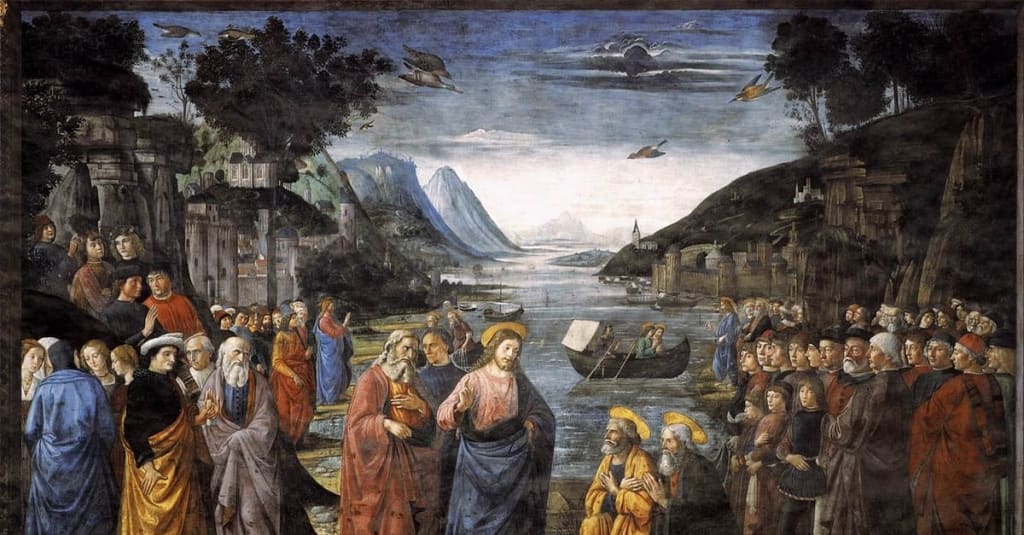
The life histories of the apostles of Jesus are rich and varied, as recorded in the New Testament of the Bible. These twelve men played a significant role in spreading the teachings of Jesus Christ and establishing the early Christian Church. While the available information about each apostle varies in terms of depth and accuracy, the following is an overview of their lives and ministries based on biblical accounts and historical traditions.
Simon Peter:Simon Peter, also known as Peter or Cephas, was one of the closest disciples of Jesus. He was a fisherman by trade and initially lived in Bethsaida and Capernaum. Jesus called Peter and his brother Andrew to follow him, promising to make them fishers of men. Peter was impulsive but deeply loyal to Jesus. He witnessed numerous miracles and was present during significant events such as the Transfiguration and the Last Supper. Peter is famously known for denying Jesus three times before his crucifixion but later became a prominent leader in the early Christian Church. He is believed to have been martyred in Rome, crucified upside down at his own request, as he felt unworthy to die in the same manner as Jesus.
Andrew:Andrew, the brother of Peter, was also a fisherman from Bethsaida. Like Peter, he responded to Jesus' call to become a disciple. Andrew is known for being a bringer of people to Jesus, including introducing Simon Peter to Jesus. He witnessed Jesus' ministry and was among the disciples during the feeding of the five thousand. While there are limited details about Andrew's later life, tradition suggests that he preached in Scythia (modern-day Ukraine and Russia) and was eventually martyred by crucifixion in Patras, Greece.
James, son of Zebedee:James, the son of Zebedee, was one of the inner circle of disciples along with Peter and John. He and his brother John were fishermen from Galilee. James witnessed many significant events in Jesus' life, such as the raising of Jairus' daughter and the Transfiguration. He was present in the Garden of Gethsemane during Jesus' arrest. James became the first of the apostles to be martyred when King Herod Agrippa I ordered his execution by the sword in Jerusalem around AD 44.
John:John, the brother of James, was another one of Jesus' inner circle of disciples. He was known as the "disciple whom Jesus loved." John was present during the Last Supper and stood at the foot of the cross when Jesus was crucified, where Jesus entrusted the care of his mother, Mary, to him. After Jesus' ascension, John became a prominent figure in the early Christian community and authored several books of the New Testament, including the Gospel of John, the Epistles of John, and the Book of Revelation. Tradition holds that John lived a long life and died of natural causes in Ephesus (modern-day Turkey).
Philip:Philip was from Bethsaida and was one of the first disciples called by Jesus. He was present during the feeding of the five thousand and played a role in introducing Greek-speaking Gentiles to Jesus. Philip asked Jesus to show them the Father during the Last Supper, to which Jesus replied, "Anyone who has seen me has seen the Father." Little is known about Philip's later life and death, but according to tradition, he preached the Gospel in Phrygia (modern-day Turkey) and was martyred by crucifixion in the city of Hierapolis.
Bartholomew:Bartholomew, also known as Nathanael, was a close companion of Philip. He was introduced to Jesus by Philip and initially expressed skepticism, asking, "Can anything good come out
Thomas:
Thomas, also known as "Doubting Thomas," was initially skeptical when told about Jesus' resurrection and declared that he would not believe unless he saw Jesus and touched his wounds. Jesus later appeared to Thomas, allowing him to do just that, and Thomas exclaimed, "My Lord and my God!" After Jesus' ascension, tradition suggests that Thomas traveled eastward and preached the Gospel in India. He is believed to have been martyred there, pierced by a spear.
Matthew:Matthew, also known as Levi, was a tax collector before being called by Jesus. He is credited with writing the Gospel of Matthew, which emphasizes Jesus' fulfillment of Old Testament prophecies. After Jesus' resurrection and ascension, Matthew is said to have preached the Gospel in Ethiopia, Persia, and Macedonia before eventually being martyred in Ethiopia by either beheading or stabbing.
James, son of Alphaeus:James, the son of Alphaeus, is often referred to as "James the Less" to distinguish him from James, the son of Zebedee. Not much is known about his life, but he was chosen by Jesus as one of the twelve apostles. Some traditions identify him as the author of the Epistle of James in the New Testament. His martyrdom is said to have occurred in Egypt, where he was beaten and stoned to death.
Thaddaeus:Thaddaeus, also known as Lebbaeus or Judas, son of James, was another apostle of Jesus. He is mentioned in the Gospels but is not the same person as Judas Iscariot, who betrayed Jesus. Thaddaeus is associated with missionary work in Mesopotamia and is believed to have preached in present-day Iraq, Iran, and Armenia. While the details of his death are uncertain, some traditions suggest he was martyred by being crucified or beaten to death.
Simon the Zealot:Simon the Zealot, or Simon the Cananaean, is often identified as one of the twelve apostles. The term "Zealot" refers to a political movement seeking to overthrow Roman rule in Judea. However, it is uncertain whether Simon was actually associated with this movement. Little is known about his later life and ministry, but some traditions place him in Persia or Egypt, where he was martyred, possibly by being sawn in half.
Judas Iscariot:Judas Iscariot is infamously known as the apostle who betrayed Jesus to the religious authorities for thirty pieces of silver. After realizing the gravity of his actions, he returned the money and later hanged himself. Judas' betrayal led to Jesus' arrest and crucifixion. The office of apostle was restored after Judas' death, with Matthias being chosen to replace him.
It's important to note that the information about the apostles' lives and deaths beyond the biblical accounts is based on various traditions and historical writings, which may differ in details and reliability. Nevertheless, their collective ministry played a crucial role in establishing and spreading the teachings of Jesus, and their dedication and sacrifices continue to inspire Christians around the world.
About the Creator
Edwin Kingsly
i will write christian related and social contents.Also,stories like horror,moral,fiction
Keep reading
More stories from Edwin Kingsly and writers in History and other communities.
Apostles' Survival and Sadness
The death of Jesus had a profound impact on his apostles, triggering a complex mix of survival instincts and deep sadness. Their journey in the aftermath of his crucifixion and resurrection is a story of resilience and heartbreak, one that highlights the human experience of grief and the struggle to carry on a mission without their leader.
By Edwin Kingsly2 years ago in History
Firoun: The Tyrant Who Defied God
Firoun, known to history as Pharaoh, was not just a king—he was a symbol of absolute power. He ruled over ancient Egypt at a time when the Nile flowed generously, the granaries were full, and massive stone monuments rose toward the sky. To his people, Firoun appeared invincible. To himself, he was more than human.
By The best writer 3 days ago in History
Ludacris and Nelly draw backlash over bookings at MAGA-coded music festival
Ludacris and Nelly headlining a mostly right-wing event is good for them. It’s also great for the genre of hip hop. The two rap veterans have showcased their talents on other stages. Why can’t they perform for mostly MAGA folks and grab that bag?
By Skyler Saunders5 days ago in Beat


Comments
There are no comments for this story
Be the first to respond and start the conversation.