
Unsolved Mystery Of The World 2
Casualties caused by its exploration.
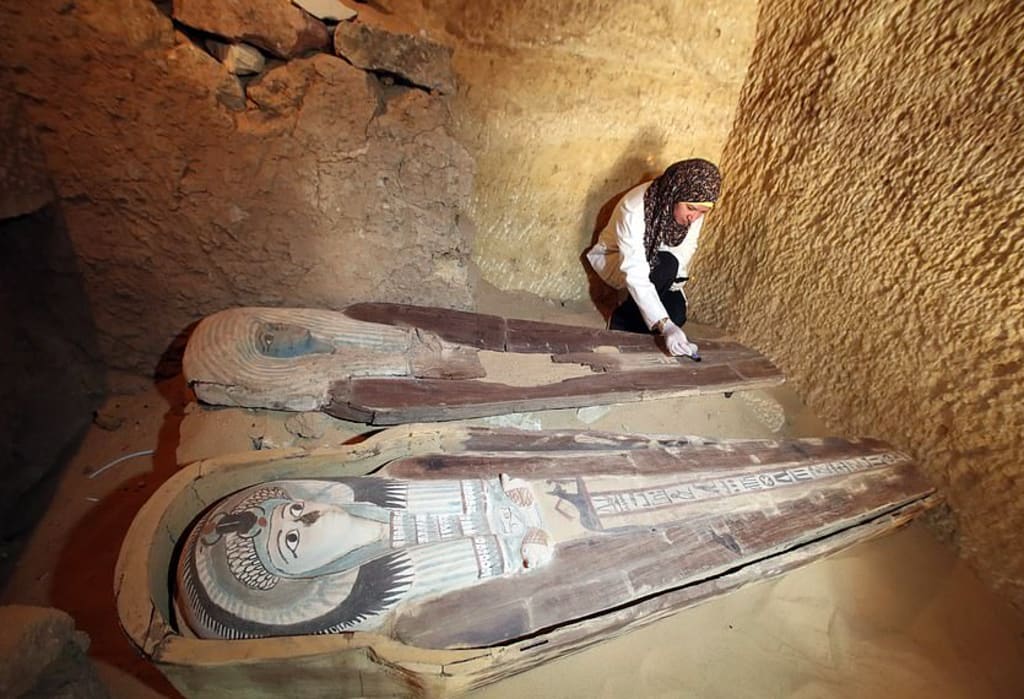
Hence, the original statue must be traced back to a time before the Sahara turned arid, during a period of greater temperate climate, higher moisture, and increased rainfall. This regression doesn't just extend slightly into that era but reaches far back, considering the extensive weathering and erosion on the Sphinx. My current belief is that it dates back to the conclusion of the last ice age around 10,000 BC, making it a relic from the pre-dynastic age. Situated just beyond Cincinnati, Ohio, in a typical suburban neighborhood, the home of Greg and Dana Newkirk conceals a remarkable secret. Their seemingly ordinary house contains a basement room brimming with an assortment of peculiar objects sent by people worldwide, all believed to be afflicted by curses. My wife and I lead a normal life like everyone else, although we serve as caretakers for exceptionally unusual items. Our venture into collecting cursed objects was entirely serendipitous and not a path we consciously set out on. Our initial interest was in the realm of the bizarre. Over time, we gained a reputation for handling these situations well. Anyone with an object that had affected their life would approach us, essentially saying, "I'm unsure what to do with this; it's disrupting my life. Can you take it off my hands?" This gradually led to the accumulation of this strange collection. Guests visiting the Newkirk residence are promptly warned that their basement is brimming with cursed artifacts. Strangely, despite the curses, there's an irresistible allure that draws people's curiosity. Although one might expect to avoid cursed objects, there's a certain fascination with them. When an item is labeled as cursed, it becomes something more than mundane. If a chair is cursed, it's distinct from every other chair, making it intriguing and unique. Even though this "specialness" inflicts harm, it appeals to a macabre aspect that resides within us. Despite being considered eerie and entertaining, working with these objects is less about amusement and more about a profound responsibility to safeguard them, ensuring they stay secure and out of the wrong hands. Among the Newkirks' assortment are several objects believed to hold the power to cause harm to those who come in contact with them. An example is the cursed deer skull, which they acquired from Nashville. The object was associated with illnesses among the employees of the woman who bought it, culminating in an accident and structural damage. In our museum, certain objects evoke unexplainable reactions from people, stirring palpitations, anxiety, dizziness, vomiting, and more.
Responses to certain objects within the Newkirk's collection of cursed items vary, with some items causing notable disturbances. Among these objects is a deadly ring reputed to cause the demise of its wearers, a Bible tied to a failed exorcism, and a doll believed to carry illness wherever it goes. However, within the spectrum of cursed objects, there exists one that is so profoundly unsettling that the Newkirks have chosen not to retain it within their collection. This eerie artifact is a carved wooden effigy known as the Crone. The Crone encapsulates the essence of a cursed object. It takes the form of a woman, adorned with a noose and nails, and was handed over to the Newkirks by hikers who discovered it concealed in a cave in the Catskills, far off the usual trail. Once in their possession, the hikers encountered eerie experiences – peculiar animal behavior, wet footprints appearing without explanation. They reached out to the Newkirks, who, upon receiving the Crone, noticed that individuals near the effigy were overcome by intense anxiety. In a striking incident, an individual from Canada had to be taken to the hospital with severe symptoms after being exposed to the Crone. Recognizing the danger, the Newkirks resolved to address the situation. As the Crone had originated in the Catskills, the plan was to return it there and conduct a ritual to remove the curse. With nails embedded in the artifact, a cleansing ritual involving nail removal was set in motion. During the ritual, unsettling phenomena were observed, including inexplicable sounds and eerie footsteps. However, as the ritual concluded, a sense of completion filled the air. Another enigma lies in the lower Jordan River Valley, a ridge concealing the ruins of an ancient city that is believed to date back almost 4,000 years. This city, known as Tall el-Hammam, is associated with mystery as its true identity and occupants remain unknown. Some experts speculate that it could be the ruins of the biblical city of Sodom, notorious for its destruction as recounted in Genesis. The story of Sodom and Gomorrah, marked by wickedness and divine intervention, has biblical and historical significance. Scholars have recently proposed that Tall el-Hammam could align with the geographical and temporal descriptions of Sodom as outlined in the Bible. This perspective offers intriguing possibilities about the site's historical and cultural importance.
About the Creator
The Year 1965 in Review: Fun Facts, Trivia, and Historic Highlights
This quick read is a collection of fun facts, trivia, and historical events from the year 1965. Discover the year’s top news stories, most influential people, sports facts, historic firsts, entertainment trivia, and much more.
By Gregory DeVictor6 days ago in History



Comments
There are no comments for this story
Be the first to respond and start the conversation.