
United States and China Relations: A Complex Dance of Peace and Turmoil
Explore the intricate relationship between the United States and China, filled with moments of rift and peace, shaping global stability.

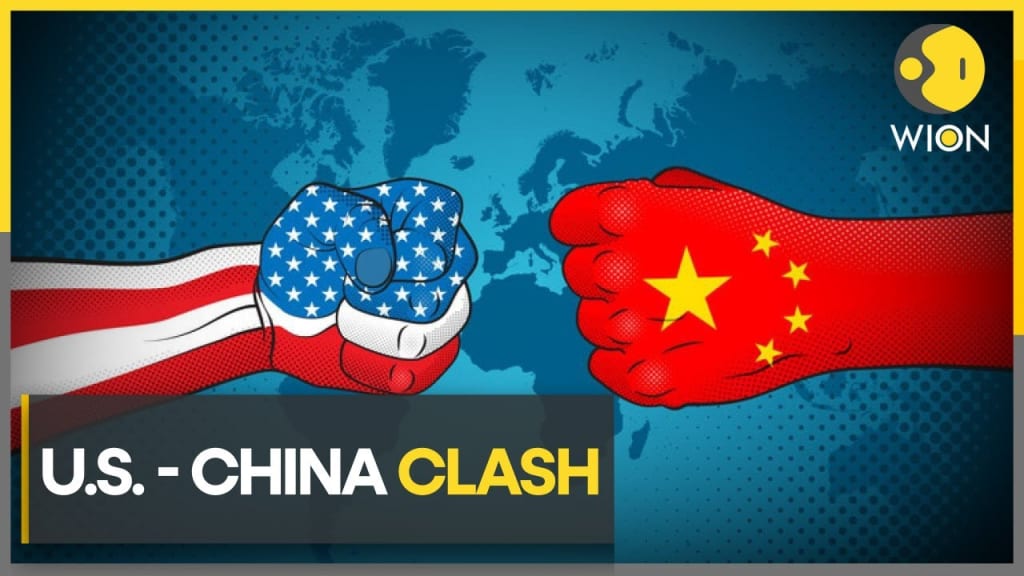
The relations between the two global powers United States of America (USA) and China have always been turbulent and perplexing. While times of peace have been beneficial for global stability, moments of rift have caused profound suffering. Recently, a visit by US Secretary of State Antony Blinken to China seemed to go well. However, drawing from the intricate relationship pattern of these two countries, any step forward is always followed by two steps backwards.
Just as the relations seemed peaceful, President Joe Biden, at a fundraiser, described the president of China as a dictator; this provoked a strong response from Beijing. Correspondingly, the special treatment of Indian Prime Minister Narendra Modi in Washington to back India against its Anti-China stance further escalated the friction between these superpowers. The critical question is the future of this significant relationship, which poses a grave threat to many countries in Asia and beyond.
Many books have discussed the confrontations between the US and China. All these books have a common point, especially over who will prevail in the contest. Lately, the insertion to this discourse is "Cold Peace: Avoiding a New Cold War" by Michael Doyle, a professor at Columbia University. This book puts forth a fresh perspective on the most critical bilateral relationship, extending to Russia. Doyle examines whether a new Cold War is possible and whether would it be different from the past.
While acknowledging the threat of a Cold War, the author argues that it is not inevitable. He believes in the establishment of a "cold peace" through cooperation between the two superpowers.

Doyle proposes three reasons why a growing Cold War will not replay the past. First, he stresses the exorbitant costs of a prolonged Cold War. Second, the common global interest in extricating the planet from environmental degradation, which requires cooperation between nations. Finally, Doyle says that China and Russia are authoritarian, not totalitarian.
The book recommends multiple measures to avert a second Cold War, including cooperation on tackling climate change and negotiation to end the Ukraine conflict with Russia. Also, reaching a truce between the US and China in Taiwan, and establishing new rules for cyber warfare. He believes that compromise can limit the disastrous impact of a full-scale confrontation.
In the long run, diplomacy and mutual commitment have the potential to avert turbulence and instability. In 2017, Graham Allison, a Harvard scholar, explored the concept of Thucydides's Trap in his book "Destined for War: Can America and China Escape Thucydides's Trap." The ancient Greek historian described a deadly trap that emerges when one superpower strives to displace another. Allison's theory resonates in Doyle's book and Henry Kissinger's warning about the disastrous ramifications of a US-China confrontation. Kissinger emphasizes that the future depends on the cooperation between the US and China.
In conclusion, the tense relationship between the US and China has a great impact on world dynamics. While there have been times of harmony and peaceful cohabitation, there have also been times of great unrest. The book "Cold Peace: Avoiding a New Cold War" presents a new perspective on this crucial bilateral relationship by arguing that collaboration and compromise can avert a full-fledged conflict. It takes diplomacy, mutual commitment, and recognition of shared global interests to achieve the delicate balance between the United States of America and China. The complicated and perilous interactions between these two superpowers must be navigated while keeping in mind these key foundations. Both countries may discover a road to collaboration and cooperation through opening channels of communication, encouraging understanding, and supporting shared objectives. Only with this coordinated effort can the complex connection be adequately handled, opening the door for a more secure and peaceful international system.
About the Creator
Jalal Khan
I ignite imagination and evoke emotions transporting readers to new realms, touching hearts, and sparking introspection. Ergo, creating a world where words dance and the magic of literature enchants all who venture into my realm.
Keep reading
More stories from Jalal Khan and writers in History and other communities.
The Dark Web: Unveiling the Hidden Dangers of Extremist Propaganda
The internet has evolved into a disturbing stage where terrorists orchestrate manipulative schemes, enticing vulnerable individuals towards the dangerous realms of extremism and terrorism. Concealing their identities and evading law enforcement agencies, these malevolent actors exploit the dark web—a clandestine tool that shields their actions. Initially, they recruit on the open web before retreating to hidden corners, beyond the reach of surveillance. Leveraging the internet's multilingual nature, they disseminate extremist propaganda far and wide, poisoning minds across the globe. Notably, publications like Dabiq and Kybernetiq offer authorized content by clerics, educating readers about extremism, and fundamentalism, and even providing guidance on participating in the Cyber War. By imparting knowledge on online anonymity, they present a grave threat to global security.
By Jalal Khan3 years ago in Criminal
3 Everyday Rules That Exist Because Someone Once Did Something Very Stupid
Everywhere you go, you are surrounded by rules that feel oddly specific. Do not touch. No running. Contents hot. Do not insert body parts. These warnings aren’t theoretical. They weren’t written by pessimists or lawyers with too much free time. They exist because at some point in history, a real human being looked at a situation and thought, “This will probably be fine.”
By Enoch Sagini7 days ago in History
Reform or Replace? The Future of Global Governance
Reform or Replace? The Future of Global Governance Global governance stands at a critical crossroads. Institutions created after World War II—especially the United Nations—were designed to prevent another global catastrophe. For decades, they provided platforms for dialogue, coordination, and conflict management. But today, many people question whether these institutions still work as intended. The growing debate is no longer just about reform. It is about whether global governance should be repaired or replaced entirely.
By Wings of Time 2 days ago in History



Comments (2)
grabbed my attention in the beginning only. Loved every bit of it!
Interesting article!