
TRADITIONAL MEDICAL SYSTEMS IN INDIA
The Ayurvedic Science of India

|| हिताहितम् सुखं दुखं अयुस्तस्यहिताहितम् | मानं च तछ यत्रोक्तं आयुर्वेदः स उच्यते ||
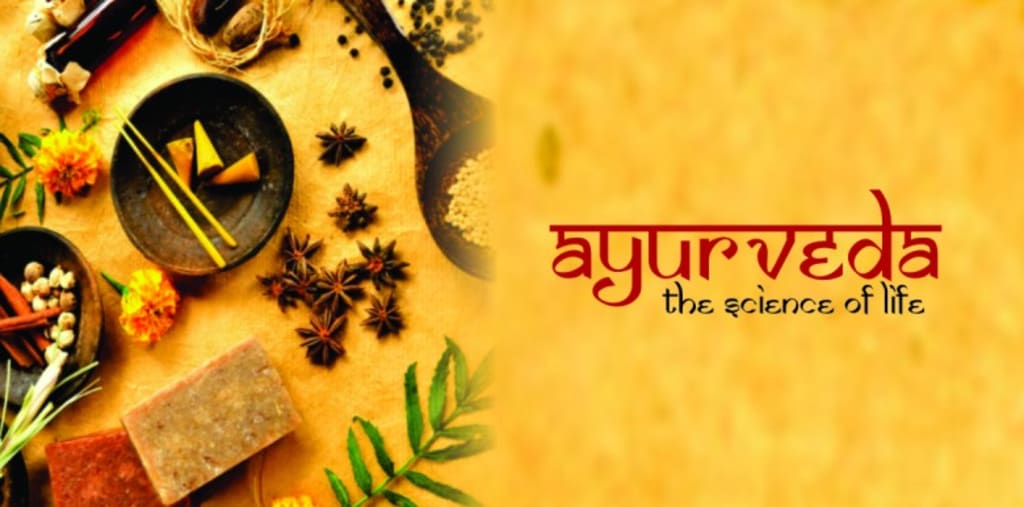
"AYURVEDA" comes from two sanskrit words 'Ayur' means life and 'Veda' means knowledge. In other words we say Ayurveda is "SCIENCE OF LIFE".
There are four Vedas in the India :
1] RIG VEDA
2] YAJUR VEDA
3] SAM VEDA
4] ATHARVA VEDA
The Indian Ayurvedic Science is been originated from Atharva veda which has the mentions of several diseases and their treatments. Ayurveda has an age old history since second century BC.
Ayurveda is attributed to dhanvantari,the physician of gods in hindu mythology,who received it from Brahma.Its earliest concepts were set out in the portion of the vedas known as the Atharva veda(2nd millennium BCE).The vedas are rich in medical practices for the treatment of diseases
The golden age of Indian medicine,from 800 BCE until about 1000 CE,was marked especially by the production of medical treatises known as the
Charaka-Samhita and Sushruta-Samhita,attributed
respectively to Charaka,a physician,and Sushrut a surgeon. Estimates place the Charaka-Samhita
in its present form as dating from1st century CE Although there were earlier versions.
The Sushruta-Samhita has written around 6th century BCE.Then we had maharshi vagabhatta,who wrote Ash-tanga hridaya.
All later writings on Indian medicine were based on these works,which analyse the human body , in terms of the ‘panchatatva’.i.e, fire,water,earth,air and ether as well as the three bodily humours or ‘Doshas’(vata,pitta,and kapha).
The central concept in Ayurveda is the idea of the three doshas, which are the fundamental energies or principles that govern various physiological and psychological functions in the body.
These doshas are Vata, Pitta, and Kapha. Any sort of disbalance between these
doshas would initiate various diseases
In the body.
1). Vata: This dosha is associated with the elements of air and ether (space). It governs movement, including the flow of breath, blood, and thoughts. When Vata is in balance, it promotes creativity, enthusiasm, and vitality. Imbalances can lead to conditions such as anxiety, insomnia, and digestive issues.
2). Pitta: Pitta is linked to the elements of fire and water. It governs digestion, metabolism, and transformation in the body. When Pitta is balanced, it promotes intelligence, courage, and a strong digestive system. Imbalances may manifest as anger, inflammation, or digestive disorders.
3). Kapha: Kapha is associated with the elements of water and earth. It governs stability, structure, and lubrication in the body. When Kapha is balanced, it promotes calmness, strength, and a healthy immune system. Imbalances can lead to weight gain, lethargy, and respiratory issues.
Ayurveda in modern times has evolved by:
1).Integrating with modern medicine.
2).Conducting scientific research for validation.
3).Implementing standardization and quality control measures.
4).Globalizing and becoming more accessible worldwide.
Surgery and it’s types
The Golden Age of surgery in ancient India rests largely on the shoulders of Susruta, who lived sometime between 700 and 600 B.C. Susruta practiced and propagated the art of surgery at the University of Benares in that ancient city, located on the banks of the holy Ganga.
Rhinoplasty : sushruta has described about rhinoplasty in his texts.It is the technique used for reconstructing the nose.He used a part of skin from cheek to reconstruct the nose.
Cataract: Sushruta also detailed the process of cataract surgery. It involved pushing the cataract down using a sharp instrument, allowing the patient to see again.
Extraction of Urinary Stones: Sushruta documented techniques for the extraction of urinary stones, a procedure known as lithotomy.
Comparison between ayurvedic science and medical science
Ayurvedic Science: Rooted in ancient Indian philosophy, Ayurveda views health as a balance between mind, body, and spirit. It emphasizes harmony with nature and the importance of individualized treatments based on one's unique constitution (dosha). - Modern Science: Modern medicine is based on empirical evidence, scientific research, and the principles of biology, chemistry, and physics. It focuses on diagnosing and treating diseases using standardized protocols and evidence-based medicine.
About the Creator
Keep reading
More stories from SAHIL PRASAD and writers in History and other communities.
INDIAN TEMPLES
TEMPLES - A spiritual place where people worship their god in Hindu Mythology. It is not only a place to worship but also a place to earn knowledge.According to puranas a temple is a external layer that houses the physical manifestation of the invisible divine spirit just like the human body is an external layer that houses the invisible soul.
By SAHIL PRASAD2 years ago in Art
Pablo Escobar: The Man Who Declared War on Colombia
Pablo Emilio Escobar Gaviria was born on December 1, 1949, in Rionegro, Colombia, and raised in the nearby city of Medellín. He grew up in a modest household, the son of a farmer and a schoolteacher. From an early age, Escobar showed ambition and defiance. He dreamed of power, wealth, and influence—dreams far larger than his surroundings. In a country struggling with inequality and limited opportunity, Escobar believed the rules were written to keep people like him down. Instead of trying to change the system, he chose to dominate it.
By The best writer 7 days ago in History
3 Times a Simple Mistake Changed History Forever
History books love dramatic moments—wars, revolutions, and grand speeches delivered on balconies. What they don’t highlight enough is how often history was hijacked by someone making a very human, very dumb mistake.
By Enoch Saginiabout 16 hours ago in History
Rachel Reviews: The Spiral Archive by Pieter Hendrik
It's difficult for me to know where to start with a review of this book as it was, for me, an entirely unique experience and one that I'll probably never have again. I don't want that to be interpreted as unenjoyable but it has left me scratching my head a little and ruminating on its content, its themes and its characters.
By Rachel Deeming6 days ago in BookClub




Comments (1)