

The RMS Titanic, often called "The Ship of Dreams," is one of the most famous ships in history due to its tragic sinking during its maiden voyage. Its story encompasses ambition, luxury, and disaster, leaving a lasting impact on maritime safety.
### **Design and Construction**
The Titanic was conceived by the White Star Line to compete with the Cunard Line’s Lusitania and Mauretania. Designed to be the largest and most luxurious ship ever built, the Titanic was part of a trio that included the RMS Olympic and the RMS Britannic. Construction began in 1909 at the Harland & Wolff shipyard in Belfast, Northern Ireland. At 882 feet in length and 92 feet in breadth, it was equipped with advanced technology for its time, including a Marconi wireless telegraph system and state-of-the-art safety features. Despite these advancements, the Titanic was criticized for having only 20 lifeboats, which was not enough to accommodate all passengers and crew.
### **Maiden Voyage**
The Titanic was launched on April 10, 1912, from Southampton, England, on its maiden voyage to New York City. The ship was carrying 2,224 people, including some of the wealthiest individuals of the era, such as John Jacob Astor IV, Benjamin Guggenheim, and Isidor Straus. The Titanic was celebrated for its luxurious accommodations, with amenities including a swimming pool, a gymnasium, and a grand staircase.
On April 14, 1912, at around 11:40 PM ship’s time, the Titanic struck an iceberg in the North Atlantic Ocean. The collision caused the ship’s hull to rupture, leading to the flooding of several compartments. The Titanic’s advanced design, which included watertight compartments, was insufficient to prevent disaster once the iceberg breached the hull in multiple places.
### **Sinking and Rescue**
The Titanic’s sinking was chaotic and tragic. Despite the ship’s capacity to hold more lifeboats, many were not filled to capacity, and lifeboat drills had been inadequate. At around 2:20 AM on April 15, 1912, the Titanic sank beneath the waves. In the ensuing hours, many passengers and crew were left in the icy waters of the Atlantic. Only 705 people survived, having been rescued by the RMS Carpathia, which arrived at the scene around 4:00 AM. The disaster claimed the lives of more than 1,500 individuals, making it one of the deadliest maritime tragedies in history.
### **Aftermath and Legacy**
The sinking of the Titanic led to immediate and extensive inquiries by both the British and American governments. The inquiries revealed a series of failings, including inadequate lifeboat provisions and insufficient emergency procedures. As a result, significant changes were made to maritime regulations, including the requirement for ships to carry enough lifeboats for all passengers and crew and the establishment of the International Ice Patrol to monitor iceberg dangers in the North Atlantic.
The Titanic's story has captivated the public for over a century, inspiring numerous books, films, and documentaries. The most notable of these is James Cameron’s 1997 film "Titanic," which blended historical facts with a fictional romance, reigniting global interest in the tragedy.
### **Discovery and Exploration**
For decades, the Titanic’s wreck remained lost in the depths of the Atlantic. It was not until 1985 that oceanographer Robert Ballard and his French team discovered the shipwreck, lying approximately 12,500 feet below the surface. The discovery was a significant event in marine archaeology, leading to numerous explorations and the recovery of artifacts that have since been displayed in museums worldwide.
The Titanic’s legacy endures as a symbol of both human hubris and the pursuit of excellence, highlighting the need for improved safety and regulations in maritime travel. The ship’s story continues to serve as a poignant reminder of the fragility of life and the lessons learned from one of the most infamous maritime disasters in history.
About the Creator
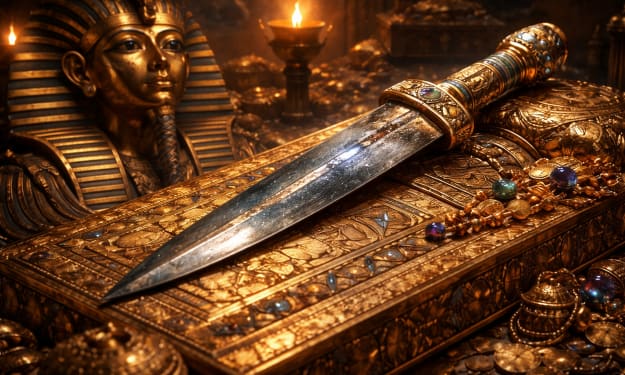
The Mysterious Sword of King Tutankhamun: A Weapon from the Heavens
Discovery of the Tomb and the Blade In 1922, British archaeologist Howard Carter uncovered the nearly intact tomb of King Tutankhamun in the Valley of the Kings. Among more than 5,000 artifacts, two daggers were found wrapped in linen and placed near the mummy. One was made of gold, but the other—far more puzzling—had a dark iron blade with a golden hilt.
By Say the truth 6 days ago in History
Somers Historical Tidbits - Part 10
All Manor of Things On Route 100, the Pinewood Sanitorium once treated Psychiatric patients, and in 1954 the property was deeded to the Keswick Colony of Mercy, which served recovering alcoholics. Passing over, the site was proposed as a reformatory for delinquent girls. But opposition from residents and town officials killed the initiative. Somers Manor eventually took its place and now senior living resides
By Rich Monetti6 days ago in History



Comments
There are no comments for this story
Be the first to respond and start the conversation.