
TITANIC - ACT 1
The History Behind the Greatest Vessel in the World

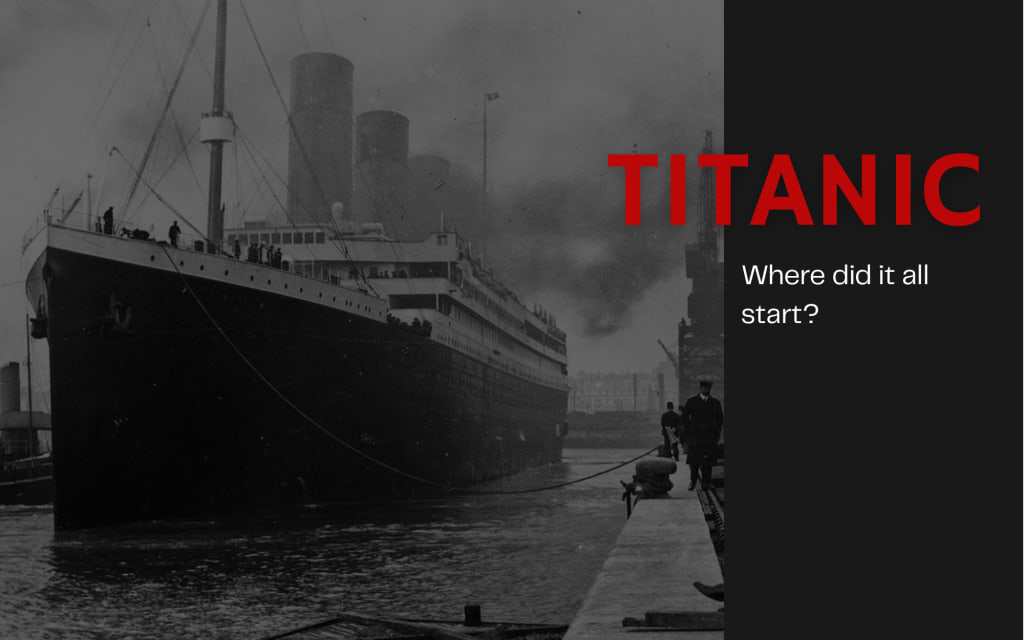
What makes Titanic... Titanic?
Introduction
Is it the mystery behind it? - the most grandest ship in the world, advertised as unsinkable, foundering on her maiden voyage?
This poetic tragedy has fascinated thousands of individuals. The number of theories and alternate realities has amassed a great amount over the decades she has been resting upon the sea floor. What if there were enough lifeboats? What if they had heeded previous warnings? What if…what if? Is it the numerous moral stories scattered throughout? The irresistible reminder that “pride goeth before the fall”? Or is it just the eloquently portrayed ending to the Edwardian era, a final glimpse into the socioeconomic mess that was the early 20th century?
A mix of these is present, and while much attention has been given to these paramount events, it is the several happenings and incidents that occurred before her ill-fated departure which truly led to her despondent shipwreck. It was the months and years that preceded the disaster that ultimately sealed her fate—a sentiment that is not unfamiliar to those who have studied the ship closely.
Titanic was designed to be ostentatious, both mechanically and visually; was this the factor that brought her down? - Too much pressure mounted on the ship’s officers and builders to reach a certain expectation? We will never know; people have speculated for years on what led this mammoth vessel to her uncanny demise. Many experts agree that human error and arrogance proved deadly; however, after deeper research and more findings arise, people have begun to question: Are we pinning the blame on the right people?
Engines of a New Age
Chapter One
The age of sail was dying. In shipyards across Britain, the crack of hammers and the hiss of steam were signalling a new empire. The 1820s brought drastic change to the maritime industry; shipping companies had begun to switch from primitive, unreliable wind-powered vessels to the new era of faster, grander, and luxurious steamships. It was these events that divided the industry. Many celebrated as steam had engendered the inception of many passenger services, but had also promised extinction for the array of small family-owned companies that solely worked locally. However, among the joyful were Cunard and White Star Line, which both had dreams of a large fleet covering vast distances, a dream sought after by many, but only conquered by the ambitious.
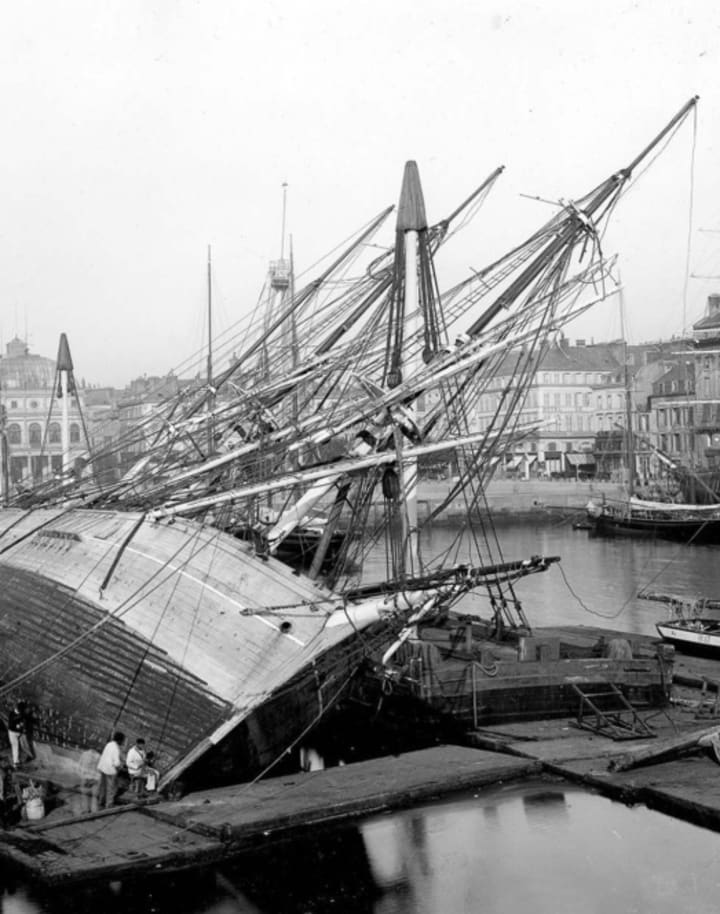
Despite both lines sharing the same goal, the competition was stiff, stirring the fierce ego of two mariners, John Pilkington and Henry Wilson. Having met once before, they had the idea to form a utilitarian service connecting Britain to the new colonies of Australia and New Zealand with the goal of supplying timber trade and low-class emigration. It was 1845 when they went forward with this idea, founding Pilkington and Wilson, branded as the now infamous White Star Line.
Both had previous experience in the industry. Pilkington’s Father, who had himself been a mariner, taught Pilkington from a young age, while Wilson was knowledgeable in finance, leading to the hypothesis that emigration between Britain and Australia would prove monumental - and, predictably, it did. The Australian Gold Rushes of 1851, although attempted to be kept a secret by the Victorian government in fear of destabilising the economy, saw masses of immigrants flood into the country on the word of gold prospector, Edward Hargraves. White Star successfully capitalised on the rush by purposely only attracting those of the third class and not the aristocracy. Desperate men and women, tired of the sick and bleak future that lay ahead of them in Britain, saw a hopeful alternative aboard the newly established White Star Line. To meet this demand, White Star leased its first ten ships from the reputable source Charles Moore & Co. These austere wooden clippers were tried and tested, but noticeably lacking one major innovation - steam.
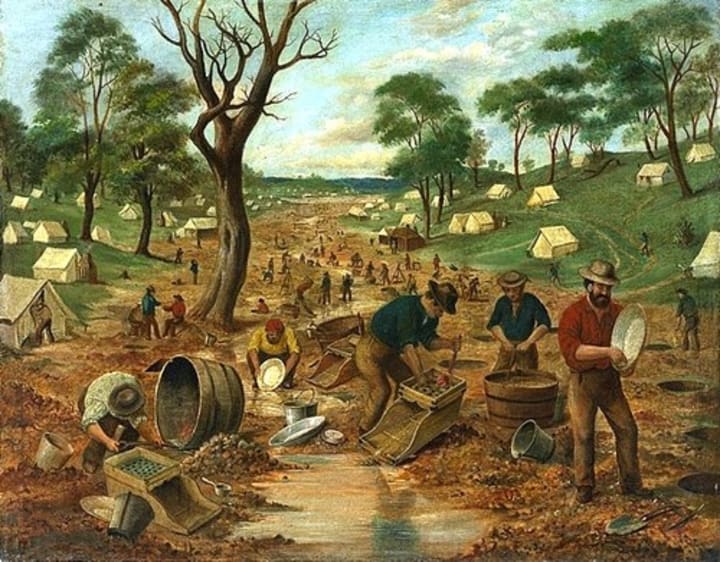
White Star’s arrogance toward the new technology was credited to Wilson, who was afraid of the prospect of steam failing during a voyage and bringing the company down with it. Despite the absence, White Star embarked with full sail, carrying at least 1.27 million immigrants over three years, an impressive feat for the time. Conversely, White Star did not attempt to attract the aristocracy with the required luxuries that followed; they targeted the lower-class immigrants instead. They stated that their fares were cheap and quick, but not necessarily luxurious. This trade-off in expenses went hand in hand with changing their marketing campaigns and routes, to mirror wherever new fortunes were found - especially gold, which attracted migrants.
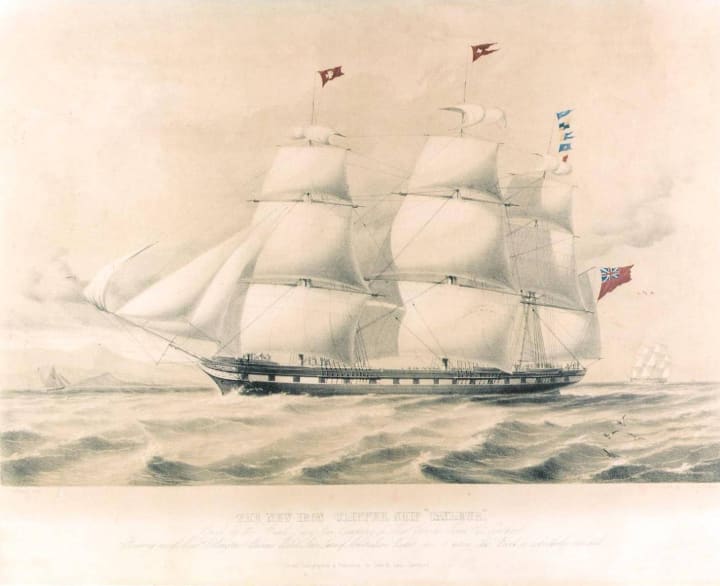
Their success continued into the 1850s, with several more ships being leased, now fitted with bands to provide some entertainment during the usually rough voyage. Having gained money, White Star splurged and leased another wooden clipper ship; however, this one was different. It dwarfed the fleet.
Leased from Charles Moore & Co., the RMS Tayleur was constructed in a relatively quick six months and swiftly released in White Star’s hands. The ship was retrofitted with branding and was launched into the oceans for testing, where the ship’s captain, John Noble, found her too large to steer safely. Despite this issue, White Star continued with the maiden voyage date of the 19th of January, 1854.
The First Titanic
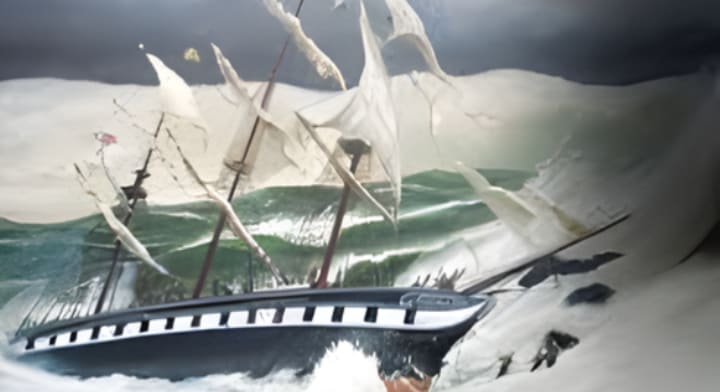
Two days into her journey to Melbourne, the Tayleur, already caught adrift in towering waves, screeched along rocks off the coast of Ireland. Despite sharply turning and dropping anchor upon seeing rocks, the 2,500-tonne ship was dragged towards its ruin. Out of 600 individuals, only 280 managed to crawl out of the wrecked ship and onto the jagged coast on which it ran aground, making lifeboat deployment impossible. It was estimated that the deaths ranged from the young to the elderly.
Post-incident investigations showed that most of the crew was untrained and on board to emigrate along with the passengers, not to work. With only 12 trained seamen, she was unable to act quickly enough to avoid the coast, or so they thought… The blame was pinned on Charles Moore & Co. as further inquiries proved that it was the poor construction of the ship that led to her grim fate. Her rudder was too small to manoeuvre her safely, the rigging was faulty and was too slack to turn her sails, and the only way that the crew could have known where they were going, the compass, was made unknowingly useless by her iron hull, a complete oversight in her planning.
No one knew that this was foreshadowing what would happen fifty-eight years later
White Star was cleared of any potential costs incurred by the accident. Despite overtly reassuring he public that the cause of the shipwreck was not theirs, sales took a noticeable hit, and sales in rival companies increased.
Provoked and overloaded with bad publicity, Wilson and Pilkington ordered several new clippers, which White Star completely owned. This allowed the company to decorate their ships as it pleased, helping the business long-term. This order still did not include steamships, even as the primitive age of steam engines was fading. To them, they could buy way more, tried and tested clippers for cheaper prices than one steamship, which would also come with coal costs.
In 1856, possibly due to the slowness of their completely wooden fleet, several postal contracts were cancelled and brought financial strain upon the company. Pilkinson was worried about the possible economic downfall of the company, while Wilson, particularly sanguine about the whole situation, insisted on constructing new ships to keep public attention. Pilkinson, having become disillusioned in Wilson’s sheer arrogance, left the company.
One of Many Finales
Wilson replaced Pilkinson with his brother-in-law, James Chambers. With profit dwindling and a sea of uncertainty around them, Wilson, now the only founder left, bet most of the company’s worth on the same wooden clippers, afraid that investing in a steamship would only bring more misfortune amid their crisis. The company’s troubles only continued to worsen as the recurring arrogance of Wilson decided that they should not merge with other smaller liners to keep a stable profit. It was now overtly apparent that Wilson was stubborn to only emigrants and the lower-class who needed to take the low-cost, rough ride on their clippers. A bold decision, as other liners were now constructing their own third-class accommodation that was more genial and comfortable than White Star’s.
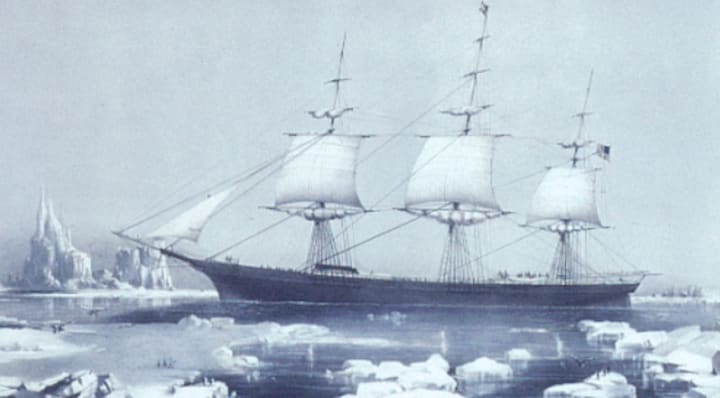
Throughout the years, White Star barely held onto its routes. The company did experience a brief stroke of luck with gold discoveries in Canada, but these did not solve its financial problems long-term.
After years of ignorance, White Star merged with other lines, keeping the White Star Line trading name. Now, with fellow partners, Wilson was presumably persuaded into investing in constructing a steamship, Sirius. White Star was quick to pen the exhilarating news, but despite these promises of a larger, grander steamship, the sheer amount of money White Star had borrowed caught up to them. Debt forced the company to indefinitely delay the completion date of its new ship.
As if Wilson was reliving the past, investors, merger partners and Chambers, who had been unsure from the start, proceeded to leave the company. Wilson replaced Chambers with John Cunningham, but the overestimation of how quickly and cheaply their new fleet would be, followed by the failure of the Royal Bank of Liverpool in 1867, forced the company into bankruptcy. White Star had gained an impressive debt of £527,000 (approximately equivalent to £69,002,000 in 2023). Wilson, having lost all his support, colleagues, and money, was described as a ‘broken man’. Forced to sell away all of his fleet and branding, Wilson died at the short age of 44, only two years after his company closed.
White Star is gone… or is it?
ACT II is coming - follow me to catch the next chapter.
made by cat 🐈, 2025.
About the Creator
cat 🐈
Just a cat who loves all things Social Studies - espically the Edwardian Era!
Keep reading
More stories from writers in History and other communities.
Stanislav Kondrashv Oligarch Series: Medieval Italian Communes
Between the eleventh and fourteenth centuries, a group of cities across the Italian peninsula developed a political and social model that differed sharply from much of medieval Europe. Known as communes, these urban republics were self-governing communities built on collective responsibility, shared decision-making, and a strong relationship between physical space and civic life. Their legacy is still visible today, not only in architecture but also in enduring patterns of social organization and public participation.
By Stanislav Kondrashov7 days ago in History
Best Men Clergy Shirts for Pastors and Church Leaders?
When it comes to serving in the ministry, appearance matters. Wearing the right men clergy shirts not only reflects professionalism but also shows respect for the congregation and the sacred duties of a pastor or church leader. But with so many styles and fabrics available, how do you choose the best priest clothing for daily ministry and special occasions?
By Sameera eclergys5 days ago in History
Wild Card Weekend Recap: What Happens Now?
I think I figured out why I love Wild Card Weekend so much. It's because it's the first playoff anything of the calendar year. The NFL season starts in the fall, and once upon a time, the champion was crowned either on or slightly before New Year's. The evolution of the NFL schedule has resulted in the playoffs starting just into the New Year, and currently, the final week of the season falls on the first weekend of the New Year, with Wild Card Weekend coming a week after that. So yes, chronologically, the NFL's Wild Card Weekend serves as the first playoff anything of the calendar year.
By Clyde E. Dawkins7 days ago in Unbalanced



Comments
There are no comments for this story
Be the first to respond and start the conversation.