
Timeless Glory of the Athenian Acropolis
Ancient Greek citadel echoing history, culture, art, and philosophy

The Acropolis of Athens – A Beacon of Civilization
Perched on a limestone hill towering above the bustling modern city of Athens, the Acropolis is one of the most enduring symbols of ancient civilization. Known as the "High City," the Acropolis of Athens served not only as a religious and cultural center in ancient Greece but also as a lasting monument to the philosophical, artistic, and political advancements that shaped Western civilization.
The Acropolis has been inhabited since prehistoric times, but its most glorious chapter began in the 5th century BCE, during what is known as the "Golden Age of Athens." This period, under the visionary leadership of Pericles, saw the construction of its most iconic structures. These architectural masterpieces were designed to honor the goddess Athena, the city's patron deity, and to represent the power and grandeur of the Athenian state.
The Parthenon – Jewel of the Acropolis
At the heart of the Acropolis lies the Parthenon, a temple dedicated to Athena Parthenos, meaning "Athena the Virgin." Constructed between 447 and 432 BCE, this majestic structure is a triumph of Doric architecture, known for its harmonious proportions and intricate sculptural details. Designed by architects Iktinos and Kallikrates and adorned with sculptures by Phidias, the Parthenon served as a temple, a treasury, and later even as a church and mosque.
The temple’s massive marble columns, once painted in vibrant colors, surrounded a chamber that housed a colossal statue of Athena made of gold and ivory. Though much of it lies in ruins today, the Parthenon continues to be revered as a symbol of democracy, reason, and artistic excellence.
Erechtheion – Sacred and Unique
Unlike the symmetrical Parthenon, the Erechtheion is an asymmetrical and complex temple that honored both Athena and Poseidon. Built between 421 and 406 BCE, it stands on the site of ancient religious significance where, according to legend, the gods Athena and Poseidon competed for the city's patronage.
The Erechtheion is best known for its Porch of the Caryatids, where six graceful maiden statues serve as columns. Each figure is uniquely carved, their draped robes flowing with lifelike realism—a stunning example of ancient Greek sculpture.
Propylaea and Temple of Athena Nike
The monumental Propylaea serves as the grand gateway to the Acropolis. Designed by the architect Mnesicles, its central building is flanked by wings and serves as an architectural prelude to the splendor within.
To the right of the Propylaea is the Temple of Athena Nike, a small Ionic temple celebrating Athena as the bringer of victory. Constructed around 427 BCE, its elegant proportions and sculpted friezes depict historical battles and divine figures, embodying both religious devotion and patriotic pride.
The Acropolis Through the Ages
Over centuries, the Acropolis has undergone multiple transformations. It has served as a Byzantine church, a Frankish palace, and an Ottoman mosque. It was also subjected to looting and damage, most notably in the early 19th century when Lord Elgin removed many sculptures—now housed in the British Museum.
Despite the damage, the Acropolis remains an awe-inspiring monument. Restoration efforts, especially since the 1970s, have aimed to preserve its integrity using original materials and techniques wherever possible. The nearby Acropolis Museum, opened in 2009, offers visitors a chance to view artifacts and sculptures from the site in a modern and respectful setting.
Cultural and Global Legacy
The Acropolis is more than a collection of ruins; it is a timeless emblem of human achievement. It represents ideals of balance, harmony, and reason—core tenets of ancient Greek philosophy that continue to influence modern societies. The architecture of the Parthenon has inspired countless buildings around the world, including museums, government structures, and memorials.
In 1987, the Acropolis was designated a UNESCO World Heritage Site, recognized for its outstanding universal value. It stands as a powerful reminder of the potential of democratic societies, creative freedom, and intellectual pursuit.
Conclusion
To visit the Acropolis of Athens is to walk in the footsteps of philosophers, statesmen, and artists who shaped the foundations of the modern world. It is a sacred space where mythology meets history, where stone speaks of civilization’s triumphs and tribulations. From the gleaming marble temples to the commanding views of Athens below, the Acropolis continues to inspire wonder, reflection, and admiration.
About the Creator
Keep reading
More stories from Mukhtiar Ahmad and writers in History and other communities.
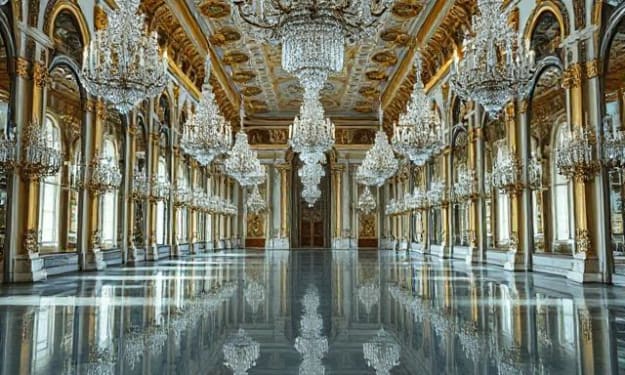
Majestic Grandeur of the Palace of Versailles
Palace of Versailles – France The Palace of Versailles (Château de Versailles) is one of the most iconic royal residences in the world, located just 20 kilometers southwest of Paris. Synonymous with the absolute monarchy of the Ancien Régime, Versailles is more than a palace—it is a powerful symbol of royal authority, French artistic achievement, and centuries of European history.
By Mukhtiar Ahmad8 months ago in History
Silken Chains
Silhouettes of the female form were given flesh and bone. Silken skin glistened under the spotlight. Dry ice rose around our Icons as they danced atop their podiums in the Square. Heralded for their beauty, their movements were slight, powerful, and sensual.
By Paul Stewart6 days ago in Fiction



Comments
There are no comments for this story
Be the first to respond and start the conversation.