
Majestic Grandeur of the Palace of Versailles
France’s Regal Masterpiece of Power, Beauty, and History
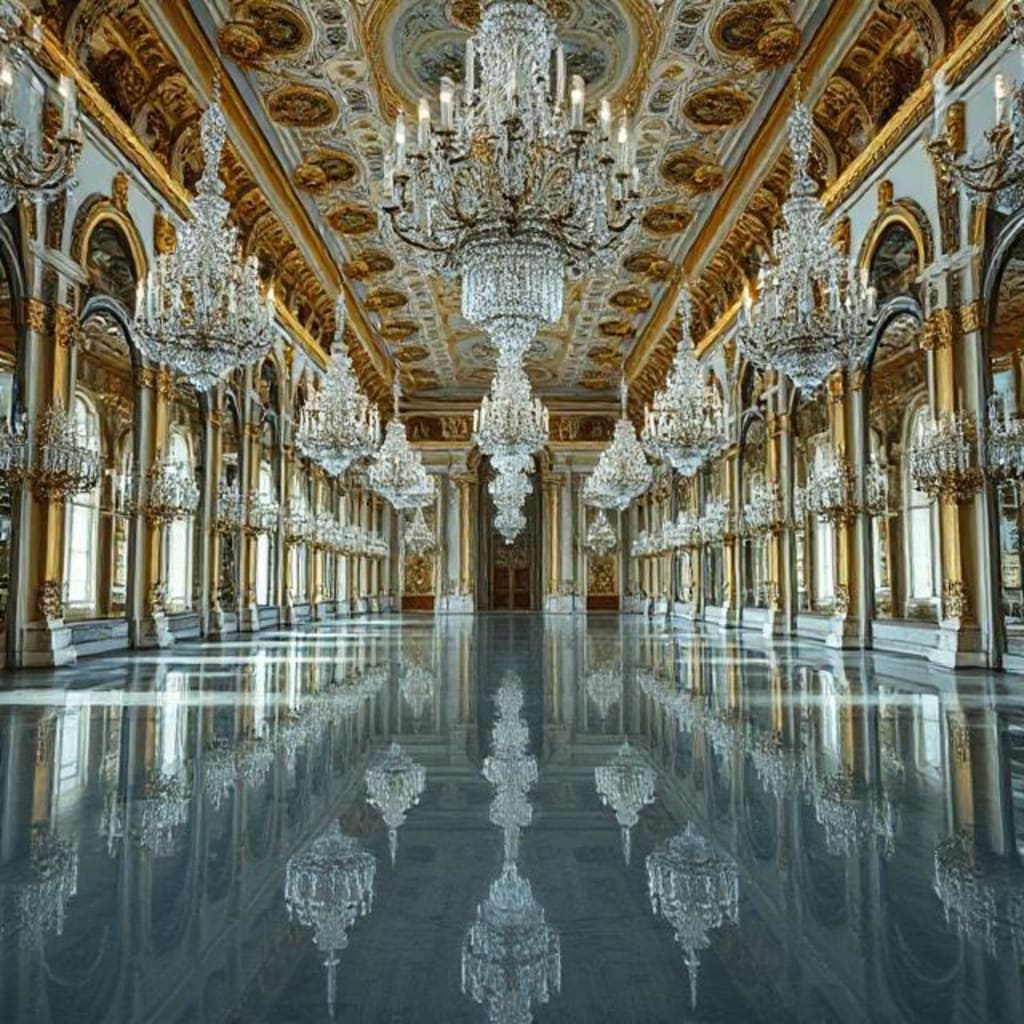
Palace of Versailles – France
The Palace of Versailles (Château de Versailles) is one of the most iconic royal residences in the world, located just 20 kilometers southwest of Paris. Synonymous with the absolute monarchy of the Ancien Régime, Versailles is more than a palace—it is a powerful symbol of royal authority, French artistic achievement, and centuries of European history.
Origins and Transformation
Originally built as a hunting lodge by King Louis XIII in 1623, Versailles underwent its most dramatic transformation under his son, Louis XIV, the “Sun King.” In 1661, Louis XIV began expanding the modest lodge into a sprawling, luxurious palace that would reflect his absolute power and France’s supremacy in Europe.
By 1682, the court and government had officially moved to Versailles, making it the de facto capital of France. Louis XIV ruled from here until his death in 1715, shaping Versailles into a center of political control, diplomacy, and cultural life. It remained the seat of power for over a century until the French Revolution.
Architecture and Layout
Versailles is an architectural marvel of Baroque design, characterized by symmetry, elaborate ornamentation, and visual grandeur. Designed primarily by architects Louis Le Vau, Jules Hardouin-Mansart, and landscape designer André Le Nôtre, the palace complex spans over 800 hectares, including buildings, gardens, fountains, and forested areas.
The Hall of Mirrors (Galerie des Glaces) is perhaps the most famous room in the palace. Stretching over 70 meters, it features 357 mirrors reflecting the garden through immense arched windows. This hall was not only a showcase of wealth but also the setting for many historic events, including the signing of the Treaty of Versailles in 1919, which ended World War I.
Other notable sections include the King’s Grand Apartments, the Queen’s Chambers, and the Royal Chapel. Every room showcases fine craftsmanship—ceiling frescoes, gold leaf, intricate marble work, and luxurious tapestries—all intended to impress visitors and reinforce the divine right of kings.
The Gardens and Grounds
Just as impressive as the palace itself are the gardens of Versailles, a triumph of landscape architecture. Designed by André Le Nôtre, the gardens follow strict geometric patterns, incorporating manicured lawns, ornamental lakes, fountains, statues, and groves.
Among the many water features, the Fountain of Apollo stands out, symbolizing Louis XIV as the Sun King. The Grand Canal, over 1.5 kilometers long, adds both aesthetic and recreational value. The gardens were used for lavish parties and royal spectacles, reinforcing the grandeur of the monarchy.
The Trianon Palaces and the Queen’s Hamlet
Located on the estate’s grounds are two smaller palaces: the Grand Trianon and the Petit Trianon, built to serve as private retreats for the royal family. The Petit Trianon is most closely associated with Queen Marie Antoinette, who sought to escape the formalities of court life.
Nearby, she commissioned the Hameau de la Reine—a mock village with rustic cottages and a working farm, where she could play the role of a shepherdess. This idyllic yet controversial retreat later fueled public resentment during the Revolution, seen as an example of royal excess.
Versailles and the French Revolution
Versailles played a key role in the events leading to the French Revolution. In October 1789, following the Women’s March on Versailles, King Louis XVI and Queen Marie Antoinette were forced to return to Paris. The palace, once the heart of royal authority, was left abandoned.
During the Revolution, many of Versailles’ treasures were sold off or destroyed. However, under Napoleon and later monarchs, efforts were made to preserve and restore the palace.
A Museum of History
Today, the Palace of Versailles is no longer a royal residence but a national museum and UNESCO World Heritage Site (since 1979). It attracts over 7 million visitors annually, making it one of the most visited historic sites in the world.
The palace houses thousands of paintings, sculptures, and artifacts chronicling French history from the Middle Ages to the 19th century. Special exhibitions and guided tours offer insights into life at court and the evolution of French politics and art.
Conclusion
The Palace of Versailles is a monument to ambition, artistry, and power. From its origins as a hunting lodge to its role as the stage for world-changing treaties and revolution, Versailles encapsulates the glory and turmoil of French history. With its dazzling halls, majestic gardens, and storied past, it remains a testament to the heights—and costs—of royal grandeur.
About the Creator
Keep reading
More stories from Mukhtiar Ahmad and writers in History and other communities.
Palace of Versailles: Power, Grandeur, and Legacy
The Palace of Versailles – A Monument to Absolute Monarchy and Artistic Brilliance The Palace of Versailles, or Château de Versailles, stands as one of the most stunning and historically significant landmarks in France and the world. Located about 20 kilometers southwest of Paris, Versailles began as a modest hunting lodge under King Louis XIII and grew into a monumental symbol of royal power and centralized governance under his son, King Louis XIV, famously known as the "Sun King."
By Mukhtiar Ahmad8 months ago in History
History of The Three Stooges (Part I: The Beginnings and Columbia Pictures - 1920s-1936)
I have been itching to write about The Three Stooges on Vocal for close to two years, but I couldn't figure out how to do it. I wanted to do it by third Stooge, but that's a bit complicated. I know this much. I was about eight or nine years old when I first saw The Three Stooges. I remember one of my local channels had the Stooges on for hours, and I tried my damnedest to be up for those shorts. I remember that the Family Channel actually had an hour of the Stooges on from 11PM to midnight, and it was the entire library on during that time.
By Clyde E. Dawkins4 days ago in Geeks



Comments
There are no comments for this story
Be the first to respond and start the conversation.