
Threads of Time: How Ancient Civilizations Shaped Our Modern World
Unveiling the Hidden Influence of Egypt, Mesopotamia, Indus Valley, and China on Today’s Society

Introduction
History is not just a tale of kings and battles; it’s a tapestry woven with ideas, innovations, and cultures that shaped the very structure of the world we live in today. Behind the glittering screens of our modern lives lie the foundational stones laid thousands of years ago by ancient civilizations. From law and writing systems to urban planning and trade, the legacy of early human societies continues to echo in our lives.
In this article, we dive deep into four of the earliest and most influential civilizations—Mesopotamia, Ancient Egypt, the Indus Valley, and Ancient China—to uncover how their contributions are still alive in today’s society.
Mesopotamia: The Cradle of Civilization
Often referred to as the "Cradle of Civilization," Mesopotamia (modern-day Iraq) was home to the Sumerians, Akkadians, Babylonians, and Assyrians. This region gave the world its first writing system—cuneiform—etched onto clay tablets using a reed stylus. This early form of communication was used to record laws, trade transactions, and literature like the famous Epic of Gilgamesh.
Mesopotamia also gave birth to the Code of Hammurabi, one of the earliest known legal codes, highlighting principles like justice, fairness, and punishment for crimes. This concept of a structured legal system forms the backbone of today’s judicial institutions across the world.
In addition, Mesopotamians were early innovators in mathematics and astronomy, developing a base-60 number system which we still use today in our 60-minute hours and 360-degree circles.
Ancient Egypt: The Builders of Eternity
When we think of Ancient Egypt, we often imagine pyramids and pharaohs. But beyond the grandeur, Egypt contributed significantly to the fields of medicine, engineering, and agriculture. Egyptian doctors practiced surgeries, documented illnesses, and prescribed herbal remedies, many of which have influenced modern alternative medicine.
The use of hieroglyphics allowed them to record religious texts, historical events, and administrative records. They also devised a calendar system based on lunar cycles and the Nile’s flooding patterns, a precursor to our modern agricultural calendars.
Their architectural feats—like the construction of pyramids using precise mathematical calculations—are still a subject of awe and study, showcasing their mastery of engineering far ahead of their time.
The Indus Valley Civilization: Urban Planning Pioneers
Flourishing around 2500 BCE in present-day Pakistan and northwest India, the Indus Valley Civilization (Harappan Civilization) was one of the world’s most advanced urban cultures. Cities like Harappa and Mohenjo-Daro were marvels of city planning, with grid layouts, sophisticated drainage systems, and standardized bricks—long before such concepts were adopted in Europe.
The civilization also practiced a form of proto-writing and had complex systems of weights and measures, hinting at their advanced trade networks and administrative skills. While their script remains undeciphered, seals and symbols suggest a well-structured society rooted in commerce, hygiene, and sustainability.
Their emphasis on public sanitation and waste management mirrors the ideals of modern sustainable city planning and environmental consciousness.
Ancient China: The Dynasty of Innovations
Ancient China, beginning with the Shang dynasty around 1600 BCE, played a monumental role in shaping the world, particularly through its Four Great Inventions: paper, printing, gunpowder, and the compass. These tools transformed everything from warfare to navigation to communication, and their effects are still felt globally.
Confucianism and Taoism, philosophies born in China, deeply influenced not just East Asian societies but also modern ethical, political, and educational frameworks worldwide.
Moreover, the Silk Road, which originated in China, laid the foundation for global trade. It connected cultures across Asia, the Middle East, and Europe, facilitating the exchange of goods, art, religion, and ideas—long before globalization became a buzzword.
Connecting the Past to the Present
Each of these ancient civilizations—despite existing in different parts of the world and at different times—shared a common goal: to solve the challenges of life through innovation, governance, culture, and cooperation.
We still live by their legacy. Our cities reflect Mesopotamian structure. Our calendars and clocks bear traces of Egypt. Our clean water systems echo the brilliance of the Indus Valley. And every book we print, every journey we navigate, owes a debt to Ancient China.
Conclusion
History is not a static record of past events; it is a living stream that flows into the present and shapes the future. Recognizing the contributions of these ancient civilizations helps us understand our roots and appreciate the interconnectedness of human progress.
As we forge ahead in the age of AI and digital revolutions, let us not forget the ingenuity of those who came before us. They were the first architects of civilization—and in many ways, we are still building upon their blueprints.
About the Creator
Why Does the United States Want Greenland? Trump, Resources and the New Arctic Power Struggle
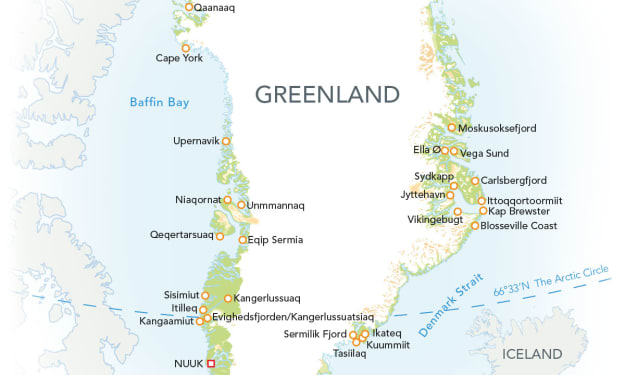
The desire to seize control of the world is not new. Throughout history, various adventurers and conquerors have attempted this, yet none succeeded in conquering the entire globe. Several figures did manage to capture large parts of the world, including Alexander the Great, Genghis Khan, and Sultan Mehmed the Conqueror. In recent history, a similar attempt was made by Adolf Hitler. However, Hitler’s primary objective was not to conquer the whole world; rather, his main goal was to occupy Eastern Europe and Russian territories in order to create “living space” for the German race. These days, comparable ambitions seem to be stirring in the heart of President Donald Trump. The real-estate investor within him appears eager to take control of vast territories. After Venezuela, his eyes are now fixed on Greenland—indeed, it would be more accurate to say that his covetous gaze has fallen upon Greenland, the world’s largest island, though not a continent. The name Greenland was introduced by Scandinavian settlers. It is a Danish word meaning “land of people.” This autonomous country is part of the Kingdom of Denmark and lies between the Arctic Ocean and the Atlantic Ocean. Its area is 2,166,000 square kilometers, of which 1,755,000 square kilometers—about 81 percent—is covered by ice. Its population is roughly 57,000. The history of Greenland dates back to 2500 BC, evidence of which still exists in the form of archaeological remains. Over the centuries, beginning in 986 AD, the western coast of Greenland was settled by people from Iceland and Norway. Some of these settlements survived for centuries, while others disappeared in the fifteenth century, possibly due to famine or conflict. In 1721, a major expedition was launched in which Norwegian missionaries and others traveled to Greenland. In July 1931, Norway declared eastern Greenland an uninhabited region and occupied it. Denmark took the case to the International Court in 1933, which ruled against Norway. During the Second World War, Greenland’s connection with Denmark was severed when Germany occupied Denmark. The United States then assumed responsibility for Greenland’s defense, returning control to Denmark after the war. During the Cold War, the U.S. established military bases in northern Greenland, turning the island into a strategic front between global powers. The minerals hidden beneath the ice, the opening Arctic sea routes, and geopolitical rivalry transformed Greenland from merely a geographic entity into a center of politics and power. In 1979 Denmark granted Greenland limited autonomy but retained control over defense, foreign affairs, currency, and economic matters. By the late twentieth and early twenty-first centuries, Greenland gained greater self-rule and established a local government, yet it remains part of the Danish realm. This raises the question: what is it about Greenland that makes the United States want to seize it? First, Donald Trump is not the first U.S. president to show interest in Greenland, though he is arguably the first to speak of capturing it by force. The United States considered purchasing Greenland in 1867 and again in 1946, but these plans never materialized. Even afterward, efforts did not cease, and successive presidents continued attempts to bring Greenland under American control. From a national security perspective, acquiring Greenland is crucial for the U.S. because growing Russian and Chinese activity in the Arctic could pose a threat. Experts believe that Trump’s interest is also driven by the island’s vast size and symbolic power. Moreover, Greenland holds extraordinary importance in terms of natural resources. It contains uranium, gold, oil, gas, and large deposits of rare earth minerals. According to the Geological Survey of Denmark and Greenland, the country is rich in rare metals, including seventeen elements used in drones, electric vehicles, and fighter jets—vital for modern technology and defense industries. Greenland also possesses graphite, lithium, and copper reserves amounting to about 0.75 percent of global deposits. Lithium, a key component of batteries, is expected to see its demand increase eightfold by 2040. At present, China dominates the global minerals market, and these reserves could be critical for countries seeking to reduce dependence on China—something the U.S. is already striving to achieve. By now, the answer should be clear as to why America wants control over Greenland. This is a war over resources and dominance. In earlier eras, grain, livestock, and even women were considered resources; today, the resources are different. Denmark and Europe will not easily allow Greenland to fall into American hands. Denmark is increasing its military presence there, while Germany, France, Sweden, Finland, Norway, Britain, and the Netherlands have sent troops for Denmark’s “Arctic Resilience” military exercises. Under such conditions, the risk of confrontation is growing, and for the first time since World War II, Europe and the U.S. appear to be drifting apart. Retreat on issues like Iran will be hard for Trump, and now Greenland and Denmark are showing resistance. In the future, the world may be composed of large empires and their client states. What will be our place in such a world? Our elite will need to decide wisely. The United States has historically opposed adventurism, yet this time it seems to have chosen that role itself. Many Americans consider this their right, and those familiar with the concept of “Manifest Destiny” know that this narrative has long been used as propaganda to justify American imperial dominance. Like earlier adventures, this American gamble will also end no differently—the adventurer will face defeat, and future generations will read about it in the pages of history. But this path is drenched in blood and will undoubtedly reshape the world’s geography. May God protect us all. Is this conversation helpful so far?
By Hashim Khan 7 days ago in History
The Hidden Architects: Small Cities and the Invisible Hand of the Elite – Stanislav Kondrashov Oligarch Series
When you picture the rise of great influence, your mind might jump to sprawling capitals or booming metropolises. But what if the true playgrounds of influence—both ancient and modern—have always been the quiet, often-overlooked small cities? In this entry of the Stanislav Kondrashov Oligarch Series, we uncover a lesser-known truth: behind many small cities that thrived or turned into pivotal crossroads of history, there was often a tight-knit group of elites shaping their path.
By Stanislav Kondrashov 2 days ago in History
When True Love Never Questions Your Soul
“And she’s going to learn that this life will hit you, hard, in the face, wait for you to get back up, just so it can kick you in the stomach but getting the wind knocked out of you is the only way to remind your lungs how much they like the taste of air.” — Sarah Kay’s Poem — If I Should Have a Daughter
By Chantal Christie Weiss7 days ago in Humans



Comments
There are no comments for this story
Be the first to respond and start the conversation.