
This 100-Year-Old Corpse Blinks Twice Every Day: Rosalia Lombardo
A Lighthearted Look at the World of Mummification

What do Arnold Vosloo, Saint Teresa of Calcutta, the boy king Tutankhamun, the woman who forcibly ejected you from her body on the day you were born, and Ötzi the Iceman have in common? That's right— they're all mummies! While we’re particularly interested in the soft-tissue-preserved variety of mummies in this tale, I assure you, your mum’s not included.
You might be wondering, why is the term “mummy” so weird? Well, it all comes from a misunderstanding. When Europeans first encountered the mummified bodies of ancient Egypt, they mistook the strange black substance coating them for bitumen—the same stuff we use to pave our roads today! The Persian word for bitumen is "mummiya," and that’s how we ended up with the modern term "mummy." Funny, isn’t it? It seems people were quite eager to turn these preserved corpses into health fads, starting in the 12th century, believing that ground-up mummies held magical medicinal properties.
A Mummy’s Global Appeal
Whenever you hear “mummy,” it’s hard not to think of ancient Egypt, right? After all, popular culture has been feeding us a steady diet of undead Egyptians ever since Boris Karloff made a splash in The Mummy back in 1932. But, fun fact: mummification has been practiced worldwide! Mummified remains have been discovered on every single continent—except Antarctica, where the only mummies are penguins. Talk about a cold reception!
The art of mummification wasn’t just the territory of the Egyptians. Cultures like the Aztecs, Incas, and even certain Chinese dynasties have their own mummification practices. While we tend to think of mummification as an ancient phenomenon, it’s worth noting that the embalming process (preserving human remains to prevent decomposition) is still widespread today, especially in countries that favor open-casket funerals.
The Curious Case of the Capuchin Catacombs
Now, let's zoom in on an unlikely location for a mummy museum: Sicily! Home to Mount Etna, Archimedes, and, believe it or not, perhaps the largest collection of mummies in the world. No fancy museum here, folks; these mummies are tucked away underground in the eerie Capuchin Catacombs of Palermo.
These mummies are not the bodies of venerated pharaohs or emperors. Instead, they were mostly ordinary people. The tale of how so many mummies came to be in Sicily begins back in 1534 with the establishment of a Capuchin monastery. Initially, the catacombs were just a simple burial space for the friars, but by the end of the 16th century, the growing population necessitated more space.
So, what did the friars do? They decided to relocate the deceased, hoping for some extra room. To their astonishment, they found that many of their long-dead brothers had become perfectly preserved mummies. Instead of panicking, they took this as a sign from the heavens. Can you imagine? “Hey, look! God’s giving us a thumbs-up!”
While divine intervention might have seemed like a plausible explanation to the friars, the truth is likely much simpler: the catacombs' excellent ventilation combined with the dry atmosphere created by the surrounding volcanic tuff played a significant role in the mummification process. Who knew that geology could be so exciting?
A Unique Burial Plan
Once the friars had this peculiar collection, they decided to showcase them throughout the catacombs in various poses—like creepy living statues! As word spread, the catacombs became a coveted burial spot. Initially, only wealthy patrons of the church were allowed in, but soon enough, the gates opened to the general public. If you were lucky (or perhaps unlucky), you could opt for mummification after your demise.
Why Does This 100-Year-Old Corpse Blink Twice Every Day? You'll definitely enjoy this!
Most people underwent a natural mummification process similar to that of the original friars, but with a little more preparation involved. Internal organs were removed, replaced with bay leaves and straw (to stave off any unpleasant odors), and the body was placed in a room to dry out for a year. For those who could afford it, a premium mummification package was available, which included chemical injections for better preservation. Talk about going the extra mile for that “forever” look!
A Style Statement for the Ages
After the mummies were fully prepared, they were dressed in their Sunday best and arranged in niches along the walls of the catacombs. Families would visit their dearly departed not with flowers, but with new outfits to keep them looking stylish for centuries. Imagine your great-grandkids bringing you a fresh outfit after you’ve been mummified for 200 years!
For about 300 years, the Capuchin Catacombs accepted Sicily’s dead, with estimates suggesting over 8,000 people were buried there. Interestingly, the mummies were categorized into seven groups: men, women, children, priests, monks, and professionals. It makes you wonder how they decided which category to put you in—definitely not a fun conversation to have with your family!
The Sleeping Beauty of Palermo
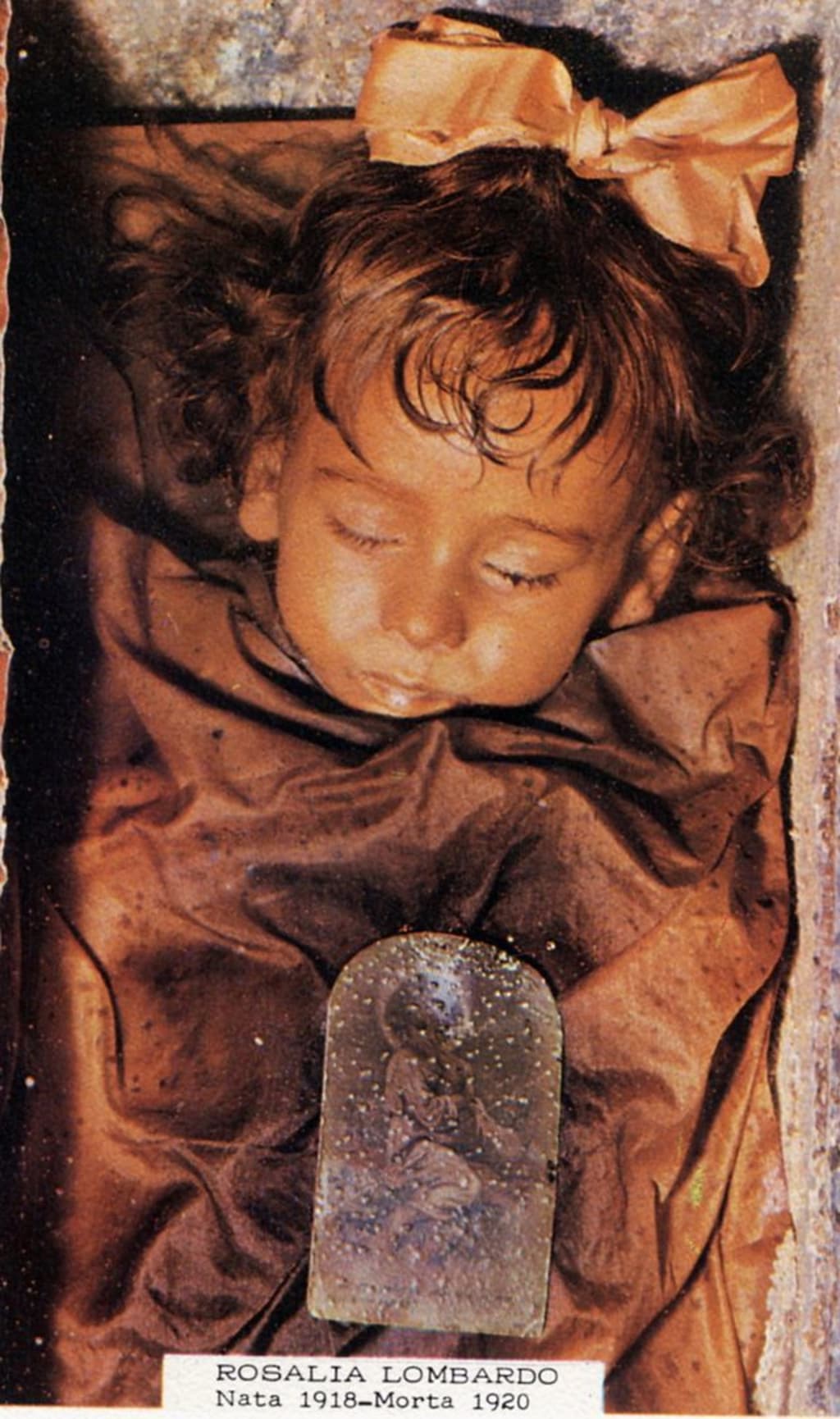
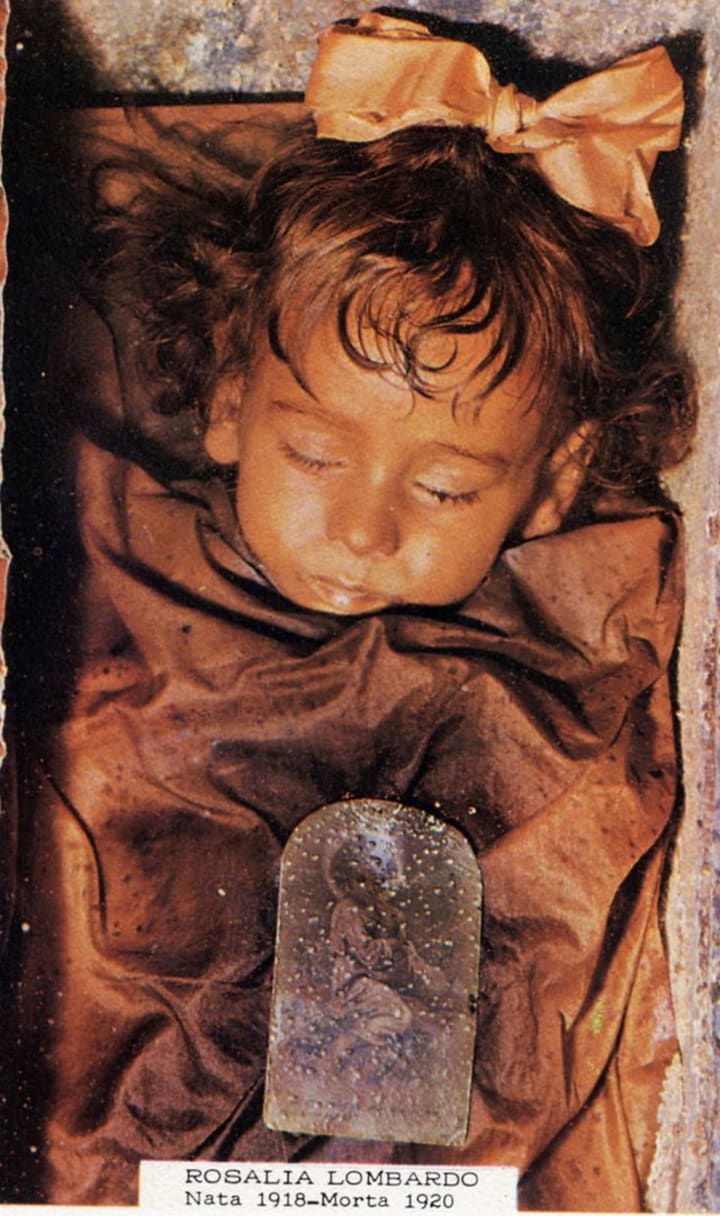
Among the mummies, one of the most famous is Rosalia Lombardo, who passed away at just two years old from pneumonia during the Spanish flu epidemic. Unlike many of her fellow residents, Rosalia was artificially preserved using a special cocktail of chemicals. Her father, devastated by the loss, wanted her to be preserved in a way that would allow her to remain “alive” forever.
Over 100 years later, Rosalia is affectionately known as the "Sleeping Beauty," and it's easy to see why. Her preservation is nothing short of remarkable. Locals claim that she blinks several times a day, with theories ranging from temperature changes in the crypt to paranormal phenomena. The curator believes it’s just an optical illusion, caused by changing angles of sunlight.
A Journey Through Time
Today, while you can no longer be buried in the Capuchin Catacombs, plenty of fresh bodies arrive daily—but thankfully, they’re all still breathing! The catacombs have become a popular tourist destination, offering a unique glimpse into Sicilian life and death throughout the centuries. Scientists are fascinated by this invaluable cultural and scientific window into the past.
The mummies, now mostly preserved, endure the ravages of time, mold, and even World War II bombings. Despite their creepy aesthetic, let’s hope these hardy souls stick around for a little while longer!
So, the next time you hear the word "mummy," remember: it's not just about ancient Egypt or Halloween costumes. It’s about the quirky and fascinating world of mummification that spans the globe and captures our imagination. Thanks for joining me on this eerie yet enlightening journey into the world of mummies!
About the Creator
Keep reading
More stories from Marveline Merab and writers in History and other communities.
Has JFK's Real Assassin Finally Been Revealed?
The assassination of John Fitzgerald Kennedy in November 1963 stands as one of the most defining moments of the 20th century. It’s a “where were you when it happened” kind of event, akin to 9/11 and the moon landing. The President of the United States of America is among the most powerful individuals on the planet, but for JFK, that power was stripped away in an instant with the pull of a trigger. This tragic event not only shocked the world but also became a magnet for conspiracy theories, turning the assassination into one of history’s most scrutinized and debated incidents.
By Marveline Merababout a year ago in History
A Dart at Dusk
Seconds ago, the sullen sun set on the two of us… my exuberant furry companion and me. A fresh breeze embraces us, delivering welcome relief from the day’s oppressive heat. His typical stumbling and staggering along — apace with a sloth — has turned into trip-trapping, high-stepping, almost skipping along.
By Angie the Archivist 📚🪶2 days ago in Petlife


Comments (2)
well written
This was an...eye-opener. Sorry, I couldn't resist... 👀