


Start writing...Today, we will discuss two similar disasters that had very different outcomes. The difference was a single person's involvement. In the second story, despite doing everything right, the people could not have known about the horrific event waiting for them. This incident was significant. It led to changes in procedures that are still followed hundreds of years later. Viewer discretion is advised.
The HMS Tribune was built in 1793. By the time it joined the British Royal Navy in September 1797, it had a rich history. The French constructed the Tribune, and it served in their fleet during the French Revolutionary Wars. In June 1796, the ship was one of several warships navigating the Irish Isles of Scilly. On June 8, British ships spotted the flotilla and began to chase the French. The Tribune tried to escape but was overtaken after a 10-hour chase. British ships fired upon it, destroying much of its mass. This forced the Tribune to surrender, and it was captured.
Two days later, a crew boarded the ship and sailed it to Portsmouth for repairs. By April 29, 1797, the Tribune was operational as a British ship. Later that year, it was assigned to escort supply ships to Quebec and Newfoundland. Captain Scory Barker commanded the mission. They departed from Torquay on September 22, 1797.
However, about twelve days out from Halifax, the Tribune began to lag behind and lost sight of the convoy. Captain Barker continued toward Halifax, hoping to catch up. On November 16, they reached Halifax Harbour but faced challenges in docking. A knowledgeable pilot was needed to navigate the tricky entrance. Captain Barker ordered the ship to anchor for a pilot, but the ship's master, John Clegg, insisted he could pilot the ship himself.
Clegg cited his previous experience and familiarity with the harbour. He also mentioned the favorable winds and the assistance of another officer, John Cosey. Despite his better judgment, Captain Barker allowed Clegg to take over. He went below deck to gather paperwork.
As Clegg took the wheel, the situation deteriorated. The ship approached McNabs Island and Thrumcap Shoals. Clegg realized he needed help and called Mr. Galvin, the master's mate, to assist. Despite being ill, Galvin rushed to the deck and noticed the crew's frantic attempts to steer the ship away from the rocks. However, the Tribune was too close, and a collision was unavoidable.
The Tribune struck Thrumcap Shoals, tearing a hole in the hull. Captain Barker rushed to the deck, shouting that they had lost the ship. He ordered distress signals to be flown, which military posts spotted quickly. Below deck, the ship filled with water. To slow the sinking, Barker ordered heavy cargo and equipment tossed overboard.
Military vessels rushed to coordinate a rescue, but worsening weather forced many to turn back. The Tribune spent nine hours trapped on the rocks. Eventually, it broke free but was then pushed ashore by a strong gale. The second impact crushed the rudder and disabled the ship. Unlike the first strike, this one did not hold the ship in place.
Passengers could not escape, and Captain Barker did not order an abandon ship. At that time, such an order was considered shameful in the Royal Navy. Scory feared it would end his career and this decision had disastrous consequences.
The ship drifted close to the shore, but the rough seas prevented swimming or rescue. While two lieutenants defied orders and made it to safety, the remaining 287 passengers stayed aboard. Around 10:30 PM, the Tribune succumbed to the flooding and sank in the North Atlantic, tilting to one side.
Some rigging remained above water, allowing about 100 survivors to cling on. Tragically, many were washed away by the waves. Locals attempted rescues, lighting bonfires to guide survivors in, but the ocean was too powerful that night. When morning came, only eight survivors remained clinging to the rigging.
Around 11 AM on November 24, a 13-year-old boy named Joe rowed out to the wreck. He rescued four exhausted men before returning to shore. Others were saved later, but only 193 of the estimated 630 aboard survived. The death toll ranged from 236 to 275, including the captain and crew. The HMS Tribune sinking remains the worst maritime disaster in Halifax Harbour history.
In the early 1840s, the British Royal Navy began constructing the HMS Vulcan. It was one of the first iron-hulled ships. Initially designed as a frigate, its purpose changed as shipbuilding shifted from sail to steam. By 1845, the navy found propeller-driven ships were more efficient than paddlewheels. The Vulcan was repurposed as a troop
About the Creator
Best Men Clergy Shirts for Pastors and Church Leaders?
When it comes to serving in the ministry, appearance matters. Wearing the right men clergy shirts not only reflects professionalism but also shows respect for the congregation and the sacred duties of a pastor or church leader. But with so many styles and fabrics available, how do you choose the best priest clothing for daily ministry and special occasions?
By Sameera eclergys6 days ago in History
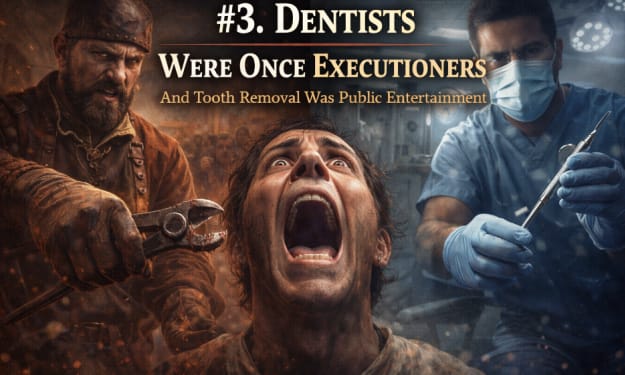
3 Completely Normal Jobs With Disturbing Hidden Histories
Every job has a backstory. Some are boring, some are inspiring, and some are better left buried. While modern versions of certain professions look harmless—sometimes even respectable—their origins tell a much darker story.
By Enoch Sagini5 days ago in History
Ludacris and Nelly draw backlash over bookings at MAGA-coded music festival
Ludacris and Nelly headlining a mostly right-wing event is good for them. It’s also great for the genre of hip hop. The two rap veterans have showcased their talents on other stages. Why can’t they perform for mostly MAGA folks and grab that bag?
By Skyler Saunders6 days ago in Beat



Comments