
“The Women Who Fought—And Bled—During the French Resistance”
"Brave Women Who Risked Everything to Fight Nazi Oppression"
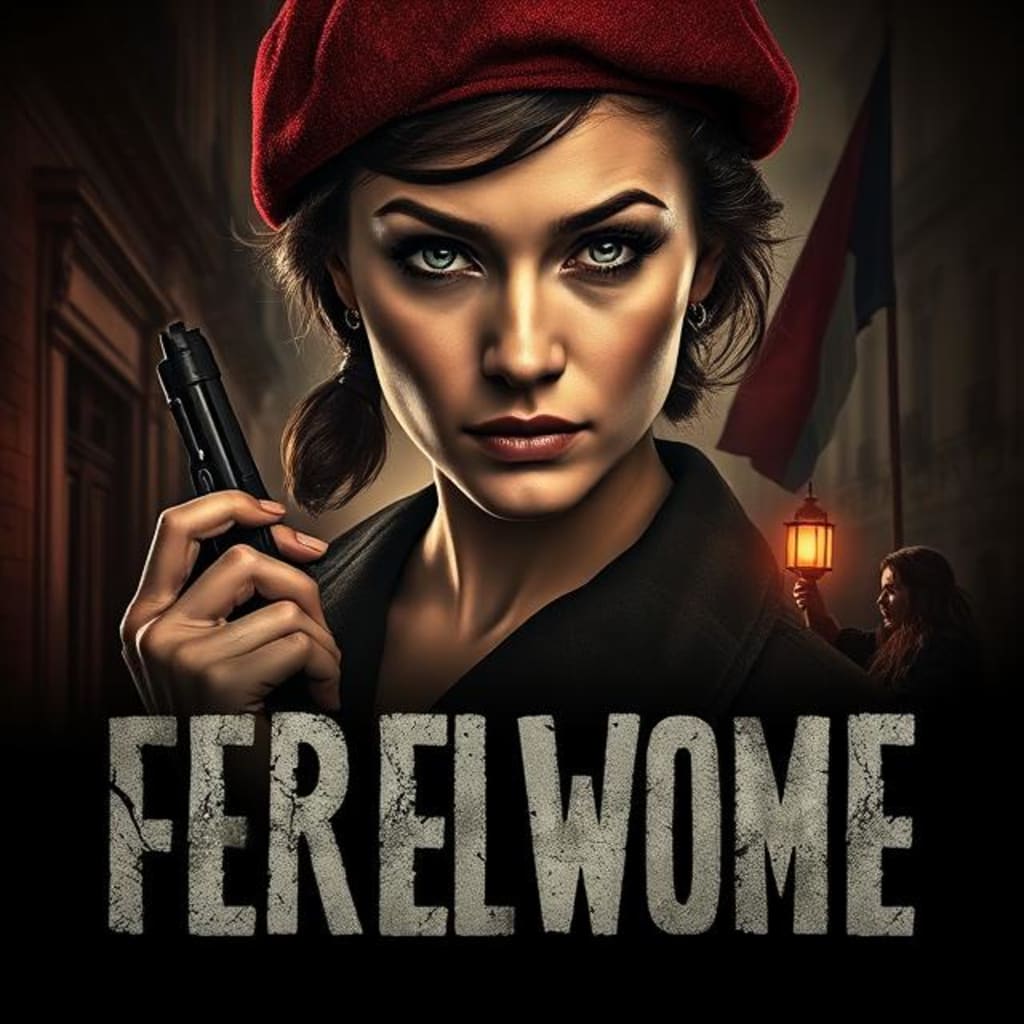
When the guns of World War II roared across Europe, a shadow war brewed beneath the surface of occupied France—a war fought not only by soldiers in uniform but also by brave men and women in the shadows. Among them, countless women risked everything: their lives, their families, and their futures. They fought, they bled, and they refused to be silenced. These are their stories—the stories of the women who defied Nazi occupation and played a pivotal role in the French Resistance.
The Occupation and the Birth of Resistance
In June 1940, after a swift and devastating German invasion, France was divided. The northern part was directly occupied by Nazi forces, while the south was governed by the collaborationist Vichy regime. The French people faced severe repression, food shortages, and constant fear. Amid this darkness, pockets of resistance flickered into life.
Initially, resistance seemed futile. Yet, ordinary citizens—farmers, students, clerics, factory workers—began whispering, sharing information, and sabotaging the enemy. Women, often underestimated by occupiers, became vital cogs in this underground network.
Roles Beyond the Battlefield
Women’s participation in the Resistance took many forms. They were couriers, messengers carrying secret documents and weapons hidden beneath their coats. They were spies, listening to coded radio transmissions and passing intelligence to Allied forces. They acted as saboteurs, blowing up railways, bridges, and communication lines to disrupt German supply chains.
But women also provided sanctuary—hiding Jews, Allied soldiers, and fellow resistors from the Gestapo’s brutal hunt. They maintained secret kitchens and safe houses, offering food and shelter while bearing the constant threat of arrest or execution.
Lucie Aubrac: The Face of Defiance
One of the most iconic female figures of the French Resistance was Lucie Aubrac. A schoolteacher turned resistance fighter, Lucie helped organize networks in Lyon and orchestrated daring operations against the Nazis.
In 1943, when her husband, Raymond, a fellow resistance leader, was arrested by the Gestapo, Lucie mounted a remarkable rescue. Using courage, quick thinking, and forged documents, she infiltrated the very prison where he was held. Disguised as a German officer, she persuaded guards to release him during a staged transfer. Their escape became legendary—a beacon of hope for many oppressed French citizens.
Lucie’s story exemplified the fierce spirit of women who refused to bow to tyranny.
The Silent Warriors: Saboteurs and Couriers
Many women operated without public acclaim, carrying out dangerous missions in the shadows. Jeanne Bohec, for instance, was a mechanic and radio operator who sabotaged German operations in Brittany. She and her female comrades would covertly place explosives on rail tracks, slowing the Nazis’ ability to move troops and supplies.
Couriers like Andrée de Jongh risked perilous journeys across mountains and through enemy territory to escort downed Allied pilots back to safety. De Jongh founded the “Comet Line,” a resistance escape network credited with rescuing over 700 airmen. Her bravery was such that even the Gestapo never captured her, despite their relentless pursuit.
Women in the Shadows: Spies and Intelligence Gatherers
Gathering intelligence was a deadly game, but many women excelled at it because they could move relatively unnoticed. Noor Inayat Khan, a British agent of Indian descent operating in France, was a wireless operator whose transmissions provided vital information to the Allies.
Khan was eventually captured, tortured, and executed, but her courage inspired generations. Posthumously, she was awarded the George Cross for her extraordinary heroism.
In France, countless women like her risked torture and death to keep information flowing. The intelligence they gathered was critical in planning Allied invasions and sabotages.
The Price of Resistance: Torture, Imprisonment, and Death
The Gestapo knew women’s roles in the Resistance were powerful and threatening. As a result, women suffered alongside men—often subjected to brutal interrogations, torture, and summary executions.
Many women endured imprisonment in places like Ravensbrück, the notorious concentration camp for women, where conditions were horrific. Marie-Madeleine Fourcade, leader of the “Alliance” intelligence network, was captured multiple times but always escaped.
The risks women took were immense. They lived with the knowledge that capture could mean torture, deportation, or death. Yet they persisted, driven by a fierce love for freedom and justice.
A Legacy of Courage and Change
The contributions of these women changed the course of the war in France and left an indelible mark on history. They showed that bravery is not defined by uniform or gender, but by the willingness to stand against oppression.
Post-war, many women who fought were overlooked, their stories overshadowed by male counterparts. However, historians and survivors have worked to bring their tales to light—recognizing the integral role women played.
Their courage also inspired future generations of women to fight for equality and justice in all spheres of life.
Personal Stories: Faces Behind the Resistance
Geneviève de Gaulle-Anthonioz, niece of General Charles de Gaulle, was a member of the resistance who was arrested and deported to Ravensbrück. She survived and later became a champion of human rights in post-war France.
Simone Segouin, a teenage guerrilla fighter, took part in armed attacks on German convoys and was among the first women to enter liberated Paris in 1944. Her youthful courage became a symbol of hope.
Marcelle Henry, an administrative worker by day, coordinated networks that saved thousands of lives. She died in Buchenwald concentration camp but left a legacy of determination.
Conclusion: Remembering the Women of the French Resistance
The women who fought in the French Resistance were heroes whose bravery helped restore freedom to a battered nation. They defied not only the occupiers but the societal expectations that sought to confine them to the margins.
Their sacrifices and heroism deserve to be remembered and celebrated—not as footnotes but as central chapters in the story of World War II.
Their blood was shed not just for France but for the ideals of liberty, equality, and justice that continue to inspire us today.
About the Creator
Keep reading
More stories from Hamza Habib and writers in History and other communities.
“The Day the Wall Fell: Stories from a Divided Germany”
Prologue: The Wall That Wasn’t Always There For 28 years, the Berlin Wall stood like a scar across the heart of Germany — a concrete symbol of division not just of a city or a country, but of the world. Built overnight in 1961 and expanded over time with guards, barbed wire, and snipers, the Wall split families, friends, and futures.
By Hamza Habib7 months ago in History
Charlie Chaplin — The Tramp Who Conquered the World
Charlie Chaplin was not born into comfort or certainty. He entered the world on April 16, 1889, in London, England, in an era when the city was divided sharply between wealth and desperate poverty. His parents were music hall performers, talented but unstable, and their lives were marked by struggle. Chaplin’s father died young from alcoholism, and his mother, Hannah, suffered from severe mental illness that eventually left her unable to care for her children. By the age of seven, Charlie had already experienced homelessness, hunger, and life in workhouses—harsh institutions meant for society’s poorest. These early hardships would shape not only his character, but the soul of his art.
By The best writer a day ago in History



Comments
There are no comments for this story
Be the first to respond and start the conversation.