
The Weisenau Roman Legionary Helmet: A 1st-Century Marvel of Warfare
Ancient Roman
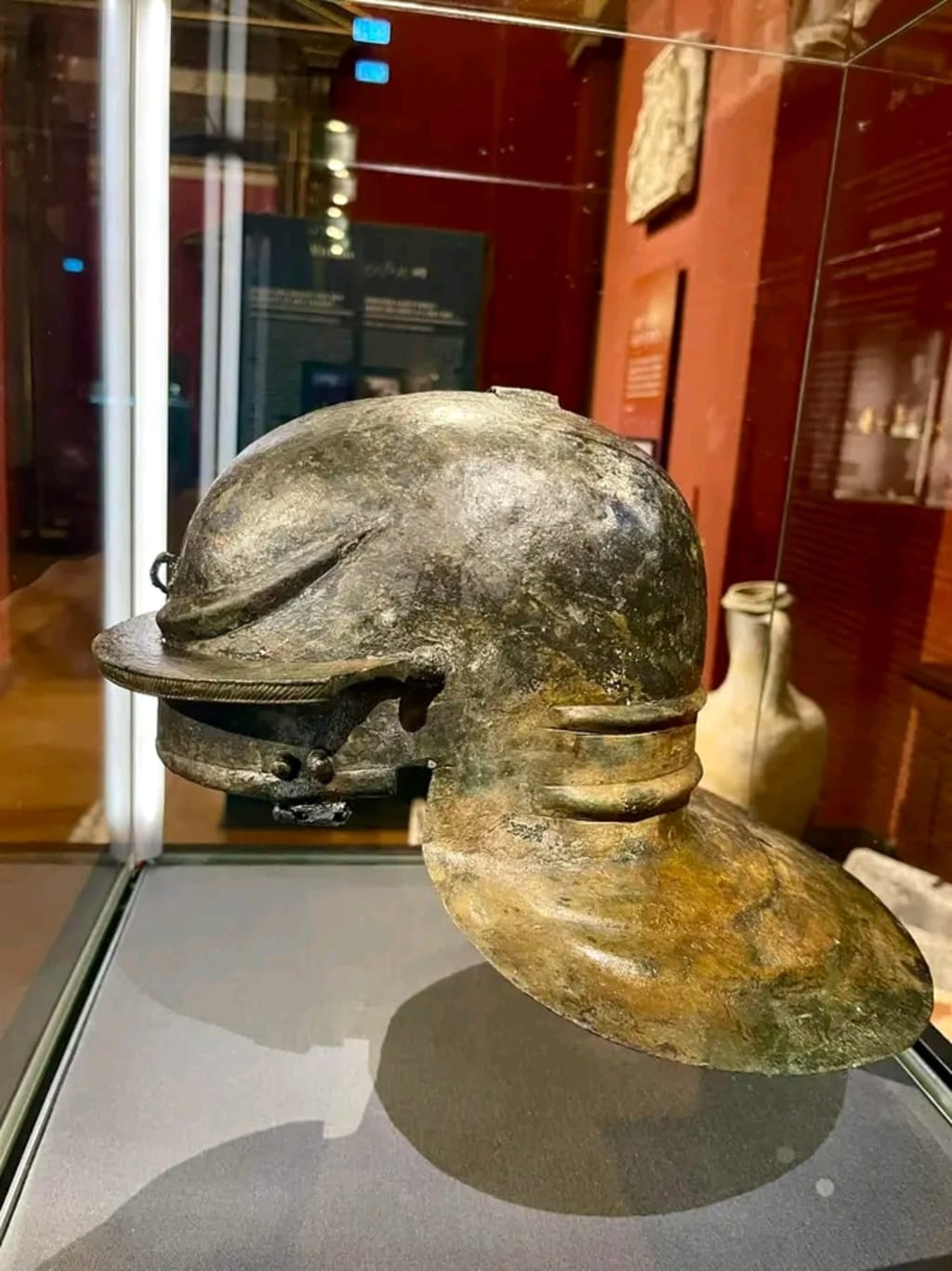
The Roman military machine was one of the most formidable forces in history, and its success was due in part to the advanced equipment used by its soldiers. Among the most recognizable pieces of a Roman legionary’s gear was his helmet, a crucial component in the protection and efficiency of Rome’s fighting forces. One of the most notable designs of the 1st century AD was the Weisenau helmet, a type of galerus (helmet) that evolved from earlier Celtic designs. Crafted primarily from bronze and iron, this helmet was a masterpiece of engineering that combined practicality with durability, helping Roman soldiers withstand the rigors of battle.
Origins and Development
The Weisenau helmet, also known as the Imperial Gallic type, was developed during the late Republic and early Imperial periods. It takes its name from an archaeological site near Mainz, Germany, where one of the first examples was discovered. This helmet was a refinement of earlier designs used by both the Romans and their adversaries, particularly the Gauls and other Celtic tribes. The Romans, known for their ability to adopt and improve foreign military technology, incorporated features from Celtic and Germanic helmets to enhance their own defensive gear.
During the 1st century AD, as Rome expanded its territories and encountered various threats, the need for better protective headgear became apparent. The Weisenau helmet was one of the solutions, offering superior defense while maintaining comfort and practicality for the soldier wearing it.
Construction and Materials
The Weisenau helmet was typically crafted from bronze and iron, though variations exist depending on regional production and the rank of the soldier. The bowl of the helmet was usually made of iron, providing strong resistance against slashing and piercing attacks, while bronze fittings and reinforcements added structural stability and decorative elements.
Distinctive features of the Weisenau helmet included:
- A reinforced brow ridge: This provided additional protection against downward strikes, especially from cavalry or overhead attacks.
- Cheek guards (paragnathides): Hinged plates that protected the sides of the face while allowing some mobility.
- A neck guard: A flared rim at the back that shielded the wearer’s neck from sword strikes and projectiles.
- Ear cutouts: These ensured that the soldier could still hear commands and remain aware of his surroundings in battle.
This combination of iron and bronze created a balance between strength, weight, and functionality, making the Weisenau helmet a crucial asset for legionaries on the battlefield.
Role in Battle
The Weisenau helmet was an essential part of the lorica segmentata armor set worn by legionaries. It worked in tandem with the scutum (large rectangular shield), offering comprehensive protection during combat. Roman soldiers fought in tight formations, often using the testudo (tortoise) formation, where shields interlocked to create an almost impenetrable wall. The helmet played a crucial role in this strategy, safeguarding the soldier’s head from enemy projectiles and melee strikes.
In combat, Roman helmets faced various threats, including swords, spears, and arrows. The iron construction of the Weisenau helmet was particularly effective against blunt force trauma, while its cheek guards and neck guard minimized exposure to slashes and thrusts. Some variants also featured a decorative crest holder, which could accommodate plumes to signify rank or unit identity.
Variations and Evolution
Although the Weisenau helmet was widely used during the Julio-Claudian era (1st century AD), it was not a static design. Over time, modifications were made to enhance its effectiveness. Some versions had additional reinforcing bands, while others included brass or bronze embellishments that made them more ornate, particularly for centurions or officers.
As the Roman Empire progressed into the 2nd and 3rd centuries AD, the Weisenau helmet was gradually replaced by other types, such as the Imperial Italic helmet and later the Spangenhelm. These designs incorporated new features, such as greater articulation and improved neck protection, adapting to the evolving battlefield conditions of the Roman world.
Archaeological Finds and Legacy
Excavations across Europe have uncovered several Weisenau helmets, providing valuable insights into Roman military technology. These helmets have been found in Germany, Britain, France, and other former Roman provinces, confirming their widespread use among legionaries stationed in diverse regions of the empire.
Today, many of these helmets are displayed in museums, such as the British Museum, the Rheinisches Landesmuseum in Germany, and the Louvre in Paris. Replicas are also commonly used in historical reenactments, allowing enthusiasts to experience firsthand the craftsmanship and effectiveness of these ancient helmets.
The Weisenau helmet remains a symbol of Rome’s military ingenuity and adaptability. Its influence can be seen in later European helmet designs, and its historical significance continues to captivate scholars and history enthusiasts alike.
Conclusion
The Weisenau Roman legionary helmet of the 1st century AD was a testament to the advanced engineering of the Roman military. With its blend of iron and bronze construction, practical design features, and battlefield effectiveness, it played a pivotal role in protecting Rome’s soldiers and ensuring their dominance across vast territories.
As an artifact of antiquity, the Weisenau helmet offers us a glimpse into the daily life of a Roman soldier and the constant evolution of warfare. Whether viewed in a museum or worn in a reenactment, it serves as a lasting reminder of the power and ingenuity that defined the Roman Empire at its height.
About the Creator
Keep reading
More stories from Tosin Akomolafe and writers in History and other communities.
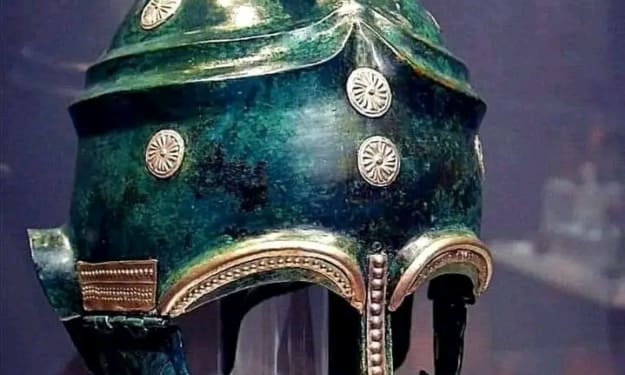
A 4thC BC bronze #Thracian helmet discovered at the village of Pletena, Bulgaria.
The Thracian Helmet of Pletena: A 4th-Century BC Masterpiece In 1997, a remarkable archaeological discovery was made in the village of Pletena, nestled in the western Rhodope Mountains of Bulgaria. Unearthed from the depths of history was a 4th-century BC bronze Thracian helmet, adorned with intricate silver decorations. This extraordinary artifact, now housed in the National History Museum in Sofia, offers profound insights into the martial culture, artistry, and societal structures of the ancient Thracians.
By Tosin Akomolafe 11 months ago in History
Rajendra Chola I and the Conquest of the Ganga: A Monumental Feat in Indian History
Known as the “Gangaikonda Chola” (the Chola who conquered the Ganga), Rajendra transformed a South Indian maritime empire into a pan-Indian power whose influence stretched from the Indian Ocean to the heart of the subcontinent. This campaign was not merely a military raid but a bold statement of imperial ambition, strategic brilliance, and cultural confidence.
By Say the truth 8 days ago in History


Comments
There are no comments for this story
Be the first to respond and start the conversation.