
The Warrior's Comb: An Early Medieval Artifact of Elegance and Utility
Medieval Artifact

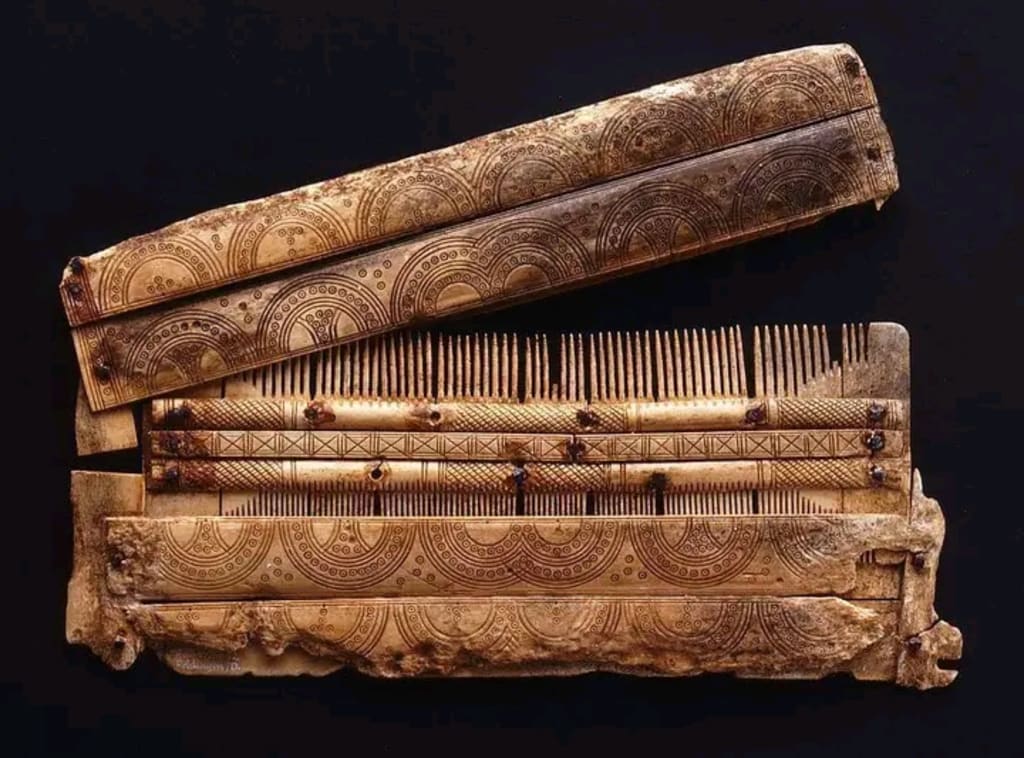
In the rolling hills of Fridingen, Germany, an extraordinary artifact was unearthed from a warrior’s grave: an elaborately decorated early medieval double-sided bone comb. This intricate object, dating back to the early 7th century CE, serves as a tangible connection to a bygone era where utility and artistry intertwined seamlessly. Now housed at the Landesmuseum Württemberg, the comb is not merely a relic of personal grooming; it is a testament to the craftsmanship, culture, and societal values of early medieval Europe.
A Glimpse into Early Medieval Society
The early medieval period, often referred to as the Dark Ages, is frequently portrayed as a time of chaos and cultural stagnation. Yet, artifacts like this bone comb challenge that narrative, revealing a society rich in artistry and attention to detail. The comb, delicately carved and housed in its protective case, suggests that personal grooming was a valued practice, even among warriors. It also underscores the importance of status symbols in early medieval communities.
The choice of material—bone—was likely due to its availability and durability. However, the level of craftsmanship evident in the comb’s design indicates it was not merely a utilitarian object but a mark of sophistication and perhaps even prestige. For a warrior, such an item might have signified wealth or social standing, as well as a commitment to personal appearance, which held significance in a world where physical presentation could reflect one’s honor and reputation.
The Dual Purpose of the Double-Sided Comb
This particular comb is double-sided, a design that highlights its practicality. One side, with its coarser tines, would have been used to detangle hair, while the finer tines on the opposite side likely served for styling or removing lice—a common problem in medieval Europe. The dual functionality suggests a practical approach to grooming, even in a warrior’s life, where hygiene was crucial for maintaining health in often harsh conditions.
The inclusion of a protective case further emphasizes the comb's value. Bone, while durable, is also brittle, and the delicate tines could easily break without proper care. The case not only safeguarded the comb but also added an element of portability, allowing the owner to carry it securely during campaigns or travels.
Decoration as a Cultural Expression
The comb’s intricate decoration is perhaps its most striking feature. Patterns carved into the bone likely held symbolic meanings or reflected popular motifs of the time. Geometric designs, animal imagery, or interlacing patterns were common in early medieval art, often serving as representations of cultural identity or spiritual beliefs.
In the context of a warrior’s grave, such embellishments may have carried deeper significance. The grave goods accompanying the warrior often provided insights into their life and values. The ornate comb might have symbolized not only the warrior's personal refinement but also the craftsmanship and artistry of the society to which they belonged.
The Role of Grave Goods
Grave goods like this comb were a common feature in early medieval burials, reflecting the belief that items of importance in life would also be useful in the afterlife. Warriors, in particular, were often buried with weapons, tools, and personal belongings that marked their status and identity. The inclusion of a comb in this warrior’s grave suggests that grooming was not a trivial aspect of their life but an essential part of their identity.
Moreover, the presence of such a finely made object in a grave underscores its symbolic value. It was likely considered an indispensable item, one that bridged the mundane act of grooming with the deeper notions of personal dignity and honor.
Craftsmanship and Trade in Early Medieval Europe
The level of craftsmanship evident in the comb indicates the skills of artisans during this period. These artisans, often working in small workshops, were adept at transforming natural materials like bone, horn, or wood into intricate and functional objects.
The comb also hints at the interconnectedness of early medieval Europe. Similar artifacts have been found across various regions, suggesting that ideas, styles, and techniques were shared through trade and cultural exchange. The warrior who owned this comb might have acquired it locally or as part of a broader trade network, reflecting the movement of goods and ideas during this time.
Modern-Day Preservation
Now housed at the Landesmuseum Württemberg, this bone comb continues to captivate historians, archaeologists, and visitors alike. Its preservation allows modern audiences to appreciate the craftsmanship and cultural significance of such an artifact. Exhibits like this serve as reminders of the complexities of early medieval life, dispelling the notion of a "dark" age devoid of sophistication or artistry.
Conclusion
The elaborately decorated double-sided bone comb from Fridingen is more than just a grooming tool; it is a window into the values, aesthetics, and daily practices of early medieval Europe. Encased in its protective cover, it reflects the warrior’s dual life of battle and personal dignity. Today, it stands as a testament to the rich tapestry of human history, where even the simplest of objects tells stories of identity, culture, and craftsmanship.
Through such artifacts, we gain not only a glimpse of the past but also an appreciation for the ingenuity and creativity that have always been hallmarks of human civilization. The comb may have been buried centuries ago, but its legacy endures, inspiring us to look beyond utility and find beauty in the everyday.
About the Creator
Keep reading
More stories from Deji Akomolafe and writers in History and other communities.
Exeter’s Stranded Medieval Bridge: The Mystery of the River Exe’s Movement
In the heart of Exeter, Devon, an unusual historical relic stands as a testament to the ever-changing forces of nature: a medieval bridge that now stands "high and dry," far from the River Exe it once crossed. This peculiar phenomenon has puzzled many visitors and historians, leading to questions about how and why the river shifted, leaving the bridge seemingly stranded in its current location.
By Deji Akomolafeabout a year ago in History
The Forgotten Region of Greece That Maps Once Ignored
High in the rugged mountains of central Greece, there lies a mysterious and historically fascinating region known as Agrafa. For centuries, this isolated land lived up to the meaning of its own name. The word “Agrafa” in Greek literally means “unwritten” or “unrecorded.” The region earned this unusual title because it was so remote and difficult to control that even powerful empires often ignored it, and in some cases, mapmakers did not even bother to include it on their maps.
By Irshad Abbasi 4 days ago in History
The Solitude of The Chupacabra
Many say that the Chupacabra is a rather recent and modern tale, a mangy coyote or rabied dog. Some point out that it’s just twisted evolution. But very few know the true backstory of the shapeshifter that led to the bloodsucking legend. And perhaps once you will come to know and understand more, you might “forget” a few cattle out to wander.
By Oneg In The Arctic3 days ago in Fiction



Comments
There are no comments for this story
Be the first to respond and start the conversation.