
The Vedas- Pillars of India's Spiritual and Intellectual Legacy
The Vedas are the bedrock of Indian civilization, embodying timeless wisdom that shapes philosophy, ethics, and culture. These ancient texts illuminate humanity’s quest for understanding, offering profound insights into existence, duty, and the interconnectedness of life, guiding generations toward enlightenment.

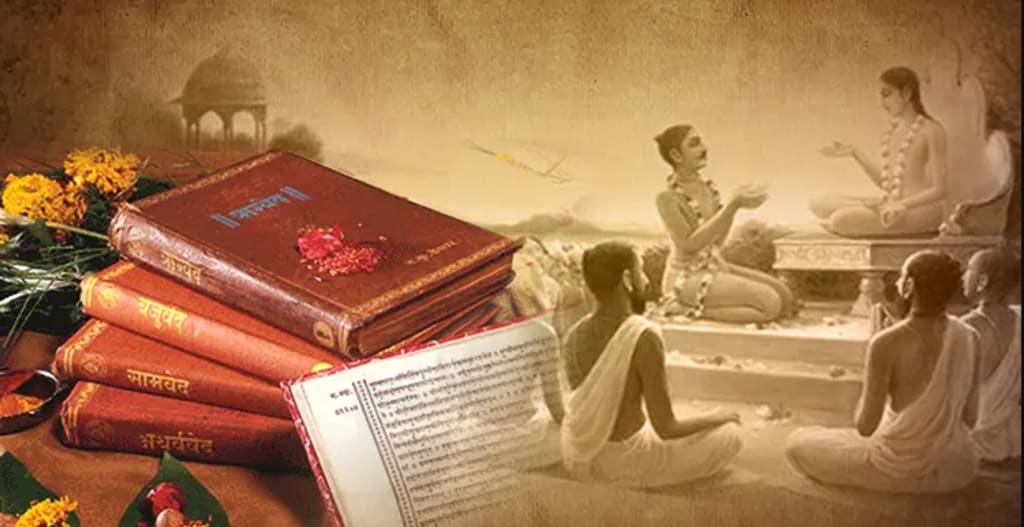
The Vedas, often regarded as the bedrock of the Indian civilization, are not merely ancient texts; they are the very essence of a culture that has flourished for thousands of years. As we delve into these sacred scriptures, we uncover a treasure trove of knowledge that transcends time and space, illuminating the human experience with profound insights into existence, duty, and the cosmos. The Vedas invite us to embark on a journey—a journey that connects us to our ancestors, our identity, and the very fabric of reality itself. They are a testament to humanity's quest for understanding and meaning in a world that often feels chaotic and fragmented.
The philosophical underpinnings of the Vedas are profound and far-reaching. They introduce concepts such as Dharma (duty/righteousness), Karma (action and consequence), and Moksha (liberation), which continue to resonate in contemporary discourse. These ideas form the bedrock of Hindu philosophy, influencing not only religious practices but also ethical frameworks across various spheres of life. The Vedic texts advocate for a harmonious existence with nature, urging individuals to recognize their place within the cosmic order. This holistic worldview fosters a sense of responsibility towards both society and the environment, an ethos that is increasingly relevant in today’s world.
Moreover, the Vedas serve as a testament to India's intellectual legacy. They have inspired countless scholars and thinkers throughout history, from Adi Shankaracharya's commentaries that sought to elucidate their philosophical depths to modern interpretations that explore their relevance in contemporary society. The Vedic corpus has been a source of inspiration for poets, philosophers, and scientists alike; its verses echo through time as a call to inquiry and understanding. Notably, Bal Gangadhar Tilak’s assertion regarding the antiquity of these texts underscores their significance in establishing India's historical narrative against colonial interpretations that sought to undermine indigenous knowledge systems.
The influence of the Vedas extends beyond religious confines; they have permeated art, literature, and governance throughout Indian history. The epics—the Mahabharata and Ramayana—draw heavily on Vedic themes and philosophies, further embedding these ancient teachings into the cultural consciousness of India. In governance, concepts derived from Vedic texts have informed political thought and administrative practices across various dynasties, advocating for a ruler's duty to uphold Dharma as central to just governance.
In contemporary times, as India navigates its identity in a globalized world, returning to Vedic wisdom offers invaluable insights into self-governance and cultural integrity. The resurgence of interest in Vedic studies reflects a broader nationalist sentiment that seeks to reclaim India's narrative from historical distortions imposed during colonial rule. This reclamation is not merely an act of nostalgia; it is a conscious effort to recognize and celebrate an intellectual tradition that has withstood the test of time.
Critics may argue about interpretations or applications of Vedic teachings in modern contexts; however, such debates only highlight the richness and dynamism inherent in these texts. They invite dialogue rather than dogma, encouraging individuals to engage with their heritage thoughtfully and critically. The Vedas remind us that knowledge is not static but evolves through interpretation and application across generations.
In essence, the Vedas encapsulate an enduring legacy that transcends time and geography. They invite us to explore profound questions about existence while grounding us in our cultural identity. As we honor this ancient wisdom within our contemporary frameworks, we reaffirm our commitment to a future rooted in understanding, respect for diversity, and an unwavering pursuit of truth—a testament to the enduring spirit of India itself. Ultimately, engaging with the Vedas is not just an academic exercise; it is an invitation to rediscover our roots and embrace the timeless wisdom that continues to guide humanity toward enlightenment!
About the Creator
Abhinandan Kaul
Abhinandan Kaul is an actor, writer, media personality, public speaker, blogger, entrepreneur, youth leader and the Founder of Exam Plus Noida.
Keep reading
More stories from Abhinandan Kaul and writers in History and other communities.
The Vitality of Exercise: Nurturing the Body, Mind, and Spirit
In an era dominated by sedentary lifestyles and modern conveniences, the importance of exercise cannot be overstated. Regular physical activity is not merely a means to an aesthetically pleasing body; it is a powerful tool that fosters holistic well-being. In this article, we delve into the numerous advantages of exercise and explore how it contributes to a more fulfilled and vibrant existence.
By Abhinandan Kaul3 years ago in Longevity



Comments
There are no comments for this story
Be the first to respond and start the conversation.