
The Unyielding Guardian: Hohensalzburg Castle
Uncaptured Castle

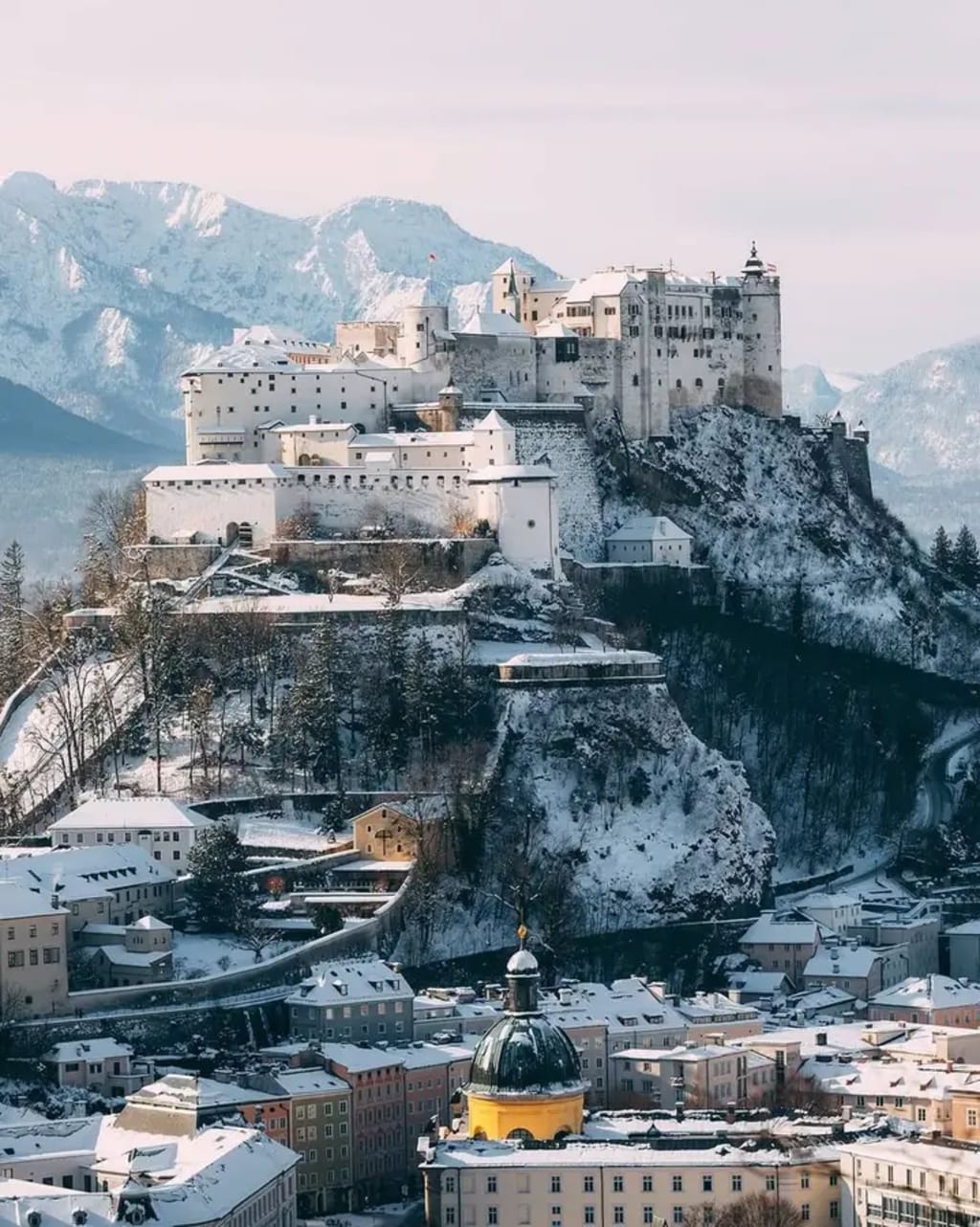
Perched high on the Festungsberg hill overlooking the city of Salzburg, Austria, stands the Hohensalzburg Castle—a fortress of unparalleled grandeur and resilience. As the largest fully preserved castle in Europe, it is a testament to the architectural ingenuity and military strategy of its time. Despite its imposing design, brimming with defensive mechanisms, the castle carries a paradoxical history: it never fell to invaders but ultimately surrendered to Napoleon without a fight.
A Fortress Born in the 11th Century
The origins of Hohensalzburg Castle trace back to 1077, when Archbishop Gebhard von Helfenstein ordered its construction during a time of political and religious turmoil. It was intended to serve as a stronghold for the Archbishops of Salzburg, who wielded both spiritual and secular power in the region. Initially a modest structure, the castle expanded over the centuries, evolving into a massive Romanesque fortress.
The initial phases of construction focused on creating a defensive haven, but as the centuries passed, the castle reflected the shifting styles of European architecture. By the late Gothic period, it had grown into a formidable complex, complete with towering walls, battlements, and living quarters fit for a ruler. Later, during the Renaissance, decorative elements and new fortifications were added, shaping the castle into the structure we see today.
A Pioneering Funicular
One of Hohensalzburg Castle's most intriguing claims to fame is its funicular railway, installed as early as 1500. Known as the Reißzug, this innovative system was the world's first hilltop funicular. Powered by human and animal effort, it transported goods and supplies up the steep incline to the castle. This engineering marvel not only underscored the castle's strategic importance but also highlighted the resourcefulness of its occupants. The Reißzug remains an essential part of the castle's history, symbolizing its blend of innovation and tradition.
The Military Might of Hohensalzburg
Hohensalzburg Castle was not just a symbol of power; it was a fortress designed to withstand any assault. By the 16th century, the castle's defenses had reached their zenith, and it possessed an arsenal that would have struck fear into any would-be attackers. Records from the 18th century reveal the staggering scale of its armory: 415 mortars, 590 cannons, 100 sets of full equestrian armor, and over 1,000 breastplates, helmets, and spears. Its strategic position atop a hill further enhanced its impregnability, allowing defenders to repel invaders with ease.
Despite its robust defenses, Hohensalzburg Castle was never subjected to a full-scale siege. Its mere presence, looming over Salzburg, served as a deterrent. The fortress's reputation for being unconquerable became its greatest defense, ensuring that no enemy dared challenge its might.
A Peaceful Surrender to Napoleon
Ironically, the fortress that had never fallen to invaders met its match not through battle, but diplomacy. In 1800, during the Napoleonic Wars, French troops marched into Salzburg. Faced with the overwhelming power of Napoleon's army and recognizing the futility of resistance, the city surrendered without a fight. Hohensalzburg Castle, too, opened its gates peacefully, marking the only time in its history that it changed hands without conflict. This moment signaled the end of the fortress's military role and the beginning of its transformation into a cultural and historical monument.
A Castle Frozen in Time
The architectural beauty of Hohensalzburg Castle reflects the diverse styles that shaped its history. While its core structure dates back to the 11th century, much of its current appearance stems from the 16th century, when it was extensively renovated and expanded. The castle's walls, towers, and gates bear traces of Romanesque, Gothic, and Renaissance influences, creating a harmonious blend of styles that captivates visitors.
Today, the castle's interiors offer a glimpse into medieval life. The Golden Hall, with its intricate wooden ceiling and gilded decorations, stands as a testament to the wealth and power of Salzburg's archbishops. The museum within the castle showcases artifacts ranging from weaponry to everyday items, providing insight into its storied past.
A Modern-Day Icon
Hohensalzburg Castle is more than just a relic of the past; it is a living symbol of Salzburg's history and culture. Each year, thousands of visitors ascend the Festungsberg to explore its halls, walk along its battlements, and marvel at the panoramic views of Salzburg and the surrounding Alps. The funicular railway, now modernized, continues to transport visitors to the castle, connecting the present with the past.
Throughout its history, Hohensalzburg Castle has stood as a beacon of resilience and ingenuity. From its origins as a modest fortress to its evolution into an architectural masterpiece, it embodies the spirit of its creators. Though it surrendered to Napoleon without a fight, the castle remains unconquered in the hearts of those who admire its enduring legacy.
As you wander its halls and gaze upon its majestic towers, you can't help but feel the weight of history. Hohensalzburg Castle is not just a monument; it is a storyteller, whispering tales of power, innovation, and resilience to all who visit.
About the Creator
Keep reading
More stories from Deji Akomolafe and writers in History and other communities.
The Pula Arena: A Roman Marvel Still Hosting Entertainment After 2,000 Years
In the heart of Pula, Croatia, stands a monumental testament to Roman engineering and cultural heritage: the Pula Arena. Built over 2,000 years ago, this ancient amphitheater remains one of the best-preserved Roman arenas in the world. Remarkably, it is not just a historical relic but a living, breathing venue still hosting events and captivating audiences, just as it did millennia ago.
By Deji Akomolafeabout a year ago in History
The Year 2017 in Review: Fun Facts, Trivia, and Historic Highlights
This quick read is a collection of fun facts, trivia, and historical events from the year 2017. Discover the year’s top news stories, most influential people, sports facts, computer and Internet news, entertainment trivia, and much more.
By Gregory DeVictor4 days ago in History




Comments
There are no comments for this story
Be the first to respond and start the conversation.