

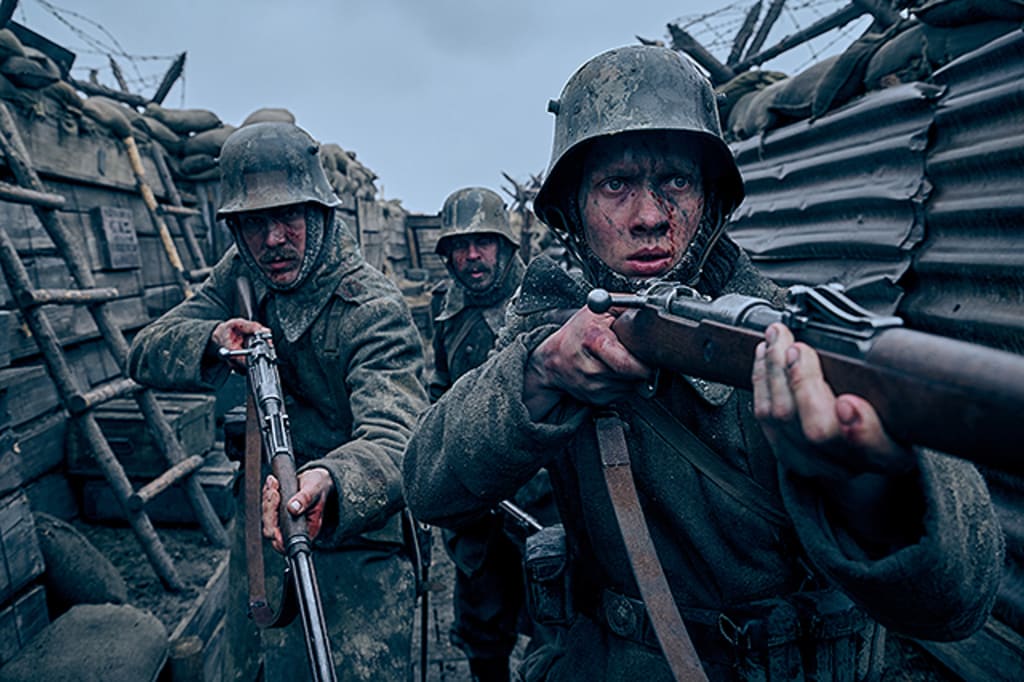
In the final stages of World War II in Germany, a harrowing scene unfolded as Jews were lined up with a precipitous cliff at their backs, directly facing a line of German soldiers with their guns pointed squarely at them. Amid this tense standoff, an elderly Jewish man raised his voice in a defiant cry, "Survive, even if it's only one among you, to bear witness to the folly and horror of this moment for future generations!" As the ominous sound of gunshots pierced the air, several individuals made a desperate leap towards the cliff, choosing potential death over certain execution. Miraculously, this act of sheer desperation and the courage to defy their grim fate has been recorded, allowing us to remember and reflect upon the atrocities committed during those dark times.
Beneath the earth, in a silent and cold chamber of its underground storage, lies a dormant warhead. It's not asleep but in a state of perpetual readiness, quietly awaiting the moment it was created for—a moment to reverse the mandate of destruction bestowed upon it by human hands, if only for a single, definitive act. This warhead, though inanimate, bears the weight of a profound curse—a curse levied by the very existence of those who brought it into being. It cannot find rest, condemned to an eternal vigil, haunted by the specter of its purpose. Yet, it dreams. It dreams of a day when it can finally fulfill its grim destiny, release the destructive energy pent up within, and thereafter sink into the tranquility of oblivion, achieving the peace of eternal rest it secretly craves. This silent sentinel of annihilation, shrouded in the chill of its subterranean vault, embodies the paradox of a creation yearning for both its moment of purpose and the subsequent cessation of its cursed existence.
The warhead knows of days spent in idle slumber, not soaring through the skies but resting on the cool floor of a museum or somewhere alike, exposed to the curious gaze of passersby. It whispers, "Farewell to arms, farewell to arms," hoping for the day when all living beings chant together to break its curse. From its chilly underground storage, it murmurs for an end to arms.
A Delta Force operative was left behind enemy lines. The Pentagon did not send a rescue team. Major Matthew Quentin Shepherd, defying orders, sent a helicopter and a squad (including himself) to rescue the stranded operative. For this insubordination, his resignation was accepted by the Pentagon. As he left the base, a military jeep driver saluted him, asking, "Why salute a civilian?" Surrounded by nearly fifty soldiers who admired him, Shepherd drove slowly through their ranks, all saluting in unison before breaking into applause and cheers of affection.
Thus, the general public remains unaware of malaria, dysentery, the fear and war-weariness, and "neurosis" that persist. Rarely, the sentimentalism of the home front directly encounters the immediate misery of the front lines, exemplified by Charles MacDonald's recollections. When a fluent reporter ventured deep into the war zone and asked soldiers, "What do you most want from America right now?" he initially received only sullen looks and silence. Eventually, a soldier spoke up, "I want you to tell them it's not a laughing matter here. It's severe. We can't just long for hot dogs or baked beans. Soldiers are dying or getting injured every minute. It's miserable, painful. Tell them it's not a joke, it's something they can never understand." MacDonald recalled the soldier's choked sob and his irritated, barely audible continuation, "Tell them it's unbearably hard. Just that. Nothing more."
About the Creator
Japan's Anonymous
2ch, Japan's leading anonymous forum, fosters anonymous discussions and comments on diverse topics, encouraging free idea exchange. This highlights trending threads, showcasing vibrant community engagement.
Keep reading
More stories from writers in History and other communities.
3 Times the Wrong Person Was in Charge at the Worst Possible Moment
Leadership matters most when things go wrong. In calm times, almost anyone can appear competent. Meetings happen. Papers get signed. Coffee is consumed with confidence. But crises are different. Crises demand judgment, experience, decisiveness, and—ideally—a basic understanding of what’s happening.
By Enoch Sagini2 days ago in History


Comments
There are no comments for this story
Be the first to respond and start the conversation.