
The Unsinkable Molly Brown
From Titanic Survivor to Tireless Humanitarian—The True Story of Margaret Brown’s Unbreakable Spirit

In the early hours of April 15, 1912, as the RMS Titanic slipped beneath the icy waters of the North Atlantic, a woman sat in a lifeboat, soaked, freezing, and furious. Not for herself—but for the hundreds left behind. That woman was Margaret Brown, later known to the world as "The Unsinkable Molly Brown."
Her story is not just about survival; it’s about resilience, rebellion, and relentless compassion. Hollywood may have turned her into a flamboyant socialite, but the real Margaret Brown was far more extraordinary than the legend suggests. She was a philanthropist, feminist, political activist, and survivor—not just of shipwrecks, but of a world that told women to stay silent and know their place.
Let’s explore the remarkable journey of a woman who was, in every sense of the word, unsinkable.
---
Humble Beginnings in Hannibal
Born Margaret Tobin on July 18, 1867, in Hannibal, Missouri, she was one of six children in a working-class Irish-Catholic family. Her parents were poor but proud, instilling in their children a strong work ethic and a sense of social responsibility. Hannibal, best known as the hometown of Mark Twain, was a town of riverboats, dreams, and hard labor.
At the age of 18, Margaret moved west to Leadville, Colorado, to live with her older siblings and seek opportunity. There, she worked in a department store and lived modestly. But fate had grander plans.
---
A Love Story—and a Fortune
In Leadville, Margaret met James Joseph “J.J.” Brown, an intelligent, hard-working mining engineer. They married in 1886, a love match rather than one of convenience or class.
The Browns were not wealthy at first. In fact, they lived among the working class for years. That changed dramatically in 1893, when J.J. helped develop a revolutionary method to mine gold from previously unworkable ore. The discovery led to a massive gold strike at the Little Jonny Mine, and the Browns became millionaires overnight.
Though newly rich, Margaret never turned her back on the underprivileged. She used her money and influence to support orphans, miners, women’s education, and workers’ rights. She also became an early suffragist, fighting for a woman’s right to vote long before it was law.
---
A Woman of the World
Margaret immersed herself in culture and education. She learned multiple languages, traveled extensively across Europe, and took classes at Carnegie Institute. Her interests ranged from literature and music to politics and law. Her home in Denver became a cultural hub and a place where the elite and the downtrodden alike could find an advocate.
But her marriage with J.J. eventually faltered. In 1909, the couple separated—a bold move for a woman at that time. Still, they remained close and never divorced, and Margaret retained her independence and wealth.
---
The Titanic: A Journey Turned Nightmare
In early 1912, while traveling in France, Margaret received news that her grandson was seriously ill. She booked the earliest passage home—on the maiden voyage of the RMS Titanic, the largest and most luxurious ship of its time.
She boarded in Cherbourg, France, as a first-class passenger, enjoying the grand accommodations, social gatherings, and opulence. But luxury couldn't shield anyone from fate.
On the night of April 14, 1912, the Titanic hit an iceberg. The "unsinkable" ship was doomed.
Margaret was awakened by the jolt and quickly assessed the situation. Unlike many in first class who hesitated, she jumped into action. She helped other passengers—especially non-English-speaking immigrants—reach lifeboats. She spoke French and German, guiding panicked travelers who didn’t understand the crew’s commands.
Eventually, she was forced into Lifeboat No. 6—but only after ensuring others were safe.
---
A Voice in the Dark
In the lifeboat, Margaret’s legendary will emerged.
Despite being 44 years old and wearing a heavy wool coat, she took up an oar and rowed to help keep warm and maintain morale. She urged the quartermaster in charge, Robert Hichens, to return to the wreck site to look for survivors. He refused, fearing the lifeboat would be swamped. Margaret was furious and threatened to throw him overboard if he didn’t cooperate.
Though they never returned to the wreck site, Margaret’s leadership and compassion kept the boat calm.
After seven freezing hours, they were rescued by the RMS Carpathia.
---
From Survivor to Savior
Once aboard the Carpathia, Margaret didn't collapse into grief or shock. Instead, she organized relief efforts for survivors, particularly second- and third-class passengers who had lost everything.
She raised money on the spot, distributed blankets, wrote letters for survivors, and formed a Survivors’ Committee. By the time they reached New York, she had already collected thousands of dollars in aid.
Her own account of the tragedy, published shortly after, was clear, empathetic, and full of calls to action. Margaret Brown became a national symbol of courage.
---
The Unsinkable Woman’s Second Life
The Titanic made her famous, but it didn’t define her. Instead of retreating into society life, Margaret used her fame to push even harder for progressive change.
She:
Ran for U.S. Senate in 1914—a bold move for a woman, especially when women couldn't even vote in many states.
Advocated for workers’ rights after the deadly Ludlow Massacre in Colorado.
Served in France during World War I, where she organized field hospitals, aided wounded soldiers, and was awarded the French Legion of Honor for her efforts.
Supported the NAACP and suffragist groups, continuing her push for justice across racial and gender lines.
Her Denver home, now a museum, became a gathering spot for activists, artists, and political thinkers.
---
Death of a Legend, Birth of a Myth
Margaret Brown died on October 26, 1932, at the age of 65, from a brain tumor. She was buried beside her husband in the Holy Rood Cemetery in New York.
But her story didn’t end there. In 1960, the Broadway musical “The Unsinkable Molly Brown” debuted, followed by a popular film in 1964 starring Debbie Reynolds. The name “Molly” was invented for entertainment, but the myth helped preserve her legacy for generations.
---
Why She Still Inspires
Margaret Brown wasn’t fearless because she survived a shipwreck. She was fearless because she stood up for people who had no voice—immigrants, children, miners, women. She fought against injustice, even when society told her to stay quiet and behave.
Her legacy reminds us that true strength isn’t loud or showy—it’s relentless. It rows through icy waters, speaks up in lifeboats, and defies the rules of its time.
More than a century later, her life still speaks to us: urging courage in the face of fear, action in the face of injustice, and compassion in the face of crisis.
---
Final Thought
Margaret Brown didn’t just survive the Titanic. She survived expectation, convention, and oppression—and came out swinging. Whether you call her Margaret, Molly, or just unsinkable, one thing is clear:
> She was a force of nature in an age that tried to tame her—and the world is better because she didn’t let it.
About the Creator
Hasbanullah
I write to awaken hearts, honor untold stories, and give voice to silence. From truth to fiction, every word I share is a step toward deeper connection. Welcome to my world of meaningful storytelling.
Keep reading
More stories from Hasbanullah and writers in History and other communities.
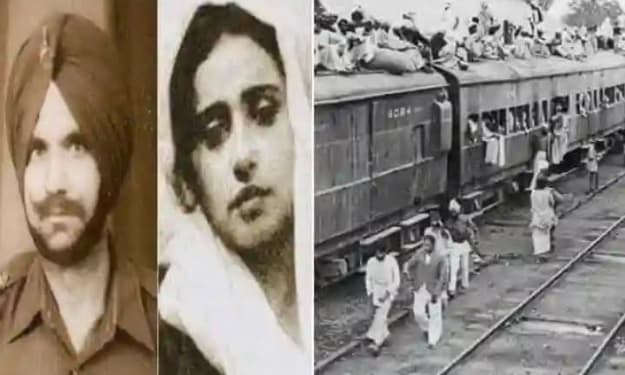
Shaheed-e-Mohabbat: The Tragic Love of Boota Singh
In the annals of South Asian history, where love stories are many but true ones are few, one tale continues to haunt the hearts of millions—because it wasn’t born in romance but in rescue, not nurtured in luxury but in war-torn refugee camps, and not broken by betrayal but by the ruthless hands of politics and partition. This is the tragic yet timeless love story of Boota Singh, a Sikh ex-soldier from Jalandhar, and Zainab, a young Muslim girl he saved and loved during the blood-soaked chaos of 1947.
By Hasbanullah8 months ago in History
I found the history of Death that produced the AI that I have found
If someone you love died tomorrow, would you want to continue communicating with them? Not through memories or stored messages, but through artificial intelligence — a chatbot that uses their texts, emails, and voice notes to respond in their own tone and style.
By Jejak Kabar Duniaa day ago in History
Flower Bloom 369
FLOWER Bloom 2/25/26 Wednesday By Mariann Carroll Karen had been with Tony for 7 years. Tony started acting strangely after her surgery. He would mow the lawn in the rain and be on his cellphone. He started pushing Karen away. Tony came clean about seeing someone. Karen moved out two months later. Karen moved in with a friend. She felt betrayed.
By Mariann Carroll5 days ago in Fiction


Comments (1)
I love articles like this, thankyou for sharing xx