
The Truth They Hid from You
A real U.S. program once explored how to manipulate behavior—here’s what history uncovered.

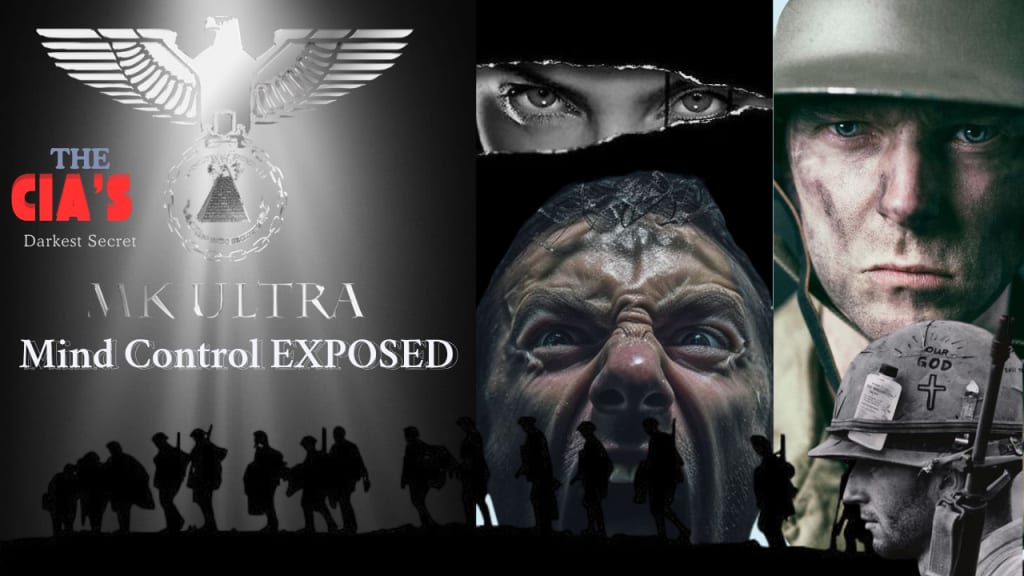
Introduction
During the height of the Cold War, when global tensions ran high and paranoia crept into nearly every aspect of life, the U.S. government quietly launched a research initiative that would remain hidden for decades. The goal? To understand and potentially control the human mind.
The project, known as MK Ultra, was conducted by the Central Intelligence Agency (CIA). Shrouded in secrecy, it explored controversial methods like hypnosis, sensory deprivation, and psychoactive drugs. At its core, the program reflected deep anxieties about foreign influence, national security, and the potential power of psychological manipulation.
But MK Ultra wasn’t just a government research program—it was a chapter in history that raised profound ethical questions and left lasting scars on those affected.
What Was Project MK Ultra?
Project MK Ultra officially began in 1953 under the direction of then-CIA Director Allen Dulles. It was inspired, in part, by reports that communist nations such as the Soviet Union and China were experimenting with brainwashing and psychological conditioning. The CIA feared that American soldiers or citizens could be vulnerable to similar tactics. To prepare for such threats—or potentially develop countermeasures—the agency set out to study the human mind in unprecedented ways.
MK Ultra was composed of over 150 secret sub-projects, involving dozens of universities, hospitals, prisons, and research institutions across the United States and Canada. Some of the most controversial experiments involved administering LSD and other hallucinogens to test subjects in order to study their psychological responses. In some cases, these substances were given without the subject’s informed consent—a clear violation of ethical standards.
Unwitting Test Subjects
One of the darkest aspects of MK Ultra was the lack of consent and transparency. Many of the individuals involved in these experiments were unaware they were part of a CIA-funded research initiative. Prisoners, psychiatric patients, and even hospital visitors were sometimes exposed to chemicals, hypnosis, or psychological manipulation without full knowledge of the risks or the purpose behind the studies.
The most well-known example is the case of Dr. Frank Olson, a U.S. Army scientist who was unknowingly given LSD by his colleagues as part of an experiment. Within days, Olson began to experience severe psychological distress. He died after falling from a New York City hotel window in 1953. Though officially ruled a suicide, his death remains the subject of investigation and debate, with many believing he may have been silenced due to his involvement in MK Ultra.
Exposure and Public Outcry
For over two decades, MK Ultra remained classified. It wasn’t until the 1970s, following the Watergate scandal and increasing demands for government transparency, that public attention turned toward the intelligence community.
In 1975, the U.S. Senate’s Church Committee, led by Senator Frank Church, began investigating abuses of power by intelligence agencies. It was during these hearings that MK Ultra came to light. Thousands of documents had already been destroyed in 1973 on orders from CIA officials, but enough remained to reveal the disturbing scope of the program.
The public was shocked. Not only had human subjects been exposed to drugs without their knowledge, but the experiments had little scientific oversight, and the data gathered was often unreliable or never published.
Ethical and Scientific Impact
The revelation of MK Ultra had a profound effect on both scientific research and government accountability. In response to the scandal, new guidelines were established for human experimentation, including mandatory informed consent and ethical review boards. These policies became standard in universities and medical institutions worldwide.
The program also highlighted the dangers of conducting research without transparency or accountability. Even with national security as a justification, MK Ultra showed how secrecy can erode ethical standards and public trust.
A Lasting Legacy
MK Ultra was officially discontinued in the early 1970s, but its legacy remains. It continues to be a symbol of unchecked government power and the importance of protecting individual rights. Over time, it has inspired countless documentaries, books, and fictional portrayals—often exaggerating or speculating beyond the documented facts.
Still, the real story is powerful enough. It’s a reminder of the complex balance between security, science, and ethics, and how easily that balance can be lost when fear overrides transparency.
Final Thoughts
MK Ultra is no longer a secret. But the lessons it teaches us—about ethics, power, and responsibility—are more relevant than ever. In a world where science continues to advance rapidly, we must ensure that human dignity and consent are never left behind.
About the Creator
Keep reading
More stories from Aimal Khan and writers in History and other communities.
The Chair by the Window
The chair by the window had been empty for three months. Every morning, Mia still made two cups of tea. One with two sugars, the other plain. She would place them both on the kitchen table, sit across from the vacant chair, and stare at the steam until it faded into nothing—just like him.
By Aimal Khan8 months ago in Humans
The “Greater Israel” Map Controversy: Saudi Arabia, Palestine and Arab League Condemn the Idea
A recent controversy over a map circulating online and in political discussions has reignited tensions across the Middle East. The map, often referred to as the concept of “Greater Israel,” depicts a much larger Israeli state stretching beyond its current internationally recognized borders and into parts of neighboring countries. The idea has drawn sharp condemnation from Arab states, including Saudi Arabia, Palestine, and the Arab League, who have dismissed it as dangerous political rhetoric and an unrealistic extremist vision.
By Irshad Abbasi 5 days ago in History




Comments
There are no comments for this story
Be the first to respond and start the conversation.