
The truth about Stonehenge
Using new technology to examine the past

Stonehenge, the iconic ancient monument nestled in the UK's Salisbury Plain, has captivated the imaginations of people worldwide for centuries. As researchers explore its mysteries, a coherent narrative about this intriguing site is emerging, revealing a rich tapestry of history and significance.
While Stonehenge is instantly recognizable, its complexity goes beyond what meets the eye. Archaeologists have been investigating both the monument itself and its surrounding landscape in search of clues that can illuminate its purpose and origins. Over the last decade, this quest has provided remarkable insights, reshaping our understanding of the Neolithic and Bronze Age world.
One noteworthy endeavor, the Stonehenge Hidden Landscapes Project employed underground radar and magnetic imaging techniques. This investigation showed a sprawling network of structures, spanning approximately 4.5 square miles (12 sq km), surrounding Stonehenge. In this labyrinth, the project generated much excitement when it hinted at the existence of a colossal stone circle, dubbed 'Superhenge,' at nearby Durrington Walls, boasting a massive 500-meter (1,640-foot) diameter.
However, the initial fervor was short-lived. Subsequent excavations revealed that no actual stones were present. Instead, timber posts had once stood at the site, later replaced by a henge bank formed by filling the postholes with chalk and earth. The radar scans had incorrectly interpreted these gaps in the chalk as stones. Despite this setback, the project's UK lead, Vincent Gaffney, emphasized that it had unearthed numerous new features and previously undiscovered sites. It had also given valuable information on where structures did not exist giving a more sophisticated interpretation of the archaeological evidence.
Such surveys have proven important in comprehending the broader landscape, allowing archaeologists to investigate all areas evenly, not just the known monuments. The Stonehenge Hidden Landscapes Project, for example, revealed an entirely unknown monumental phase at Durrington Walls, featuring a massive ring of posts, possibly numbering between 200 and 300, and standing at heights of 4 to 6 meters (13 to 20 feet). This discovery underscored the significance of the site and its role in ceremonial processions and rituals related to the surrounding monuments.
Mike Parker Pearson, who led the Stonehenge Riverside Project suggested that the posts at Durrington Walls had a short-lived purpose, perhaps marking the perimeter of an abandoned Neolithic village while Stonehenge was under construction. This finding underscored the interconnectedness of the monuments and their landscape.
The Stonehenge Riverside Project showed that Stonehenge was built in two phases, with the earliest phase, featuring a circle of bluestones surrounded by a ditch and bank, dating back over 4,500 years ago. The iconic outer circle was added roughly 500 years later. Notably, the area had been inhabited for around 9,000 years, indicating its significance long before Stonehenge's construction.
Avebury, located twenty miles (30 km) away, is another significant site featuring the largest stone circle in Europe. However, the Neolithic influence extended even further, including into Wales, where the bluestones for Stonehenge's inner circle were procured. This suggests a network of interconnected Neolithic landscapes, with Stonehenge serving as a unifying focal point.
Parker Pearson thought that the Welsh bluestones were the first to be placed at Stonehenge, representing ancestral symbols of western Britons. Transporting these massive stones across significant distances raises intriguing questions about the methods employed by prehistoric Britons.
While some theories suggested that glaciers might have transported the stones, the discovery of ancient quarries in Preseli largely discredited this idea. Experiments demonstrated that moving smaller megaliths, such as the bluestones, weighing around 2 tons or less, was feasible, even with basic sledges.
Recent archaeological findings further deepened the intrigue surrounding Stonehenge. The excavation conducted by the Stonehenge Riverside Project unearthed 58 burials at the site, including at least nine men and 14 women. The elevated social status of those interred at Stonehenge raises questions about the roles of women in the Neolithic period.
The ongoing exploration of Stonehenge continues to yield fascinating revelations. While the monument itself is very remarkable, its true significance lies in its relationship with the surrounding landscape and interconnected Neolithic sites. As researchers employ advanced technology and innovative approaches, Stonehenge's enigma gradually unfolds, offering a glimpse into the ancient world and its enduring mysteries. Despite these discoveries, Stonehenge will likely keep posing new questions, reminding us of the immense skill and ambition of its Neolithic builders in a world far removed from our own.
About the Creator
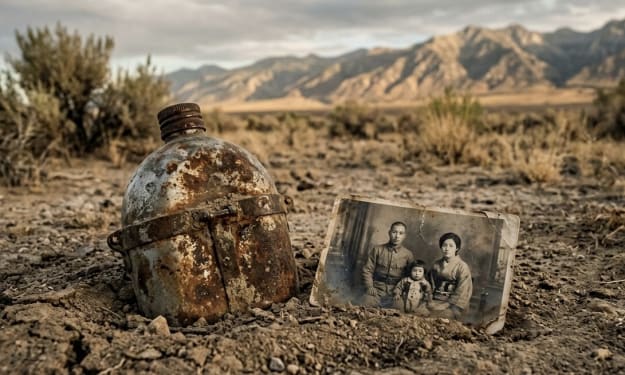
Echoes of a Forgotten War: The Discovery of a Japanese POW’s Remains in the United States
The discovery of the remains of a Japanese prisoner of war (POW) from World War II on American soil has reopened a quiet chapter of history that many people never knew existed. More than seventy years after the end of the war, this unexpected finding has sparked renewed interest in the stories of Japanese soldiers who were captured, transported across the Pacific, and held in detention camps across the United States.
By Irshad Abbasi 4 days ago in History
Pearl
1980 something. we all hung out at Pearl and you and i were nothing special, or so i thought. i mean we all danced, drenched in our own sweat, our own saline solution of fear, too many beers, shots, laughter, tears, fucks in the bathroom and i don't know when we began to be afraid. do you?
By ROCK aka Andrea Polla (Simmons)7 days ago in Fiction


Comments (1)
I was pleasantly surprised by the quality of your writing. You should be proud of yourself for creating such an exceptional piece.