
The Trump Effect: How Policies Shaped the U.S. Economy
A Deep Dive into Tax Cuts, Trade Wars, and the COVID-19 Fallout

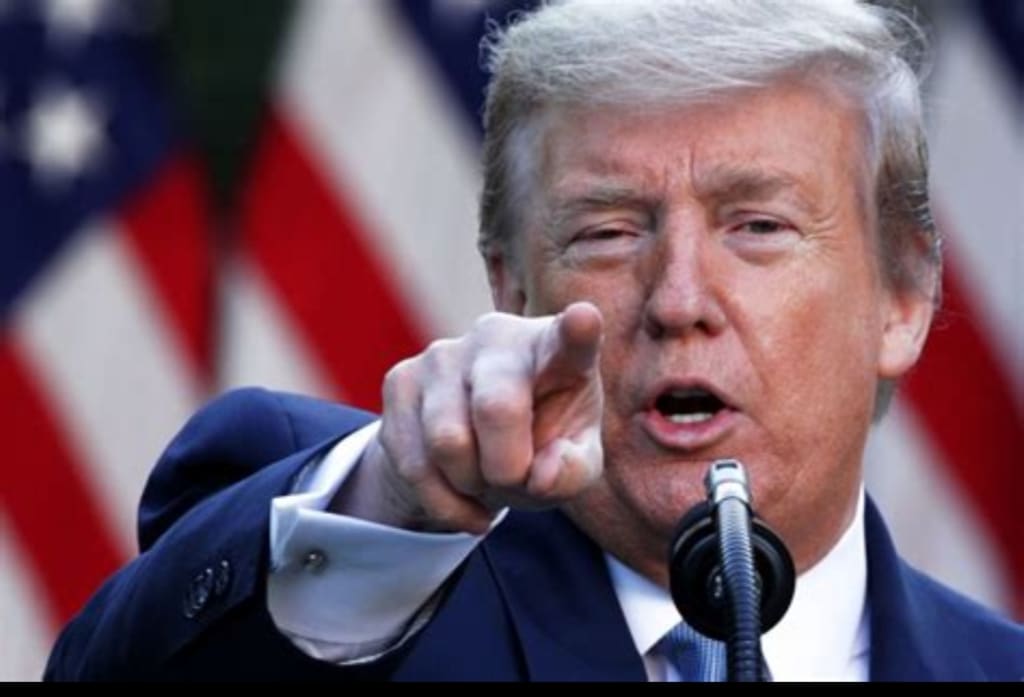
The presidency of Donald J. Trump brought a new era of bold, unconventional economic policymaking that left a lasting mark on the United States economy. Spanning from January 2017 to January 2021, Trump’s term witnessed a blend of sweeping tax reforms, aggressive trade policies, deregulation, and a global pandemic that shook economic foundations. The effects of his administration's economic decisions remain a subject of intense debate among economists, policymakers, and the general public.
Tax Cuts and Corporate Gains
One of the signature achievements of the Trump administration was the passage of the Tax Cuts and Jobs Act (TCJA) in December 2017. The law slashed the corporate tax rate from 35% to 21%, a move designed to make American businesses more competitive globally. Supporters argued that this led to increased investment, job creation, and economic expansion, at least in the short term.
In the initial years following the tax cuts, GDP growth hovered around 2.5% to 3%, and business confidence surged. Unemployment hit historic lows—falling to 3.5% by the end of 2019, the lowest level in 50 years. The stock market also soared, driven in part by corporate stock buybacks and optimism over reduced tax burdens.
However, critics argue that the TCJA disproportionately benefited the wealthy and large corporations. Many companies used the windfall not to expand operations or hire more workers, but to buy back their own shares—raising stock prices but not necessarily contributing to broader economic growth. Additionally, the tax cuts contributed to ballooning the national deficit, with little evidence of the promised long-term investment boom.
Deregulation and Industry Boosts
Trump also aggressively pursued deregulation, particularly in the energy, environmental, and financial sectors. His administration rolled back over 100 federal regulations, arguing that removing “red tape” would unleash business potential.
In the energy sector, the rollback of Obama-era regulations helped revive coal and expand oil and gas production, making the U.S. the world's largest energy producer by 2019. Financial institutions benefited from looser Dodd-Frank regulations, which Trump’s team argued were stifling lending and innovation.
While deregulation did benefit specific industries, environmentalists and labor advocates raised alarms about long-term consequences. Critics warned that reduced oversight in areas like pollution control and workplace safety could cause harm down the road, both to public health and the environment.
Trade Wars and Global Uncertainty
Another defining feature of Trump’s economic strategy was his “America First” trade policy, which upended decades of global economic cooperation. Trump imposed tariffs on hundreds of billions of dollars' worth of goods from countries including China, Mexico, Canada, and members of the European Union.
The most high-profile of these was the trade war with China, which began in 2018. The U.S. placed tariffs on Chinese imports, prompting retaliatory measures from Beijing. Trump’s goal was to reduce the trade deficit and pressure China into addressing issues like intellectual property theft and forced technology transfers.
While the trade war highlighted legitimate concerns about China’s economic practices, it also hurt U.S. farmers and manufacturers who relied on global supply chains. Agricultural exports to China fell dramatically, leading the Trump administration to authorize billions in subsidies to American farmers as compensation.
Additionally, the tariffs raised costs for American consumers and businesses that relied on imported goods and materials. By some estimates, the trade war shaved off about 0.3% to 0.4% of GDP and led to job losses in tariff-affected industries.
Pre-COVID Strength and Pandemic Collapse
Before the COVID-19 pandemic, many key economic indicators were strong. The labor market was tight, inflation was low, wages were rising moderately, and consumer spending was robust. Trump frequently pointed to the stock market’s performance as proof of his success, and for many Americans, 2017 to early 2020 felt economically stable, if not prosperous.
However, the outbreak of COVID-19 in early 2020 changed everything. The U.S. economy entered a deep recession as lockdowns shut down businesses and millions of jobs were lost almost overnight. The unemployment rate spiked to nearly 15% in April 2020, the highest since the Great Depression.
Trump’s handling of the pandemic, particularly the economic fallout, drew sharp criticism. Delayed responses, inconsistent messaging, and friction with health experts created uncertainty. While the administration did support massive stimulus measures—such as the CARES Act, which included direct payments to Americans, expanded unemployment benefits, and business loans—many felt the federal response lacked coordination.
Despite these efforts, the U.S. economy shrank by 3.4% in 2020, the worst contraction since 1946. Though a partial recovery began later that year, the pandemic left deep scars on the job market, small businesses, and the healthcare system.
Long-Term Legacy
Trump’s economic legacy is complex. On one hand, he presided over a strong pre-pandemic economy with low unemployment, a booming stock market, and confident businesses. His tax cuts and deregulation reshaped the business environment and energized certain sectors.
On the other hand, the national debt grew by over $7 trillion during his tenure, and income inequality widened. The trade wars disrupted global commerce without achieving major concessions, and the pandemic response was widely viewed as chaotic and inconsistent.
Looking ahead, economists continue to study the long-term effects of Trump’s economic policies. While some of his actions brought short-term gains, others introduced new risks and challenges. Whether seen as a bold reformer or a reckless disruptor, one thing is clear: Donald Trump’s presidency profoundly altered the course of the U.S. economy—and its aftershocks are still being felt today.
About the Creator
Faiq Ahmad
Am experienced Field Security Officer working on the Engro Enfrashare Telecom Project.
I actively earn through various online platforms.This reflects my adaptability, tech skills, and commitment to continuous learning and financial growth.
Keep reading
More stories from Faiq Ahmad and writers in History and other communities.
Who is Donald Trump?
Donald John Trump is one of the most polarizing and widely recognized figures in modern American history. From real estate tycoon and reality TV star to the 45th President of the United States, Trump’s life and career have been anything but ordinary. His political style, business ventures, and controversial statements have left a lasting impact on the United States and the world. This article explores his life, business achievements, and presidency, offering a broad perspective on a man who has both been celebrated and criticized across the globe.
By Faiq Ahmad9 months ago in History
Where the Pulse Ends
© 2026 Sai Marie Johnson The humidity in the city didn’t just hang; it leaned. It was a thick, stagnant soup of diesel exhaust, ozone, and the metallic tang of blood that drifted from the "Compliance Zones." Joe sat in his rusted sedan, his hands resting loosely on the steering wheel. He wasn't gripping it. He wasn't angry. Anger was a chemical spike, a biological inefficiency. Joe was simply... focused.
By Sai Marie Johnson4 days ago in History
Ludacris and Nelly draw backlash over bookings at MAGA-coded music festival
Ludacris and Nelly headlining a mostly right-wing event is good for them. It’s also great for the genre of hip hop. The two rap veterans have showcased their talents on other stages. Why can’t they perform for mostly MAGA folks and grab that bag?
By Skyler Saunders5 days ago in Beat


Comments
There are no comments for this story
Be the first to respond and start the conversation.