
The True Story Behind the Trojan Horse
The Trojan Horse’s Lasting Impact on History and Culture

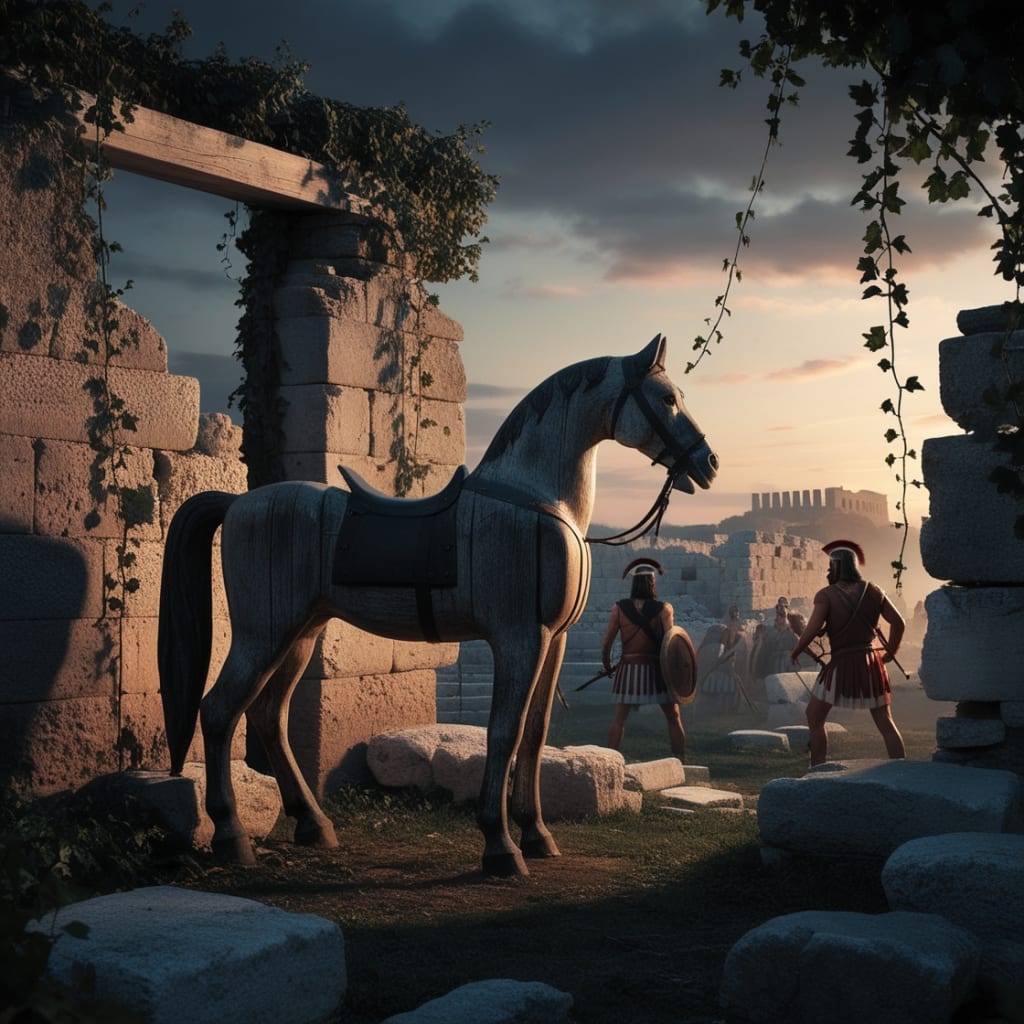
The story of the Trojan Horse is one of the most famous tales from ancient mythology, often associated with cunning, deception, and the ultimate downfall of the city of Troy. This tale, which has been passed down through centuries, combines history, legend, and myth to reveal a story that has captivated imaginations and inspired countless works of literature and art. But what is the true story behind the Trojan Horse? Was it a real historical event, or simply a metaphorical tale woven by ancient storytellers?
The tale begins during the final years of the Trojan War, a conflict between the Greeks and the Trojans that lasted for ten long years. The war itself was sparked by the abduction of Helen, queen of Sparta, by Paris, a prince of Troy. This act ignited a massive Greek expedition against Troy to reclaim Helen and punish the Trojans. Despite numerous battles and sieges, the Greeks were unable to breach the walls of Troy.
According to the legend, the Greeks devised a cunning plan to finally end the stalemate. They constructed a massive wooden horse and hid a select group of soldiers inside it. The rest of the Greek army pretended to sail away, leaving the horse as a supposed offering to the goddess Athena. The Trojans, believing the war was over and the horse a symbol of Greek surrender or divine favor, brought the horse inside their fortified city.
That night, under cover of darkness, the hidden Greek soldiers emerged from the horse, opened the city gates, and allowed the rest of the Greek forces to enter Troy. The city was sacked, leading to the downfall of Troy and the end of the war.
While this story has been romanticized and dramatized in epic poems such as Homer's "Iliad" and Virgil's "Aeneid," historians and archaeologists have long debated its veracity. Was the Trojan Horse a literal wooden structure, or could it have been a metaphor for something else—perhaps a siege engine, a secret tunnel, or a diplomatic trick?
Archaeological evidence from the ancient city of Hisarlik in modern-day Turkey, believed to be the site of Troy, reveals signs of destruction consistent with a violent siege. However, there is no direct evidence of a giant wooden horse or the exact manner in which the city fell. Some scholars suggest that the story of the horse may have been a later invention to explain the sudden and unexpected fall of a heavily fortified city.
Others propose that the horse symbolizes a form of subterfuge common in ancient warfare—possibly the use of hidden soldiers, clever traps, or even psychological warfare designed to demoralize the enemy. The Trojan Horse, therefore, could represent the idea that no matter how strong a city's walls, cunning and strategy can overcome brute force.
The enduring appeal of the Trojan Horse story lies not only in its dramatic narrative but also in the timeless lesson it imparts about deception, trust, and vigilance. The phrase “beware of Greeks bearing gifts” has become synonymous with caution against deception, reminding us to look beyond appearances.
In modern times, the Trojan Horse has also taken on new meanings in the realm of cybersecurity, where "Trojan horse" refers to malicious software disguised as legitimate programs, capable of infiltrating systems undetected—an apt metaphor for the ancient tale.
In conclusion, the true story behind the Trojan Horse may forever remain a blend of myth and history. Whether as a literal wooden horse, a symbolic tactic, or a mythological device, it endures as a powerful story about the complexity of war and the unexpected ways in which victory can be achieved. Its lessons about strategy, deception, and the perils of misplaced trust continue to resonate in both historical study and popular culture.
About the Creator
Muhammad Asim
Welcome to my space. I share engaging stories across topics like lifestyle, science, tech, and motivation—content that informs, inspires, and connects people from around the world. Let’s explore together!
Keep reading
More stories from Muhammad Asim and writers in History and other communities.
10 Forgotten Events That Changed the World
History is full of dramatic moments—wars, revolutions, discoveries—that everyone learns about in school. But some pivotal events that reshaped societies, politics, and cultures remain largely forgotten. These forgotten events that changed the world may not make headlines or history textbooks, but their impact echoes through time. Here are ten lesser-known events that quietly altered the course of history.
By Muhammad Asim9 months ago in History
The Year 1905 in Review: Fun Facts, Trivia, and Historic Highlights
This quick read is a collection of fun facts, trivia, and historic events from the year 1905. Learn about the year’s top news stories and most influential people, notable inventions and sports facts, entertainment trivia and grocery prices, and much more.
By Gregory DeVictor2 days ago in History




Comments
There are no comments for this story
Be the first to respond and start the conversation.